Oracle Rejects Breach Claims as Security Researchers Flag Credible Evidence
Oracle has dismissed allegations of a cloud infrastructure breach, but cybersecurity experts point to substantial indicators suggesting a compromise may have occurred.

A dispute over cloud security has put Oracle Corp. in the spotlight following claims by a threat actor of unauthorized access to its cloud systems and the theft of confidential information. While Oracle has rejected these allegations, multiple cybersecurity researchers have identified evidence that contradicts the company's position.
The incident originated on BreachForums, a well-known venue for hacking discussions. On March 20, an individual using the handle "rose87168" announced the exploitation of a critical flaw within Oracle Access Manager, which allegedly enabled entry into Oracle Cloud Infrastructure. The claim included the exfiltration of over 6 million records spanning more than 140,000 tenants, encompassing login details, OAuth2 tokens and configuration data specific to individual tenants.
An Oracle representative responded to initial reporting by stating that "there has been no breach of Oracle Cloud" and that "the published credentials are not for the Oracle Cloud. No Oracle Cloud customers experienced a breach or lost any data."
However, both the threat actor and independent security professionals have presented contradictory findings. Trustwave Holdings Inc. conducted an investigation revealing that the individual behind the claims offered multiple sale arrangements for the purported stolen information, with options organized by organization and credential classification. Supporting their assertions, the actor distributed samples consisting of a database containing personal information, LDAP records and an inventory of potentially impacted organizations.
Trustwave's intelligence division observed that the format and substance of the sample materials aligned with characteristics of legitimate systems, particularly those leveraging Oracle's single sign-on and LDAP infrastructure. Should the data prove genuine, this would indicate substantial compromise of critical authentication materials that could enable subsequent attacks via social engineering or illicit system entry.
In a March 25 publication, Trustwave noted that Oracle's refutations have lacked comprehensive technical documentation to support them. The organization recommends that clients approach the allegations with caution rather than dismissing them entirely, particularly since certain users whose information appears in the leaked materials have validated the accuracy of their own data.
Additional security professionals have reached similar conclusions. Jake Williams, who serves as faculty at IANS Research and holds the position of vice president of research and development at Hunter Strategy, expressed to Cybersecurity Dive that he has "little doubt" that a compromise of Oracle's environment took place. According to Williams, "There is direct evidence that a threat actor was able to upload data to the web root of a login server that was being actively used, so it can't just be a 'legacy endpoint' as some have suggested."
Despite Oracle's continued denial of any breach and uncertainty regarding the actual scope of any potential compromise, enterprises that may be affected could face considerable danger should the threat actor's assertions prove accurate.
Following Trustwave's guidance, affected organizations should implement protective measures including credential rotation for potentially compromised access keys, deployment of multifactor authentication systems and heightened surveillance for anomalous behavior.
Read more

California Tightens Rules on Robotaxis as Incidents Mount
A new state law sets safety standards and accountability measures for autonomous vehicle operators, requiring local support staff and penalties for blocking emergency responders.
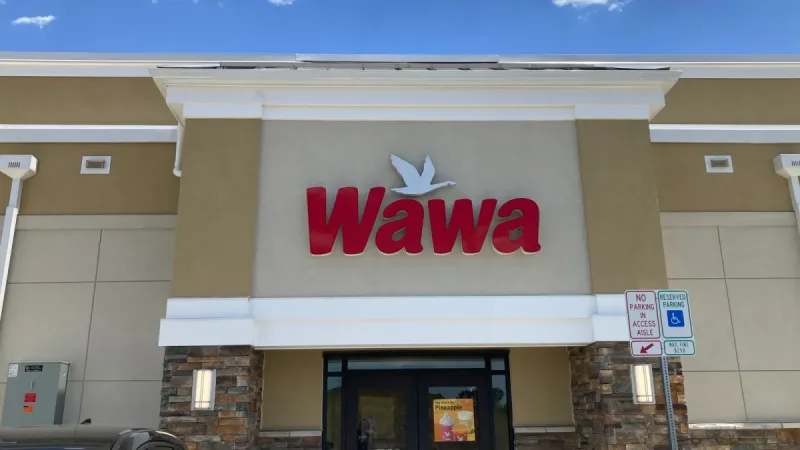
Wawa Elevates Long-Tenured Executive to CIO Role
The convenience store chain has named Bill O'Donnell, a 25-year company veteran, as its new chief information technology officer, putting him in charge of tech strategy, cybersecurity and digital operations.

ServiceNow Debuts Flow, a Conversational Service Desk Built for Speed Over Complexity
ServiceNow is rolling out Flow, a natural language service desk tool that automates employee requests through Slack and Microsoft Teams without requiring a full IT service management overhaul.