California Tightens Rules on Robotaxis as Incidents Mount
A new state law sets safety standards and accountability measures for autonomous vehicle operators, requiring local support staff and penalties for blocking emergency responders.
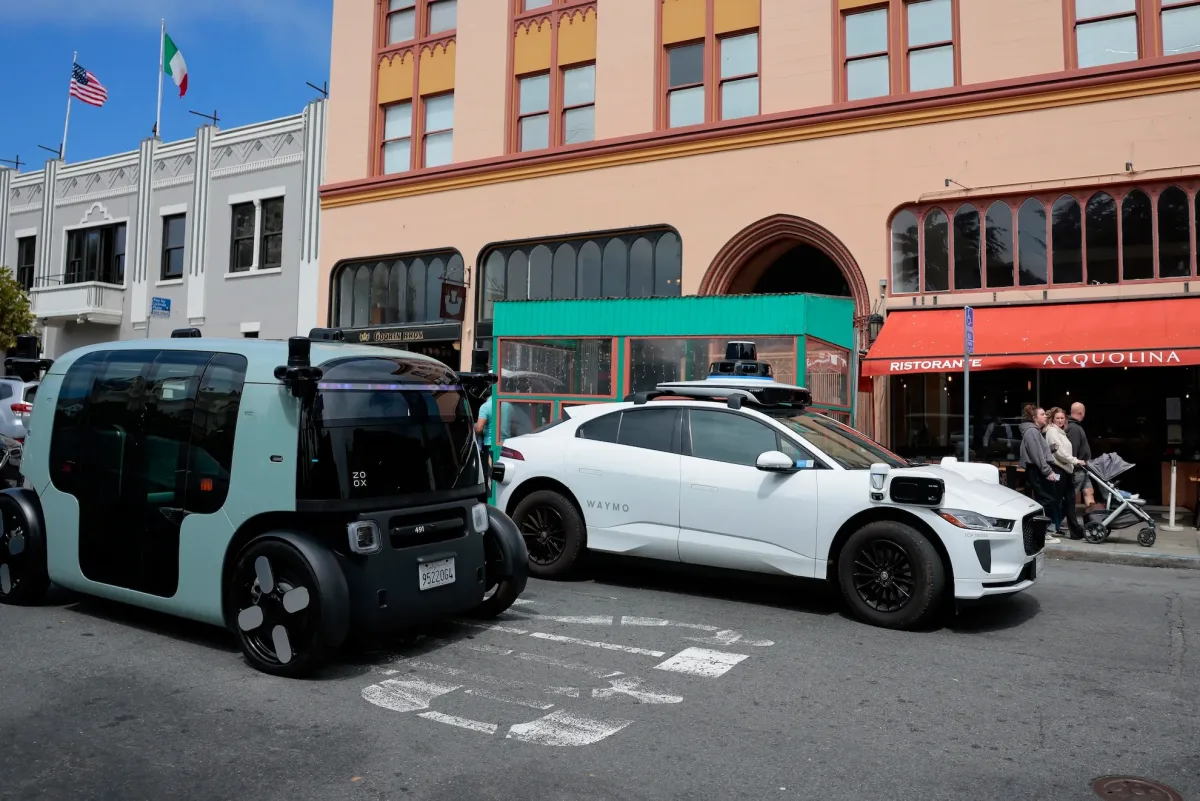
Autonomous vehicles have become a common sight on San Francisco streets, with Waymo's fleet operating with relative smoothness most days. Yet disruptions have mounted: robotaxis have obstructed traffic, entered active crime scenes, and hindered emergency response efforts across multiple regions. In some instances, first responders have had to physically relocate the vehicles themselves.
The state of California is moving to prevent these problems from escalating as the robotaxi sector expands. Senate Bill 1246, signed by Governor Gavin Newsom this week, establishes fresh requirements for autonomous vehicles aimed at strengthening safety protocols and accelerating response times when vehicles malfunction or interfere with emergency personnel. The legislation also establishes enforcement mechanisms to penalize non-compliance.
Companies including Tesla, Waymo, and Zoox must now supply on-site assistance from local personnel when their vehicles cause disruptions. They face financial penalties if a robotaxi blocks emergency services for longer than 30 minutes. The law mandates that remote operators be U.S.-based and possess valid American driver's licenses. Firms must alert local authorities about vehicle locations and system-wide outages, and must deploy "local incident technicians" to respond to accidents and obstructions.
Implementation details will be finalized by California's Department of Motor Vehicles, which oversees autonomous vehicle regulation in the state. The law takes effect in July 2028. While the measure may not eliminate all conflicts between robotaxis and emergency responders, it could reduce incidents and strengthen accountability when problems occur.
The broader question remains whether other states will adopt comparable standards or defer to federal guidance.
Deals
- Harbinger, an electric vehicle startup, secured a $300 million contract to furnish FedEx with 2,000 electric trucks.
- HyperGuest, a travel technology company based in Israel, closed a $25 million funding round led by AMI, the investment division of Apax Partners.
- REGENT Craft, maker of the all-electric Seaglider, expanded its partnership with the U.S. Marine Corps Warfighting Lab, bringing the total contract value to $19.25 million.
- Quartermaster, a maritime intelligence startup headquartered in Arlington, Virginia, raised $140 million in Series B funding. Insight Partners, Overmatch Ventures, and First Round Capital contributed approximately $100 million, while Stifel provided $40 million through a debt facility.
- Voltaback, a French fleet management software company, raised €2.8 million from the European investment fund Serena.
Notable reads and other tidbits
Aurora's announcement of 30,000 autonomous trucks operational by the end of 2030 prompted deeper investigation. The company's CFO David Maday explained the strategy and reasoning behind this ambitious target.
BMW introduced its redesigned 2027 3 Series, offering both gasoline and electric variants with nearly identical specifications. The pricing comparison favors one powertrain over the other.
DoorDash revealed additional details about DoorDash Air, its drone delivery division, describing both the autonomous aircraft and ground infrastructure systems.
Kodiak has partnered with Ikea to begin driverless deliveries on public roads later this year. Autonomous trucks will transport Ikea merchandise without onboard operators across a 219-mile section of Interstate 45 connecting Houston and Dallas.
Lyft agreed to pay $272.5 million to resolve litigation alleging the company violated California employment law by categorizing drivers as independent contractors rather than employees. The settlement addresses violations predating the voter approval of Prop 22, which permits ride-hailing firms to maintain contractor classifications.
Researchers at Northeastern University examined 21 recent-model vehicles from 17 manufacturers and 30 companion applications. Their findings revealed that automobiles gather extensive personal information and transmit it to numerous technology firms, including Adobe, Contentsquare, Google, Microsoft, Meta, Snap, and Yahoo.
SpaceX's Starship rocket achieved orbital velocity for the first time, though the flight involved significant challenges.
Rivian posted record-breaking quarterly sales driven by the new R2 SUV. The company maintains its forecast of 65,000 to 70,000 vehicles for the year. However, the R2 has encountered some issues. Rivian initiated a recall addressing fasteners on the high-voltage battery pack that may be insufficiently tightened, potentially resulting in power loss during operation.
Tesla delivered more than 480,000 electric vehicles in the third quarter, marking the second consecutive strong performance following a slower opening to the year. The company postponed its Roadster 2 event due to unfavorable weather conditions.
While Tesla's traditional automotive operations remain robust, the company aspires to be recognized as an artificial intelligence and robotics enterprise. Elon Musk unveiled his fourth Master Plan one year ago, promising "amazing abundance" via robotaxis, humanoid robots, and AI technology. As noted in recent reporting, "What that means, more than a year later, is still tricky to pin down." Tesla has now secured $30 billion in new credit facilities that may support expansion of future offerings, including the Optimus robot and the Cybercab robotaxi.
One more thing
Disrupt 2026, TechCrunch's flagship annual conference in San Francisco, arrives in days. A 30% discount on tickets is available using code mobility30.
The event features an onstage interview with Rivian CEO RJ Scaringe on October 13. Additional sessions include a panel discussion titled "Building AI Systems When Failure Is Not an Option" with Mikell Taylor, director of robotics strategy at GM; Nathan Michael, CTO of Shield AI; and Waabi founder and CEO Raquel Urtasun. Another panel, "How to Win When You're Not Building AI," will feature Also CEO Chris Yu, Yuri Sagalov from General Catalyst, and Shan Shan from Baillie Gifford. Speakers and panelists from Cerebras, Nvidia, OpenAI, and Replit are also scheduled.
MyMonthly Car, a participant in the Startup Battlefield 200 program, has earned a place to exhibit at the conference.
Read more
Wawa Elevates Long-Tenured Executive to CIO Role
The convenience store chain has named Bill O'Donnell, a 25-year company veteran, as its new chief information technology officer, putting him in charge of tech strategy, cybersecurity and digital operations.

ServiceNow Debuts Flow, a Conversational Service Desk Built for Speed Over Complexity
ServiceNow is rolling out Flow, a natural language service desk tool that automates employee requests through Slack and Microsoft Teams without requiring a full IT service management overhaul.

Figma expands London footprint as UK becomes top European market
The design platform is deepening its presence in the United Kingdom with a larger London office, where two-thirds of FTSE 100 companies now use Figma.