Four Core Qualitative Research Methods for Understanding User Behavior
Usability testing, user interviews, field studies, and diary studies form the foundation of qualitative research in UX. Each method answers different questions about how people behave, what they need, and why they make the choices they do.

Qualitative research methods reveal the reasoning behind user behavior, answering the why and how questions that quantitative approaches cannot. This overview examines four widely used techniques—usability testing, user interviews, field studies including contextual inquiry, and diary studies—and explains when and how to deploy each one. The guide complements quantitative research methodologies and provides rough comparative estimates for cost and difficulty, though actual expenses will vary based on your tools, participant pool, and how you adapt each method.
Qualitative vs Quantitative Research
These two research approaches serve distinct purposes. Qualitative investigation explores the behaviors, experiences, needs, and problems people face. It yields observations and themes derived from small participant groups. Quantitative investigation measures phenomena, revealing patterns and frequency: how many people, how much, and how often. It produces numerical findings based on larger samples analyzed through statistical methods.
The methodology itself does not determine whether a study is qualitative or quantitative. Usability testing, for instance, can work for both. Your research question and study design make the distinction. A qualitative usability test with a handful of participants identifies problems and their causes. A quantitative usability test with roughly 40 participants measures metrics such as success rate and time on task.
The two approaches strengthen each other: qualitative research illuminates what is happening and why, while quantitative research demonstrates how widespread the finding is.
Why Qualitative Research
Most UX teams conduct substantially more qualitative studies than quantitative ones, and justifiably so. Qualitative methods offer flexibility, relatively low expense, and applicability at nearly every project phase.
However, because qualitative methods appear straightforward—observe a few users, interview a few more—they are also prone to misuse. Selecting an inappropriate method or executing the right one carelessly produces unreliable findings and unwarranted confidence. Executed properly, qualitative methods enable you to:
- Identify design flaws and their underlying causes
- Grasp user needs, objectives, frustrations, and mental models before designing
- Observe actual behavior in real settings, including the workarounds, interruptions, and additional tools people employ
- Foster team empathy by witnessing genuine users struggle with your product, often more persuasive than any written report
Choosing a Method
Begin with your research question. What information do you require?
An evaluative question seeks to identify design problems and understand their origins. Examples include: Do people locate and comprehend shipping costs before checkout? Why are users leaving our signup form? Which prototype elements confuse people? For these inquiries, qualitative usability testing is typically appropriate. (Note: if you need to measure design performance such as success rate or time on task, quantitative usability testing is necessary instead.)
A generative question aims to understand user needs, behaviors, and experiences. Examples include: What frustrates people most when planning vacations? How do nurses access patient records during their shift? How do people select a meal-delivery app, and does this change over time? For these questions, user interviews, field studies, or diary studies are likely suitable. To decide among them, consider:
- Do you need to observe what people do, or is hearing about it sufficient? Interviews are efficient but depend on memory. If actual behavior accuracy matters, observation is preferable
- Does context matter? If tools, interruptions, or other people influence the experience, or if actual behavior accuracy is critical, conduct a field study. (For specialized or complex work, contextual inquiry may be ideal)
- Does the experience span days or weeks? If yes, a diary study captures it better than a single session
Start with your research question: a few yes-or-no questions will direct you toward the appropriate qualitative method.
Qualitative Usability Testing
- Use: Identifying problems in a design and understanding why they occur
- Cost: Low–Medium
- Difficulty of Collection: Medium
- Difficulty of Analysis: Low–Medium
- Type of Method: Behavioral (what people do)
- Context of Use: Task-based
- Typical Sample Size: About 5 participants per user group, per round of testing
During a usability test, a facilitator instructs a participant to complete realistic tasks using a design while observing actions and listening to commentary. Participants typically think aloud—verbalizing thoughts as they work—so you can capture their expectations, confusion, and reasoning in real time.
In qualitative usability testing, the design itself is central. The participant completes realistic tasks while the facilitator observes, documents, and poses followup questions as needed. These tests can occur in person or remotely.
Though qualitative and quantitative usability testing appear similar on the surface, they pursue different objectives. Quantitative usability testing gathers metrics like success rate and time on task. Qualitative usability testing prioritizes observations: Where did people encounter difficulty? What did they anticipate would occur? Why did they select the wrong link? Since the goal is understanding rather than measurement, the facilitator can pose followup questions and modify the study as it progresses.
A large participant pool is unnecessary. For a typical qualitative study with a single user group, testing with 5 users identifies many common usability issues. Additional participants typically yield diminishing returns, so rather than investing your budget in one extensive study, test with a few people, address findings, and test again.
Qualitative usability testing functions at any stage, from paper prototypes to deployed products. Sessions can be conducted in person, remotely with a facilitator, or remotely without one. Each format affects cost and session control.
The primary hazard is unintentionally biasing participants. Minor wording issues in your tasks can direct people to search for a particular word or feature, and an inexperienced facilitator can alter participant behavior by interrupting at inopportune moments. Skilled facilitation requires experience.
User Interviews
- Use: Learning about users' experiences, needs, pain points, and motivations
- Cost: Low
- Difficulty of Collection: Medium
- Difficulty of Analysis: Medium
- Type of Method: Attitudinal (what people say)
- Context of Use: Not using product
- Typical Sample Size: Often 5–12 for a focused study; 20–30 or more for a broad one
An interviewer poses questions to a participant about a topic, listens to responses, and asks probing questions to deepen understanding. Interviews prove particularly valuable during discovery phases, when determining who your users are, what their circumstances entail, and which problems you might address. These insights frequently feed into outputs like personas and customer-journey maps.
In a user interview, participants do not interact with a design. The interviewer follows a guide of open-ended questions, and the participant does most of the speaking. Interviews can be conducted in person or remotely.
User interviews are frequently conflated with usability tests, yet they serve different functions. A usability test assesses a design by observing usage. An interview generates new understanding about people's experiences; participants typically do not see or use a design.
A strong interview is a formal research endeavor, not a casual conversation. Establish clear research objectives, then develop an interview guide containing a few open-ended questions that encourage discussion. Inquire about specific instances rather than general patterns. For instance, "Tell me about the last time you booked a vacation" yields richer, more precise details than "How do you usually book vacations?" Follow up with probes such as "Tell me more about that" or "Why was that important to you?"
How many interviews are necessary? This depends on how expansive your research objectives are and how diverse your users are. Five interviews may be insufficient for exploratory work. Begin with a modest sample (5 or 6), analyze continuously, and include additional participants until new insights cease emerging.
Interviews carry a significant constraint: they capture reported behavior, not observed behavior. People forget details, omit information they don't perceive as relevant, and occasionally present themselves favorably. Additionally, data quality hinges on interviewer competence. A few leading questions can compromise an entire study. When actual behavior matters, pair interviews with an observational method.
Field Studies (Including Contextual Inquiry)
- Use: Understanding users' real environments, workflows, tools, and workarounds
- Cost: Low-High
- Difficulty of Collection: High
- Difficulty of Analysis: High
- Type of Method: Behavioral and attitudinal (mostly what people do)
- Context of Use: Natural use
- Typical Sample Size: Small; recruit until you reach saturation
A field study takes place in the participant's natural setting—their home, workplace, vehicle, retail location, or hospital ward—rather than a lab or meeting room. Field studies and diary studies are both context methods: they demonstrate how people behave in reality, not in a hypothetical scenario you've constructed.
Context uncovers information you wouldn't think to ask about. Observing people in their own space reveals the sticky notes on their screens, the spreadsheet running alongside your app, the colleague they consult for guidance, and the constant interruptions disrupting their work. You also witness the discrepancy between what people claim they do and what they actually do.
Field studies range from fully immersive to narrowly focused. Common varieties include:
- Direct observation: The researcher watches without intervening or asking questions
- Contextual inquiry: The researcher combines observation with in-the-moment questions
- Customer-site visits: The customer guides the researcher through their facility or system
- Ethnography: The researcher immerses themselves in a group's setting for an extended period
Whichever type you select, emphasize observation over questioning. Once you've invested in visiting someone in person, the most valuable data is what they actually do.
Field studies can be costly if extensive travel is necessary to reach your users. They can also be logistically complex because they may require permissions and coordination around participants' schedules. Additionally, they can be challenging to analyze due to the volume of unstructured data they generate. However, a straightforward field study does not demand a team of anthropologists. Every design team member can and should participate in customer visits periodically.
Contextual Inquiry
Contextual inquiry stands among the most valuable field methods for UX teams. It merges intensive observation with interviews to grasp work practices and the reasoning underlying them, and it can sometimes be executed remotely. The approach draws from the relationship between a master craftsperson and an apprentice. The participant (the master) performs their work normally. The researcher (the apprentice) observes, then pauses to ask questions when something is unclear or to verify an interpretation. Sessions typically follow 4 parts:
- Primer: Build rapport, explain the session, and get a summary of the work
- Transition: Explicitly shift from interviewing to observing, so the participant knows to work normally while you watch
- Contextual interview: Alternate between watching and discussing what you've seen
- Wrapup: Summarize your interpretations so the participant can correct or confirm them
During contextual inquiry, the participant works as usual at their desk while researchers observe and take notes. Seeing people in their actual workspace reveals the tools and workarounds they depend on, which they seldom mention in an interview.
Contextual inquiry is potent because, as people execute a task, they can explain what they're doing and why—details they may struggle to recall later. In one redesign initiative, insurance specialists described a straightforward copy-and-paste workflow during interviews. Observing them at work uncovered extra steps they hadn't mentioned, such as checking a second application for missing information and repeatedly clicking Save despite the software saving automatically. Both discoveries influenced the redesigned interface.
Contextual inquiry works best for intricate systems, involved processes, and specialist users. It is excessive for simple interfaces, like a newsletter-signup form.
A frequent mistake: participants may revert to interview mode and start describing their work instead of performing it. A distinct transition (and gentle reminders to work as usual) helps prevent this.
Diary Studies
- Use: Understanding behaviors and experiences over time and in context
- Cost: Medium
- Difficulty of Collection: High
- Difficulty of Analysis: High
- Type of Method: Attitudinal and self-reported behavioral (what people say they do)
- Context of Use: Natural use
- Typical Sample Size: About 5–12 for small discovery projects; 12–30 for large ones
In a diary study, participants record their activities and experiences as they occur, over days, weeks, or even a month or longer. For instance, you might ask people to document every time they use a meal-delivery app over 3 weeks, or ask nurses to log every interaction with patient-health records.
Diary studies document something no single-session method can: how behaviors and perceptions shift over time. They suit research questions about habits, extended customer journeys, how people learn a system, and how they switch between channels and devices.
Like field studies, diary studies are a context method. However, because they operate remotely and asynchronously, they typically cost less than field studies and simplify including participants across multiple locations.
Unlike field studies, diary studies depend on self-reporting rather than observation. Because participants document events shortly after they happen, a diary study somewhat mitigates the recall issues inherent in interviews. However, it does not fully eliminate self-report biases.
Participants typically generate entries in one of three ways:
- Event-based: They log an entry whenever a relevant event occurs
- Interval-based: They log an entry at regular intervals (for example, every evening)
- Signal-based: They log an entry whenever you prompt them (for example, by text message)
Diary studies demand substantial planning. You must select a logging tool, compose clear instructions and sample entries, and establish a reporting period long enough to capture the behavior in question. Plan to review entries as they arrive, enabling you to pose followup questions while the experience remains fresh. Many diary studies also include a pre-study briefing and conclude with a followup interview to examine each participant's entries thoroughly.
Since participants commit to days or weeks of effort, anticipate some dropout. Overrecruit, and provide higher incentives than you would for a single session.
All data is self-reported, so diary studies share interview limitations. They also generate substantial qualitative data: allocate ample time for analysis.
Combine Methods
You seldom must select just one method. Certain combinations prove especially effective:
- Begin a usability test with a brief interview to understand the participant's background (but avoid questions highlighting design elements you're testing)
- Interview participants before or after observing them in the field
- Bookend a diary study with an introductory briefing and a followup interview
- Follow a qualitative study with a quantitative one to determine how prevalent your findings are
Consider Time and Cost
After the research question, budget and timeline typically rank as the next most significant factors.
Qualitative usability testing and user interviews represent the most economical and fastest methods discussed. A basic usability study may require as little as 3 days of effort: one to prepare, one to conduct testing, and one to examine findings. Remote sessions can further reduce costs by eliminating travel and facility rental.
Diary studies cost more than single-session approaches because of higher incentives, time spent monitoring participants, and (occasionally) specialized software. Field studies can prove most expensive if substantial travel is required. If field visits are financially unfeasible, a remote diary study can deliver comparable contextual insights.
The participant count also influences cost. Sample sizing operates differently in qualitative research than quantitative research. Rather than calculating participants needed for statistical significance, researchers employing generative methods (interviews, field studies, and diary studies) pursue saturation.
Saturation is the point in a qualitative study where additional sessions no longer produce new insights that would change your themes.
Saturation can be reached with just a few participants when research questions are fairly specific (e.g., how nurses hand off patient records at a shift change). Broader objectives or more heterogeneous users require more participants (e.g., how people use personal assistants).
Qualitative usability testing differs somewhat. Rather than conducting one large study until problems stop appearing, we suggest distributing your budget across multiple small testing rounds: test with a few users, fix discovered problems, and test the revised design. The first few users in a round surface most common problems, so each additional user largely repeats prior findings. A new round, however, demonstrates whether your fixes succeeded and uncovers problems the earlier ones concealed. This is why we recommend 4–6 users per round.
Next Steps
Once you've selected a method, study it before beginning. This article includes links throughout, plus a Resources section at the end.
Be aware: Qualitative does not mean informal. Qualitative findings rest on the researcher's observations and interpretations. Unlike quantitative data, they lack statistical safeguards against random variation. This means rigor is essential at every stage:
- Establish clear research objectives before planning your sessions
- Recruit participants representing your actual users
- Prevent leading questions and other behaviors that sway participants
- Examine your data methodically (for instance, via thematic analysis or affinity diagramming) rather than depending on the most striking quotes
Executing qualitative research well demands practice. Yet it remains the most direct path to discovering what your users require and whether your designs function for them.
Read more

Equifax Slashes Database Support Tickets by Moving Oracle Billing System to AWS
The credit bureau migrated its massive billing database to Oracle Autonomous AI Database on AWS, eliminating the need for query tuning and cutting daily support workload from 15-20 tickets to just one or two per month.
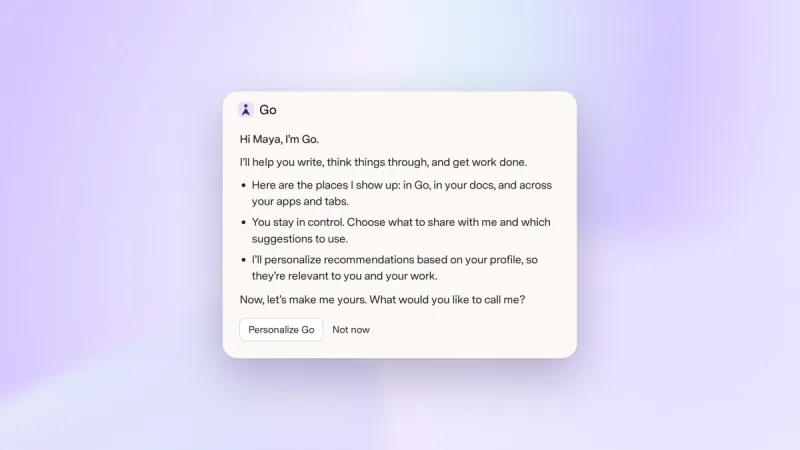
Superhuman Rebrands From Grammarly, Launches Personal AI Agent Across Productivity Suite
The company formerly known as Grammarly has unveiled an expanded Go platform featuring a customizable personal AI assistant that operates across its entire product lineup, alongside new agentic capabilities in Docs and Mail.

Why Dark Patterns Are Tanking E-Commerce Conversions: What 100 Store Audits Reveal
An analysis of 100 major online retailers found that manipulative design tactics—fake urgency, hidden fees, forced subscriptions—deliver short-term conversion bumps but destroy customer lifetime value and invite regulatory action.