Equifax Slashes Database Support Tickets by Moving Oracle Billing System to AWS
The credit bureau migrated its massive billing database to Oracle Autonomous AI Database on AWS, eliminating the need for query tuning and cutting daily support workload from 15-20 tickets to just one or two per month.

The nature of multicloud strategy has shifted. Rather than simply choosing which provider hosts which workload, database vendors are now deploying directly into the cloud environments where enterprises already operate. For many organizations, this shift is unlocking value that extends far beyond routine infrastructure tasks, particularly as artificial intelligence initiatives gain prominence.
Equifax Inc., the credit reporting firm, exemplifies this trend. The company has transitioned virtually its entire on-premises data center footprint to cloud environments, distributing operations across Amazon Web Services Inc., Google LLC's Google Cloud, and Oracle Corp.'s cloud infrastructure. Avinash Singh, vice president of technology services at Equifax, outlined the company's approach during an appearance at Oracle AI World.
Migrating without rewriting
Equifax's worldwide billing infrastructure depends on Oracle's billing and revenue management platform, which processes billions of transactions monthly through rating and invoicing functions. Previously, the supporting database operated on Amazon Relational Database Service for Oracle, but the system approached a 65-terabyte capacity limit. Oracle Autonomous AI Database on AWS, powered by Exadata infrastructure, offers petabyte-scale capacity within the same cloud environment, positioning it as enterprises accelerate their adoption.
The migration preserved the existing application architecture on AWS—only the database layer changed. According to Singh, "There is zero code writing because it is just about migrating the data from one database to another." The transition occurred without service interruption.
Performance gains materialized immediately after the system launched in April. Database statistics collection on nearly 100 terabytes of data compressed from three to four days down to three to four hours. Following configuration adjustments, batch processing throughput increased dramatically—transactions that previously handled 100 to 200 rows per operation now manage 15,000 to 30,000 rows.
https://www.youtube.com/embed/6WuK0oCGvJ8?feature=oembed
Singh emphasized the operational impact: "Our rating improved almost 200% to 300%. We are able to close our books way before what we have been closing." The database optimization proved so effective that manual query tuning became unnecessary. Singh noted, "Their performance optimizer is so advanced that we don't need to tune a single query. Just think about that. Fifteen to 20 tickets per day turns into one to two tickets per month."
Read more
Four Core Qualitative Research Methods for Understanding User Behavior
Usability testing, user interviews, field studies, and diary studies form the foundation of qualitative research in UX. Each method answers different questions about how people behave, what they need, and why they make the choices they do.

Superhuman Rebrands From Grammarly, Launches Personal AI Agent Across Productivity Suite
The company formerly known as Grammarly has unveiled an expanded Go platform featuring a customizable personal AI assistant that operates across its entire product lineup, alongside new agentic capabilities in Docs and Mail.
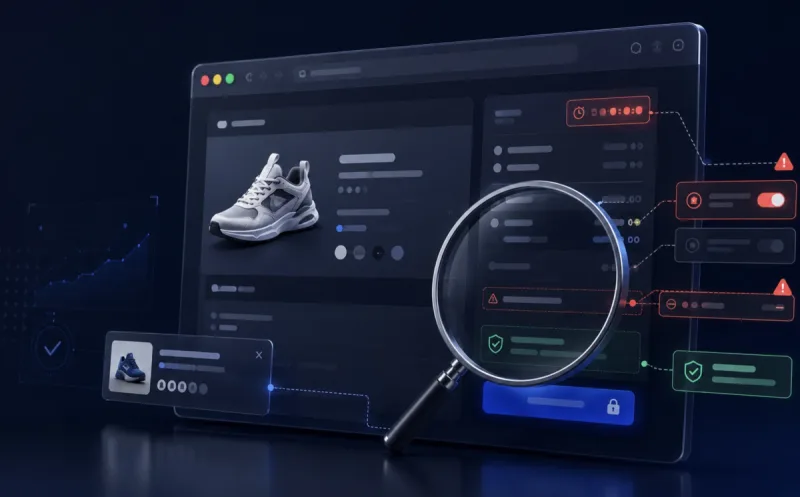
Why Dark Patterns Are Tanking E-Commerce Conversions: What 100 Store Audits Reveal
An analysis of 100 major online retailers found that manipulative design tactics—fake urgency, hidden fees, forced subscriptions—deliver short-term conversion bumps but destroy customer lifetime value and invite regulatory action.