Five under-the-radar startup deals: orbital mirrors, breathing tech, and AI garbage trucks
A monthly look at interesting startup funding rounds that may have escaped notice reveals bets on space-based solar enhancement, wellness devices, waste management software, factory automation and affordable space research.

Each month, this column examines five startup funding rounds that warrant attention despite flying below the mainstream radar. This edition spans an eclectic mix of industries, from orbital infrastructure to consumer wellness to industrial automation.
$73.5M to reflect sunlight from space
Solar energy faces an inherent constraint: darkness falls every evening. Reflect Orbital, headquartered in Hawthorne, California, is pursuing an unconventional remedy. The company plans to position massive mirrors in orbit to bounce sunlight back to Earth, potentially enabling solar installations to continue producing power well into the night.
The startup disclosed $73.5 million in fresh funding, bringing cumulative capital raised to over $102 million. Sequoia Capital, Lux Capital and Starship Ventures—all prior investors—joined new participants Buckley Ventures, Convective Capital, The Uncommon Group and Salesforce Ventures 1 in the round.
Reflect Orbital is constructing compact, collapsible reflective surfaces intended for deployment aboard satellites in low Earth orbit. Beyond extending solar generation, the company envisions applications including illuminating disaster areas for nighttime rescue efforts or lighting construction zones after hours.
The technology remains unvalidated in actual orbit. Reflect Orbital has set second quarter 2027 as the target for its initial demonstration mission, which has secured FCC clearance. Capital from this round will support those early launches, continued reflector refinement, and business development efforts.
The funding announcement arrives amid exceptional momentum in space technology investment. Through late August, capital flowing into space and satellite ventures globally reached $20.3 billion, already surpassing prior year records.
$62M to make better breathing a bigger business
Adhesive nasal strips have existed for decades, yet Intake Breathing Technology believes significant innovation remains possible. The Santa Barbara-based wellness brand announced a $62 million investment from Camino Partners, an investment vehicle established by KIND Snacks founder Daniel Lubetzky.
Intake manufactures a proprietary magnetic nasal dilator intended to widen nasal passages and boost airflow. Rather than depending on a traditional adhesive strip affixed across the nose, the product employs adhesive tabs paired with a reusable magnetic band that pulls the nose's sides outward.
The company targets consumers seeking improved breathing during sleep, physical activity or everyday life. Intake reports selling over 100 million pairs of breathing tabs since 2023, with triple-digit annual revenue expansion during the preceding three years.
Intake intends to deploy the new capital toward scaling beyond its direct-to-consumer channel into conventional retail distribution. Lubetzky's track record transforming KIND into a mainstream consumer brand positions him to guide this expansion.
The investment reflects growing venture appetite for fitness and wellness opportunities. Startups in these sectors garnered more than $3.6 billion in global funding during the first half of 2026, positioning the category for its strongest year since 2022.
Notably, much 2026 capital in this space has concentrated on wearable devices and AI-driven health platforms. Intake represents a different thesis: a straightforward physical product that has apparently built substantial demand without pledging to revolutionize medicine through technology.
$12M to bring AI to the garbage-hauling business
Waste collection may seem straightforward, yet operating the companies that manage it proves far more intricate than expected. San Francisco-based TrashLab Software secured $12 million in a growth-stage round headed by Ventana, with existing backers Bienville Capital, Harlem Capital and CreativeCo also participating.
TrashLab has constructed an AI-enabled operations platform serving waste-collection enterprises, many of which still depend on spreadsheets, paper-based routing and outdated systems for fleet coordination.
The platform integrates dispatch, route optimization, customer relations, invoicing and payment processing. An AI assistant named Haul-E handles incoming customer calls and order intake, while truck-mounted cameras document issues like overflowing receptacles, obstructed containers or missed pickups.
TrashLab claims hundreds of waste operators across the U.S. and Canada employ its software, with over 5 million tons of material processed via the platform to date.
The waste sector has attracted multiple AI-focused startups. Greyparrot, a London company, applies computer vision to categorize and examine waste at recycling plants. While Greyparrot addresses post-collection processing, TrashLab tackles the complicated logistics of transporting waste to facilities.
$10M to let engineers program factories in plain English
Industrial automation has advanced considerably, though configuring the controllers that govern production equipment still demands specialized skills and substantial time investment.
Neuron Industries, based in Gardena, California, aims to streamline this process considerably. The company announced a $10 million seed round jointly led by FCVC and Obvious Ventures, with backing from Y Combinator, Thin Line Capital, Zee Prime Capital and Founder Factor.
Neuron is constructing a novel industrial controller—the device managing sensors, motors and machinery in production environments—paired with AI software enabling engineers to specify machine behavior using everyday language.
The system produces control code that engineers can review, adjust and simulate before deployment to actual hardware. The objective is cutting the engineering time and specialized knowledge required to commission new production lines.
Neuron reports successful testing on operational factory equipment, including retrofitting a wood-processing line's aging controller in approximately three hours of engineering effort and eight hours of downtime. Commercial availability of its Cortex AI Controller is planned for early 2027.
The investment reflects a broader expansion in physical AI funding—artificial intelligence applied to robotics, autonomous systems, industrial machinery and comparable real-world equipment. Such startups attracted $47.4 billion globally across 521 transactions during the first half of 2026, nearly quadruple the second half of 2025 total.
€6.9M to make space experiments more affordable
Historically, conducting experiments in space demanded years of preparation, technical specialization and substantial financial resources. Austria-based Tumbleweed is working to reduce entry costs to approximately 15,000 euros.
The Vienna startup raised 6.9 million euros (approximately $8 million) in seed funding led by PactVC, with contributions from Vanagon Ventures, Prototype Capital and EWOR, among others. The company characterizes this as Austria's largest space-tech seed investment.
Tumbleweed manufactures standardized containers called Pods, enabling researchers and organizations to perform microgravity experiments without constructing custom satellites or navigating space mission certification requirements.
Customers insert experiments into pre-approved containers that supply power and communications while in orbit. Tumbleweed manages launch logistics and data transmission back to Earth.
Unlike numerous space startups still awaiting initial launches, Tumbleweed has already deployed hardware to orbit. Its first Oasis Alpha satellite launched in July carrying experiments from four paying customers, including biological research and space-resource investigations. The mission reached full capacity a year before liftoff.
Tumbleweed plans to execute three additional missions in 2027 and develop an advanced spacecraft enabling customers to retrieve physical samples beginning in 2028.
Tumbleweed participates in an expanding European space startup landscape, though investment concentration remains elsewhere. By late August, European companies had captured roughly 10% of global space-tech venture funding in 2026, compared with over 60% directed toward U.S. startups.
Read more

Silicon Valley faces rising threat from intelligence operatives using romance and friendship as cover
As alleged honey-trap schemes targeting tech executives gain attention, security experts warn that founders and employees across the industry remain dangerously unprepared for social engineering attacks designed to extract valuable corporate secrets.

Science's $400M Neurotech Round Tops Week of Major Funding Announcements
A brain-computer interface startup led this week's funding activity, with eight other U.S. companies securing nine-figure rounds as market momentum persists despite recent tech stock volatility.
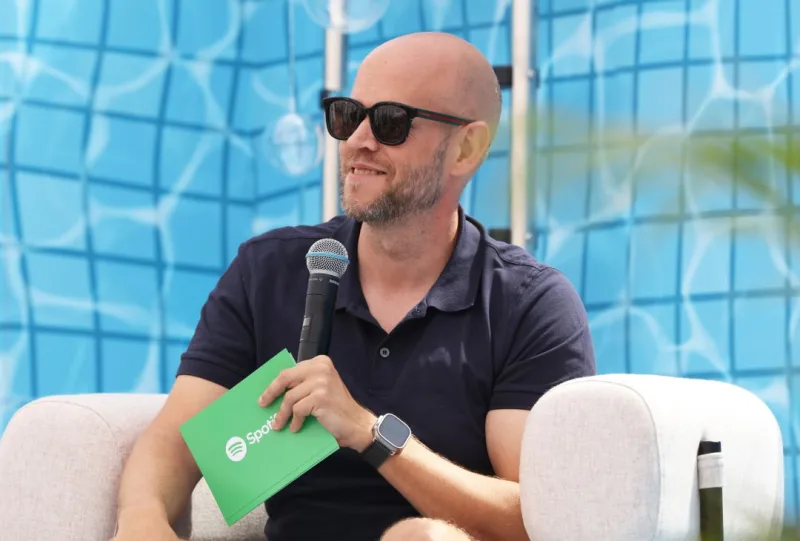
Spotify's Daniel Ek Invests in Europa Fusion, an AI Researcher's Bet on Simulation-First Power
Nantas Nardelli, a machine learning veteran from Google DeepMind and Microsoft Research, has launched a fusion startup backed by Spotify founder Daniel Ek. His approach diverges from hardware-heavy competitors by prioritizing simulation and data.