Spotify Founder's Health Screening Startup Neko Brings Preventative Medicine to the U.S.
The body-scanning company co-founded by David Ek has arrived in New York with a 300,000-person waitlist and backing from nearly $1 billion in funding.

Neko Health is capturing significant attention as a preventative health screening platform. The company, which was created by Spotify founder David Ek alongside Hjalmar Nilsonne, employs sophisticated diagnostic technology to detect potential problems affecting blood composition, skin condition, and metabolic function. Originating in Sweden, the startup has accumulated close to $1 billion in total funding and has now established operations in New York. The organization reports that its global waitlist has already surpassed 300,000 individuals.
Farooq Abbasi, an investor from Preface Ventures who participated in the company's funding, believes Neko Health represents a transformative approach to preventative medicine, particularly in the United States where healthcare infrastructure faces well-documented challenges. He points out that Americans have historically underutilized preventative care services due to cost concerns. Neko Health currently charges $500 for a one-hour screening session, which insurance plans do not cover but may qualify as an eligible expense under Health Savings Account provisions. According to Abbasi, "I think preventative care and healthcare should be cheap and accessible."
https://playlist.megaphone.fm?e=TCML7767615384%20
The company is pursuing expansion throughout the United States market. Abbasi has personally undergone the scan twice and expressed enthusiasm about the experience. "I think there should be Neko clinics everywhere," he said. He has observed substantial improvements in the screening's capabilities since his initial experience. "In my generation one scan, it was a blood test with 15 biomarkers," he said. "It was fifty-five this time."
Neko incorporates advanced computer vision technology in its scanning process, which Abbasi views as evidence of artificial intelligence's expanding role in healthcare advancement. He contends that Neko Health transcends typical wellness trends by delivering what he describes as "actionable insights to make their lives better." Despite the company's momentum, significant hurdles remain, including scaling operations and navigating regulatory requirements in the U.S. market. Abbasi maintains an optimistic outlook, expressing confidence that additional venture capital will flow toward promising companies and that existing obstacles can be overcome.
Read more
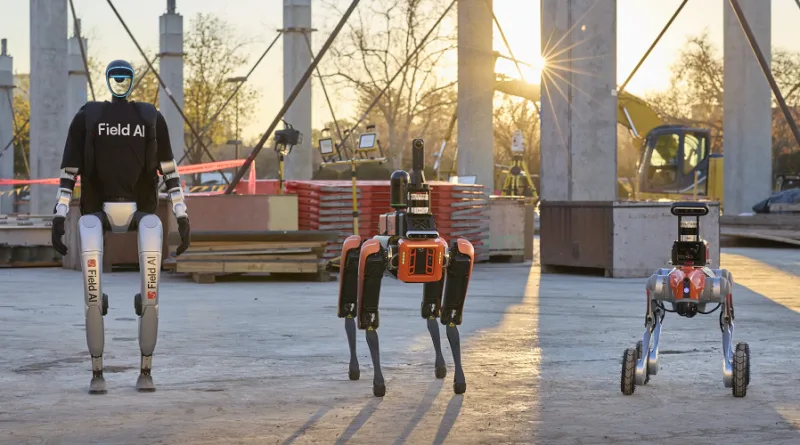
FieldAI Seeks $700M at $10B Valuation as Robot AI Demand Accelerates
The robotics AI startup is in advanced fundraising talks that would quintuple its valuation from last year, according to sources familiar with the matter.

Tech hiring slows even as employers post record open positions
A surge in IT job listings to three-year highs masks a contraction in actual hiring, with technology sector roles declining and unemployment ticking upward.

Venture Capital Floods Into Marine Startups as Investors Bet on Ocean Technology
Nearly $3 billion in venture funding has flowed into nautical and marine-focused startups over the past year, with autonomous vessels, water robotics and ocean data emerging as the dominant investment categories.