Five-Nation Alert Over Cisco SD-WAN Flaw Exploited in Sophisticated Espionage Operation
A critical vulnerability in Cisco's Catalyst SD-WAN platform went undetected for three years before attackers weaponized it to steal data and establish persistent network access, triggering coordinated warnings from the US, UK, Australia, Canada, and New Zealand.
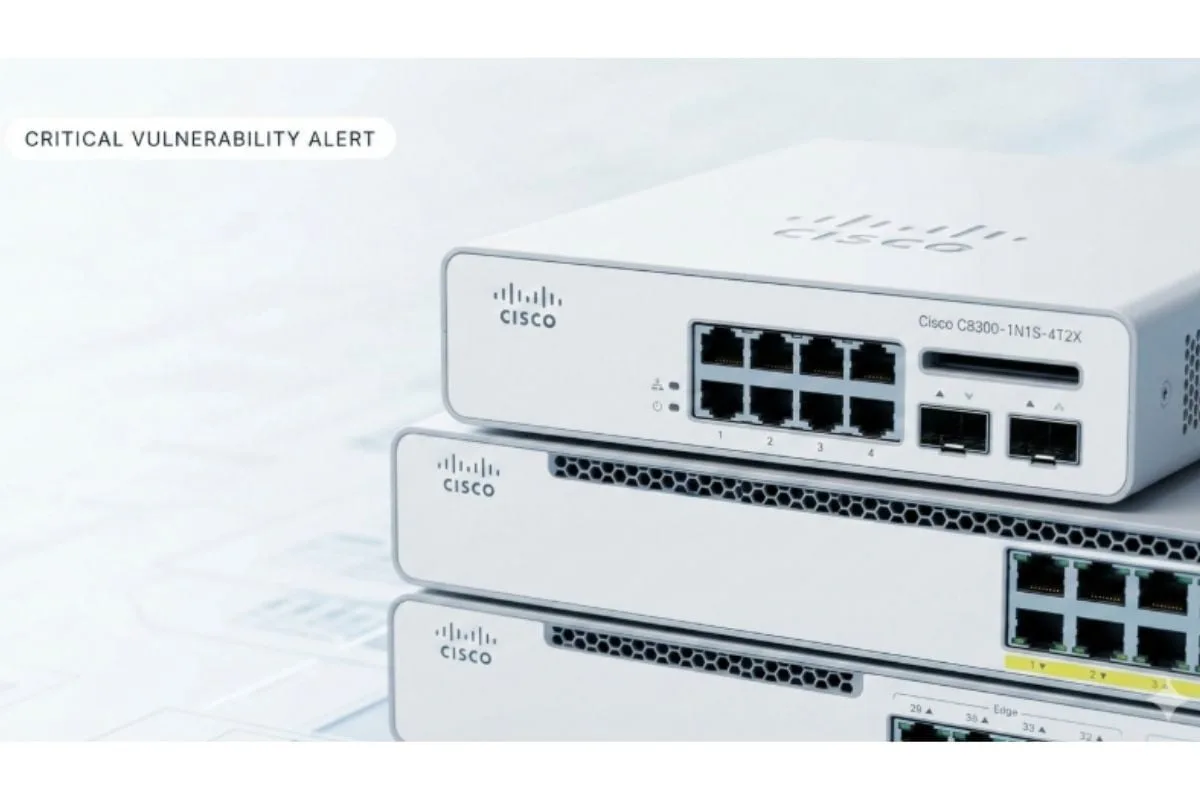
A critical security flaw lurked within Cisco's Catalyst SD-WAN products for approximately three years before threat actors discovered and exploited it. Cisco has now confirmed that the vulnerability, designated CVE-2026-20127, enabled attackers to circumvent authentication mechanisms, obtain elevated system privileges, and exfiltrate sensitive information. The confirmation led to an unprecedented coordinated alert from government cybersecurity agencies across five nations: the United States, United Kingdom, Australia, Canada, and New Zealand.
The attack's sophistication extended beyond the initial breach. Intruders combined the primary flaw with a separate, previously disclosed vulnerability to achieve root-level access, establish backdoor accounts, and eliminate forensic evidence. While no threat group has publicly claimed responsibility, investigative findings suggest a single unidentified threat actor, provisionally designated UAT-8616, orchestrated the campaign.
Technical details of the incident
CVE-2026-20127 carries a critical severity rating with a base score of 10.0 and an impact score of 6.0, underscoring the urgency of remediation efforts. Successful exploitation enables data theft and facilitates downstream cyberattacks against compromised organizations.
According to analysis from Talos, the vulnerability in Catalyst SD-WAN products allowed remote attackers to bypass authentication protections. By transmitting specially crafted requests to vulnerable systems, threat actors could obtain administrative credentials and escalate to an elevated, non-root privileged account within the system architecture.
Initial system compromise did not immediately grant root privileges. However, an investigation conducted by Australian government intelligence specialists uncovered that attackers subsequently leveraged the built-in update mechanism to downgrade the controller software. This downgrade exposed a second vulnerability, CVE-2022-20775, which permits root access to authenticated non-root users operating locally on the system.
Upon obtaining root access, the attacker established local user accounts mimicking legitimate system accounts and re-exploited CVE-2026-20127 to maintain persistent access to the environment. The attacker then restored the controller to its original software version, concealing the downgrade operation.
The Australian government's cyber investigation report documented an absence of command-and-control communications and no evidence of lateral movement beyond the Catalyst SD-WAN infrastructure. Nevertheless, investigators identified multiple defense evasion tactics, including systematic deletion of system logs, shell command histories, and network connection records.
Who is behind the attack?
No threat group has publicly claimed responsibility for the campaign, and cybersecurity researchers have not definitively attributed the activity to any known threat actor organization.
Certain operational patterns observed during the investigation suggested a single source behind the intrusions. Because these patterns cannot be conclusively linked to any established threat group, the activity has been assigned the temporary designation UAT-8616.
How organizations should respond
Cisco and participating government agencies have issued guidance for affected organizations. The primary recommendation involves examining controller system logs, with particular emphasis on exporting logs to external storage systems to prevent attackers from erasing evidence.
Additional protective measures include positioning controllers behind firewalls configured with stringent IP-based access controls.
For comprehensive detection and response strategies, organizations should reference technical advisories from Cisco Talos, the NSA Joint Cybersecurity Advisory, and the Australian government's cyber report. Organizations in the United Kingdom, Canada, and New Zealand should additionally consult guidance documents published by their respective national cybersecurity authorities.
Read more

California Tightens Rules on Robotaxis as Incidents Mount
A new state law sets safety standards and accountability measures for autonomous vehicle operators, requiring local support staff and penalties for blocking emergency responders.

Wawa Elevates Long-Tenured Executive to CIO Role
The convenience store chain has named Bill O'Donnell, a 25-year company veteran, as its new chief information technology officer, putting him in charge of tech strategy, cybersecurity and digital operations.

ServiceNow Debuts Flow, a Conversational Service Desk Built for Speed Over Complexity
ServiceNow is rolling out Flow, a natural language service desk tool that automates employee requests through Slack and Microsoft Teams without requiring a full IT service management overhaul.