Daiwa and Deloitte chart phased path for quantum-safe cryptography rollout
Organizations moving toward post-quantum cryptography can reduce complexity by treating the transition as a staged migration rather than a single technical overhaul, according to security leaders from Daiwa Institute of Research and Deloitte.
The shift to post-quantum cryptography becomes far less daunting when enterprises view it as a migration program rather than a theoretical physics challenge. As the industry moves from planning into actual deployment, companies have the opportunity to validate what already works while managing around pieces still in development.
Even straightforward technical transitions demand years to complete once organizational factors like budgeting, product lifecycles and governance structures come into play. Hands-on testing and incremental rollout strategies can break down the challenge and demystify what needs to happen, according to Colin Soutar, managing director at Deloitte Touche Tohmatsu Ltd.
I would take the word 'quantum' out of it. I think that the misconception is that one needs to be an expert [or] have a background in physics to understand what's needed here. There is a threat out there in the future … and the steps to mitigate that are generally known. Working through it again is relatively straightforward, albeit large and complex.
Colin Soutar, managing director at Deloitte Touche Tohmatsu Ltd.
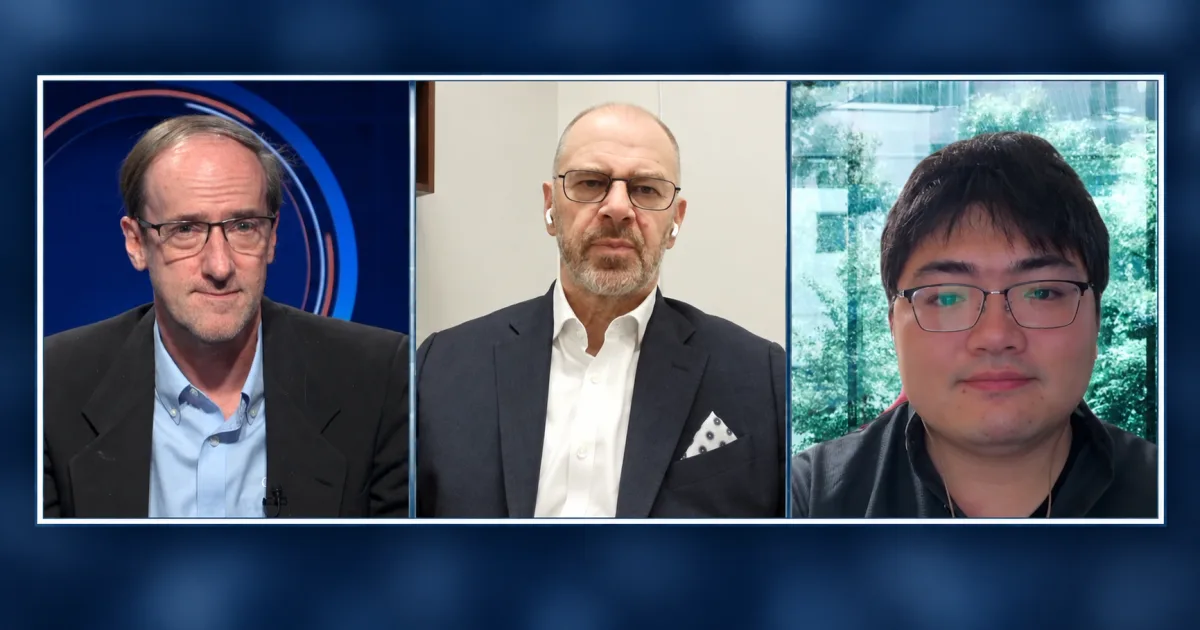
Soutar and Sadaaki Yamazaki, senior security specialist for the Digital Solution R&D Department at Daiwa Institute of Research Ltd., shared their insights during DigiCert's World Quantum Readiness Day, speaking with Tim Hollebeek, vice president of industry standards at DigiCert Inc., in a conversation broadcast on theCUBE.
Starting with what already works
Daiwa tested a hybrid cryptographic approach in a controlled setting for Daiwa Securities' online trading platform. The proof of concept deployed a post-quantum-capable load balancer to assess Transport Layer Security behavior under real-world operating conditions, Yamazaki explained.
In our measurements, the average TLS handshake time increased by approximately 1.2 milliseconds. In our environment, which operates in a high-bandwidth data center, the impact was negligible. However, PQC increased both message sizes and packet counts. Organizations operating over wireless networks or constrained bandwidth environments should carefully validate the impact in their own environments.
Sadaaki Yamazaki, senior security specialist for the Digital Solution R&D Department at Daiwa Institute of Research Ltd.
Readiness varies significantly depending on which cryptographic function is being addressed. Federal Information Processing Standard 203, released by the National Institute of Standards and Technology, represents one component of the staged approach Yamazaki outlined.
We understand the attraction of doing everything at once, but key establishment and digital signature are at different stages of readiness. For key establishment, ML-KEM has already been standardized, and hybrid key exchange such as X25519MLKEM768 is becoming available in products and platforms. This is also the part of TLS that can address the 'harvest now, decrypt later' risk, so there is a security benefit to adopting it earlier.
Sadaaki Yamazaki
Governance becomes the limiting factor at scale
When rolling out post-quantum cryptography across large enterprises, the real bottleneck shifts from technical capability to organizational prioritization. While a comprehensive system inventory remains the ultimate objective, beginning with that step can stall momentum when infrastructure and accountability span many different teams, Soutar noted.
About two years ago, we actually started advocating not to do a full discovery in the first instance. Ultimately, you will build towards that, but we think it's much more important to iteratively tackle this, show some results as well [and] start to do discovery around your most critical assets or systems.
Colin Soutar
Enterprise-level public key infrastructure touches certificates, authentication mechanisms, code signing, application programming interfaces, virtual private networks and cloud platforms. These functions live across infrastructure and applications controlled by separate organizational units, Yamazaki noted.
The difficult part is not replacing a single algorithm. The difficult part is identifying where cryptography is used, understanding dependencies and coordinating migration across the organization. From our perspective, technology is only part of the challenge. Governance and cryptographic inventory are likely to be the larger challenges.
Sadaaki Yamazaki
Read more

California Tightens Rules on Robotaxis as Incidents Mount
A new state law sets safety standards and accountability measures for autonomous vehicle operators, requiring local support staff and penalties for blocking emergency responders.

Wawa Elevates Long-Tenured Executive to CIO Role
The convenience store chain has named Bill O'Donnell, a 25-year company veteran, as its new chief information technology officer, putting him in charge of tech strategy, cybersecurity and digital operations.

ServiceNow Debuts Flow, a Conversational Service Desk Built for Speed Over Complexity
ServiceNow is rolling out Flow, a natural language service desk tool that automates employee requests through Slack and Microsoft Teams without requiring a full IT service management overhaul.