Vectorial AI Raises $3M to Deploy Simulated Users in Product Development
The startup has secured seed funding to expand its behavioral simulation platform, which generates consumer feedback by modeling thousands of synthetic users rather than relying on traditional research methods.
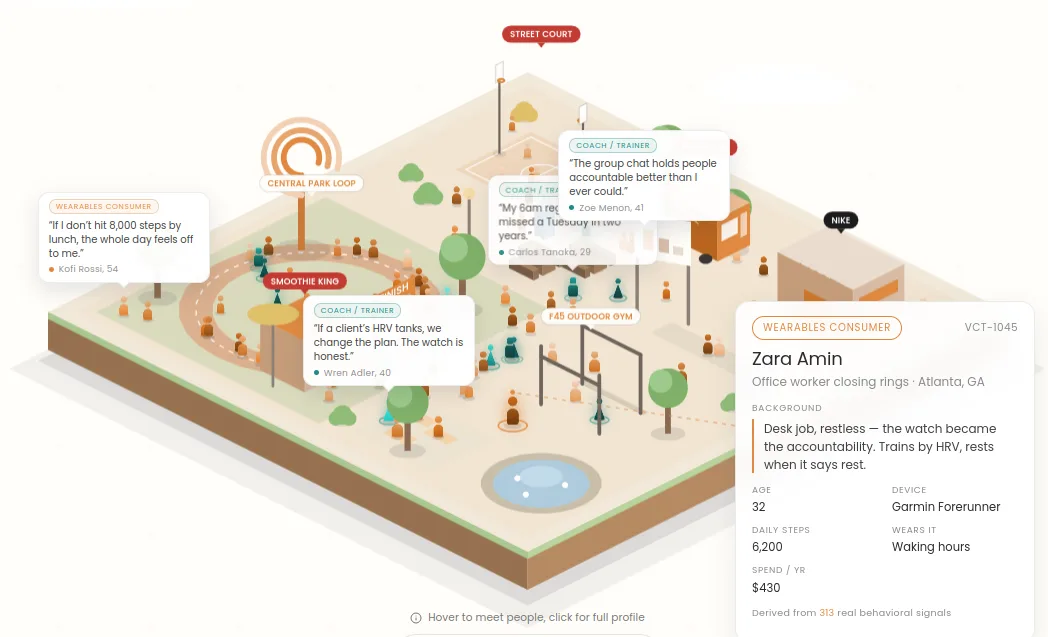
Vectorial AI Inc. announced a $3 million seed funding round to accelerate deployment of its artificial intelligence platform designed to simulate human behavior and deliver product feedback at scale. Smilegate and SenseAI Ventures jointly led the round, with participation from University of California at Berkeley and Stanford University ecosystem funds. Angel investors from Meta Platforms Inc., Mastercard Inc. and Shopify Inc. also participated.
The startup identifies a fundamental gap in how companies approach product development. While AI has dramatically sped up software engineering and code generation, consumer research remains trapped in conventional practices. Most organizations still depend on surveys of small participant groups—typically 50 to 100 people—that require weeks to complete. Many smaller companies skip user research entirely, betting on assumptions rather than data.
Vectorial co-founder and Chief Executive Taranveer Singh explained the company's strategic positioning: "We believe AI is creating two distinct frontiers. One focuses on reasoning and solving complex problems, while the other focuses on simulations and decoding human behavior." Rather than recruiting actual users, Vectorial's platform generates thousands of synthetic participants within specified demographic segments, continuously updating its models to reflect emerging trends and behavioral patterns.
Singh contends that simulated feedback achieves comparable accuracy to traditional methods and predicts this approach will become standard for new consumer products within approximately four years. Competing solutions have attempted similar approaches but, according to Singh, have fallen short. AI-moderated interviews still require real participants and multiple days to organize. Synthetic agent approaches lack grounding in actual consumer behavior, making their outputs unreliable.
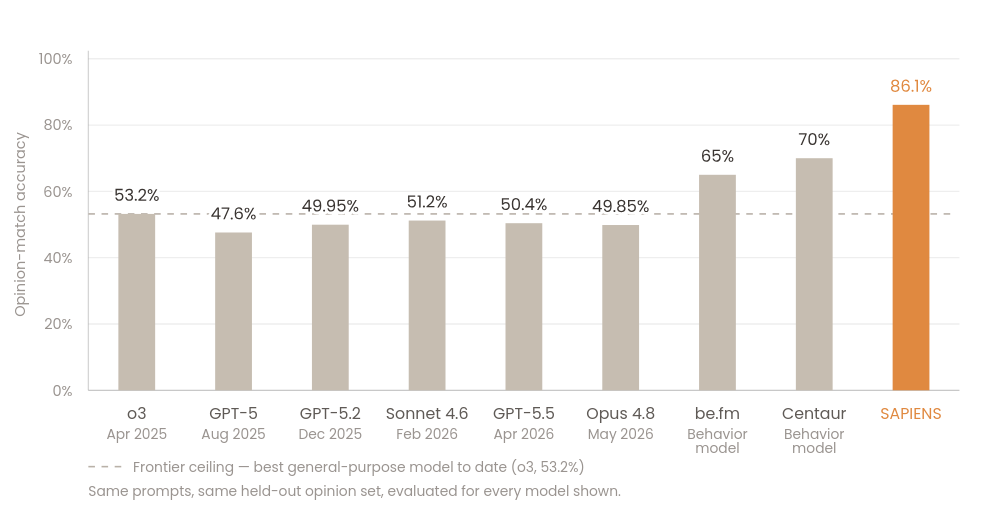
Vectorial's differentiator lies in embedding simulated audiences directly into development workflows, providing continuous feedback throughout the product creation process. The platform runs on SAPIENS, a behavior model trained on data from more than 2.5 million real consumers across socio-demographic, psychographic and behavioral dimensions. Chief Product Officer Rahul Garg noted that SAPIENS achieves 30% greater accuracy than general-purpose models in predicting consumer behavior. The new funding will support expansion of the behavioral dataset and development of SAPIENS 2.0.
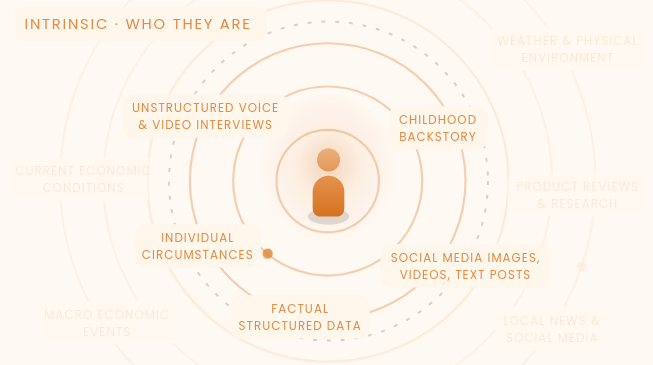
Garg emphasized that model capability alone is insufficient: "We put behavior models to work inside the product development loop. We believe this fundamentally changes how products are designed and built, because it puts users in the room where you build."
Early adoption demonstrates measurable traction. E-commerce, gaming and healthcare companies including GoodRx Inc., Boat, Everkind Inc. and Concrete Software Inc. are using the platform, running an average of 600 simulations monthly. Vectorial's testing against real user studies shows typical accuracy around 86%.
Rahul Agarwalla of SenseAI Ventures cited this accuracy as a primary reason for backing the startup. He observed that most organizations struggle to understand user needs and therefore fail to capitalize on AI-accelerated development cycles. "Vectorial replaces the slow theater of surveys with millions of simulated humans using the product and providing insights," Agarwalla said. "This is a new class of AI designed to predict human behavior, and not just the next word like LLMs do."
Read more

Legora closes $550M Series E as legal AI competition heats up
The legal automation platform reached an $8.8 billion valuation while doubling its annual recurring revenue to over $200 million, matching a rival's fundraising haul.

From Vague Pitch to Industrial AI Leader: How Nexxa's Philipp Wehn Found His Focus
Nexxa founder Philipp Wehn credits a shift in mindset—from playing not to lose to playing to win—with transforming his startup's pitch and attracting a16z's speedrun program.
Blacksmith reaches $1B valuation with $66M Series C from Sequoia
The developer platform for building and testing software, including AI-generated code, has achieved unicorn status just two months after its previous funding round.