Mach9 lands $34M to scale AI-powered CAD platform for construction surveys
After pivoting from robotics hardware to software, Mach9 has built an AI system that automates civil engineering design work. The startup just closed a Series A led by First Round Capital and Bessemer Venture Partners.
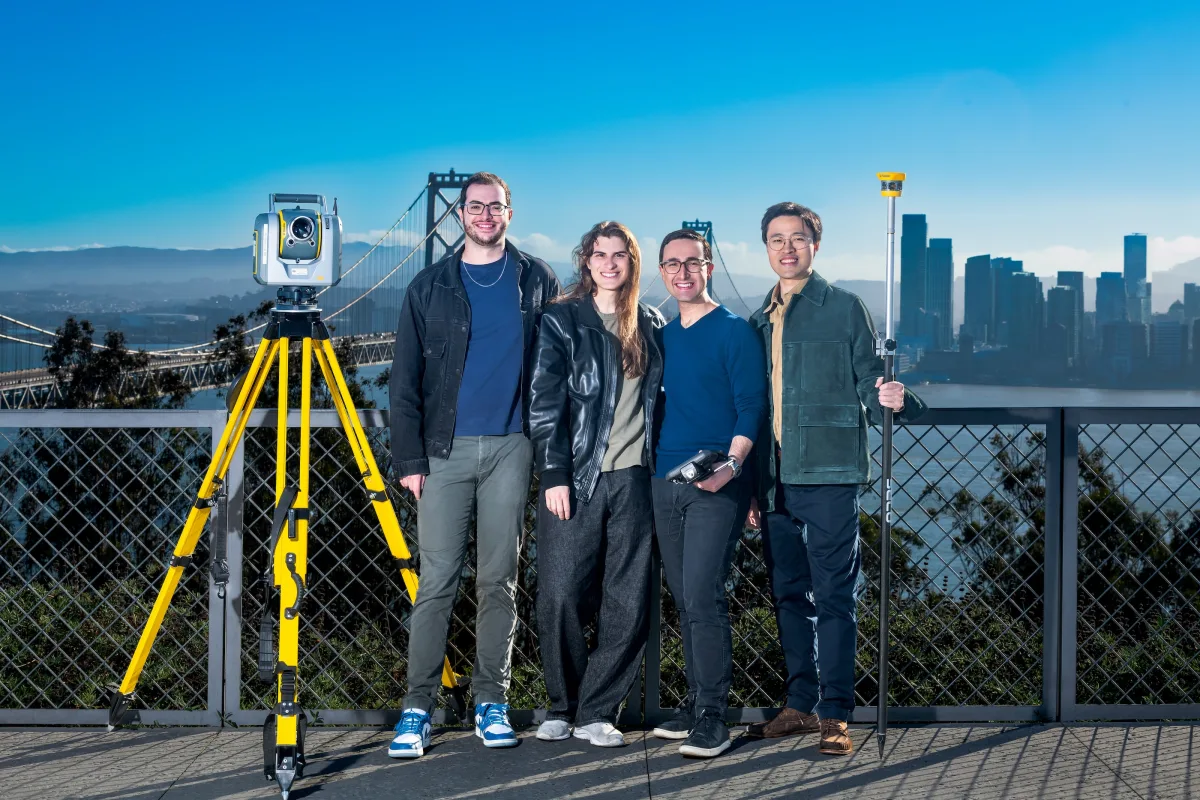
When Alex Baikovitz launched Mach9 Robotics in 2021, the mission centered on delivering civil engineers a faster, more affordable approach to visual inspections. The startup sought to dismantle bureaucratic barriers and refresh the sluggish, antiquated systems constraining construction across America.
After developing the hardware over several years, Baikovitz encountered an unexpected insight: the equipment itself was not the limiting factor. "We saw how tedious it was for civil engineering organizations to take data from these amazing laser scanners and image data capture systems and turn that into a usable survey," he told TechCrunch, describing the detailed site maps engineers rely on for design. "The real pain was in their workflows," he continued, "and how to turn all the endless amounts of data that they're able to collect into . . .information that people can use to make the best design and asset management decisions across the board."
Baikovitz stripped "Robotics" from the company name and redirected efforts toward building AI-driven computer-aided design (CAD) software. The strategy proved successful: Mach9 has attracted nearly 100 customers testing its private beta, deploying it across more than 2,500 projects.
This traction enabled Mach9 to secure fresh capital. The company announced a $34 million Series A on Wednesday, with First Round Capital and Bessemer Venture Partners as co-leads. Prudence, a New York-based early-stage investor specializing in AI software for construction and real estate, and Quiet Capital, already a shareholder, also participated.
Mach9 competes in a crowded field of startups modernizing construction workflows. CivilGrid secured $26 million in August for its underground mapping platform, while Blueprints AI, which generates code-compliant architectural drawings in minutes using AI, ranked among the top 200 finalists at TechCrunch Disrupt.
Baikovitz identified CAD software as a prime disruption target because it remains among the slowest and most labor-intensive stages of the construction pipeline. "It takes months to be able to deliver a project, and about a week per mile for someone to do manually in the legacy incumbent software that's built by the Autodesk and Bentley Systems of the world," he explained.
Mach9 claims its platform accelerates this process tenfold while slashing expenses substantially. The software enables surveying and civil engineering teams to "expand their own capacity and take on more types of work, bigger projects, and expand the reach of how reality-capture data can influence major infrastructure decisions," according to Baikovitz.
Building proprietary AI models
Mach9 constructed and refined its own AI models internally to achieve the centimeter-level precision that construction and infrastructure demand. "That's not something that a lot of off-the-shelf models are able to do or deliver at in any capacity," Baikovitz said. "A big part of what our development process has looked like since 2024 has been, how do we build the industry leading models that can turn imagery or these multimodal image and laser scan data sets into survey grade like geometry, like tracing out the curbs, the pavement striping, all of this exactly how our customers want it to be at the accuracies that the industry demands."
The system generates an initial draft from survey information, which engineers then modify. Mach9 furnishes "all of the tools to draw, remove, adjust vertices, assess the quality of the AI-generated model, so that they can put effectively their name behind the deliverable that they're producing, because there is a lot of liability in this particular industry, and it requires licensed professionals that know what they're looking at," Baikovitz noted.
Deploying the funding
Baikovitz indicated the capital will support three priorities: advancing the product, recruiting construction industry veterans, and expanding "all parts of our organization to keep up with where the market is taking us."
Looking back, Baikovitz expressed gratitude for the initial hardware venture. It furnished a tangible offering for customer conversations, and those same customers ultimately signaled they needed superior software rather than cheaper devices. "I'm not interested in getting this cheaper, lower-cost hardware," one VP told him, but better software could "improve our efficiency in delivering these big statewide transportation mapping initiatives." Such initiatives benefit states including Texas by making them "much more like safe [and] effective."
Read more

Legora closes $550M Series E as legal AI competition heats up
The legal automation platform reached an $8.8 billion valuation while doubling its annual recurring revenue to over $200 million, matching a rival's fundraising haul.

From Vague Pitch to Industrial AI Leader: How Nexxa's Philipp Wehn Found His Focus
Nexxa founder Philipp Wehn credits a shift in mindset—from playing not to lose to playing to win—with transforming his startup's pitch and attracting a16z's speedrun program.

Blacksmith reaches $1B valuation with $66M Series C from Sequoia
The developer platform for building and testing software, including AI-generated code, has achieved unicorn status just two months after its previous funding round.