From Vague Pitch to Industrial AI Leader: How Nexxa's Philipp Wehn Found His Focus
Nexxa founder Philipp Wehn credits a shift in mindset—from playing not to lose to playing to win—with transforming his startup's pitch and attracting a16z's speedrun program.
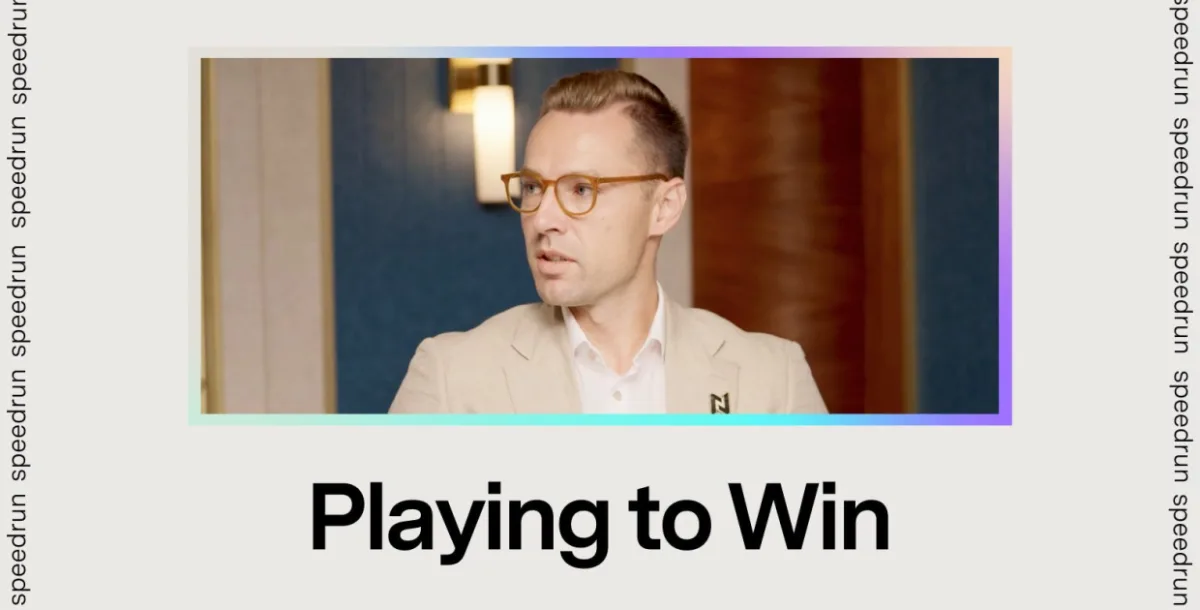
When Philipp Wehn first submitted his speedrun application, his description of Nexxa was so abstract that he now struggles to parse it himself. His original pitch read: "Nexxa is a pioneering process automation platform that applies intelligent reasoning, which enables enterprises to automate the most complex repetitive processes with higher resiliency than existing solutions." Wehn laughed when recalling those words during a conversation with a16z's Troy Kirwin. "I have no idea what that means anymore," he said.
Six months later, when Wehn applied to speedrun's fifth cohort, his message had crystallized entirely. His new pitch: "We build industrial AI agents for operations and heavy industries." Looking back, Wehn says he would only tweak it slightly by adding one word—making them specialized industrial agents.
Finding the focus
The transformation happened through customer work. In fall 2024, Nexxa was pitching itself as a broad automation platform to chief information officers, but the company lacked direction. That changed when Nexxa completed its first proof of concept at Siemens, where Wehn discovered that the workflows requiring the most attention were those demanding "highly complex, specialized AI systems to solve the problem."
Wehn's decade in industrial operations suddenly made sense. "The entire industrial sphere runs on this," he explained. "90% of the problems are specialized." Between his first and second speedrun applications, Nexxa moved from having no customer traction to running two pilots and securing its first signed contract.
The personal shift was equally significant. "I turned from a German founder into an American founder between those applications," Wehn said.
The ten-minute application
The two applications bore little resemblance in their execution. Wehn and co-founder David Huang, whom he describes as detail-oriented, spent roughly two days perfecting the first submission. During that same period, Wehn was attempting to raise a pre-seed round and encountering consistent skepticism. "Specialized AI doesn't scale" became the refrain he heard repeatedly from investors.
The second application took approximately ten minutes. Wehn wrote it after playing tennis, without using AI tools or revisions, and harbored minimal expectations of acceptance. "I just said: this is who we are, this is what we're going to do, and this is the proof that we can do it," Wehn recalled.
Comparing the two side by side, Wehn recognized the philosophical difference in his own approach. "Here I was playing it safe. I was playing not to lose," he said of the first application. Gesturing to the second: "And here, I started to play to win."
The a16z review team noticed the shift immediately. Troy Kirwin was struck by the precision of the traction section, particularly a specific lighting-related deal that Wehn had noted as being "discounted to $50K." ("I think that's the German in you," Kirwin joked.) The speedrun team contacted Nexxa's customers directly. "They loved the product, they loved you," Kirwin told him. Once they met in person, "it was obvious from the first 60 seconds."
The acceptance held profound personal significance for Wehn. Four and a half years earlier, when he first arrived in Silicon Valley on a Siemens visa, his initial act was to drive to the a16z office on Sand Hill Road to photograph the sign. After receiving the speedrun handshake, he and his wife spent roughly an hour processing the moment, with a young child at home and another on the way. "I came here as an immigrant and an outsider," he said, "but this program really made me an insider."
Momentum since speedrun
The pace of growth has accelerated sharply. Nexxa has now raised approximately $20 million and expanded to roughly 30 employees across the United States, with a new office launching in Munich. The company recently closed a six-figure contract in Austria and recruited three board advisors: the former chief executive of Schaeffler, the former chief information officer of Boeing, and the former chief procurement officer of Airbus. Wehn characterizes this as "a positive flywheel that started with speedrun," where hiring improvements drove customer wins, which in turn unlocked additional opportunities.
Nexxa's advice for other founders
When advising other speedrun founders, Wehn stresses the importance of narrowing scope. "90% of things you can do are BS. 10% matter," he said, crediting the program with teaching him to execute "a clean fundraise." He also learned that founders operate within "a specific short window" for investor engagement, a lesson he had missed earlier. "Investors can deliver rocket fuel when we need it," he said, "but in order to get to the point of needing it, they are not the best use of a founder's time."
On the broader trajectory of artificial intelligence, Wehn remains optimistic. "Deployment is the single biggest gap in AI," he said. "We have made enough progress to deploy for 5–10 years and have a massive impact on humanity. Adoption is the biggest leap we must see."
Read more
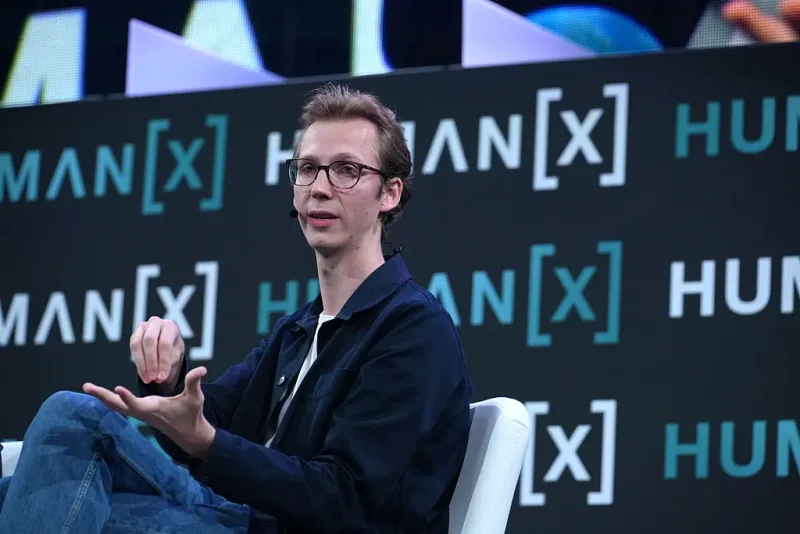
Legora closes $550M Series E as legal AI competition heats up
The legal automation platform reached an $8.8 billion valuation while doubling its annual recurring revenue to over $200 million, matching a rival's fundraising haul.
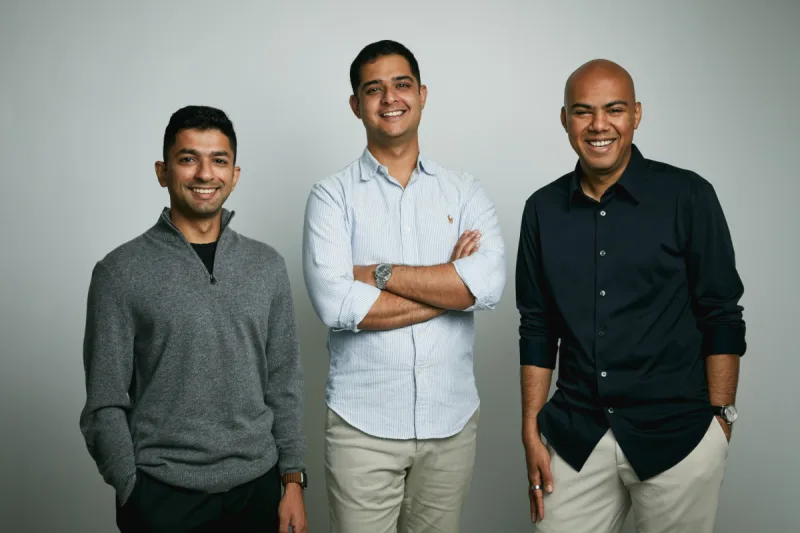
Blacksmith reaches $1B valuation with $66M Series C from Sequoia
The developer platform for building and testing software, including AI-generated code, has achieved unicorn status just two months after its previous funding round.
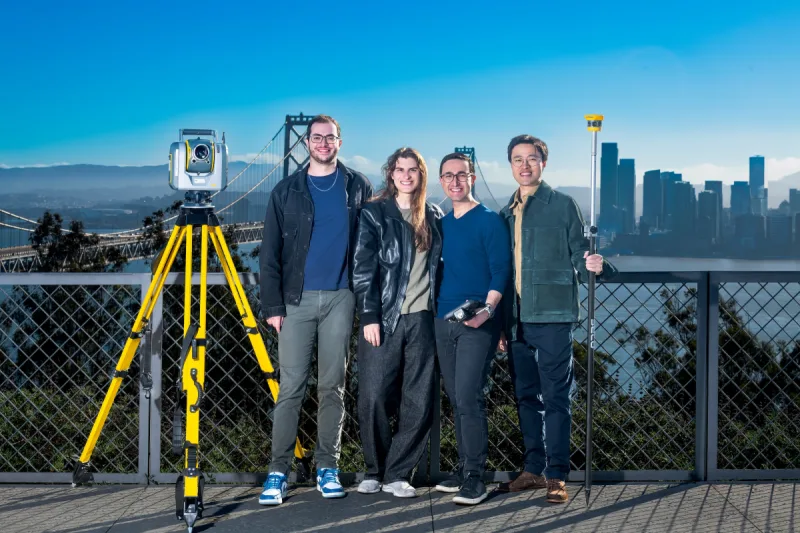
Mach9 lands $34M to scale AI-powered CAD platform for construction surveys
After pivoting from robotics hardware to software, Mach9 has built an AI system that automates civil engineering design work. The startup just closed a Series A led by First Round Capital and Bessemer Venture Partners.