Tressfecta tackles the physical toll of professional hair braiding with automation
Aisata Diallo, a 24-year-old braider-turned-founder, is building tools to reduce the strain hairstylists face during long braiding sessions. Her startup's first product, Plait Pilot, automates the hair-separation process that can consume hours of a stylist's day.
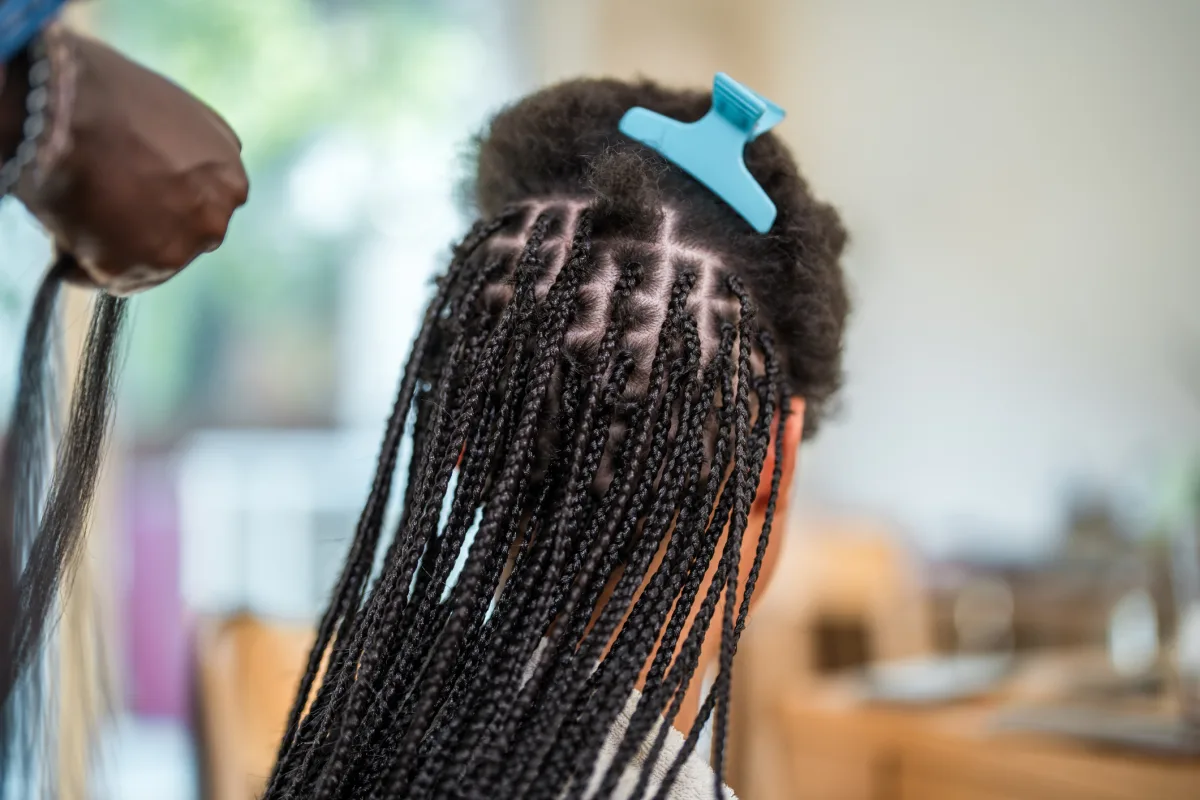
Aisata Diallo describes herself as someone who has braided hair for as long as she can remember. "I've always braided my hair growing up and, at some point in my college career, started braiding other people's hair," she explained. While attending Northeastern University in Boston, she noticed a shortage of braiders and specialists trained in textured hair care. This gap prompted her to launch her own braiding business.
The work exposed her to the grinding realities of the profession. "Throughout that experience, I was very close to some of the pain points in the styling process and complained about it constantly," Diallo said. Braiding demands hours of manual labor—a single style can require eight hours of work. Practitioners frequently suffer from cramping and carpal tunnel syndrome as a result of standing for extended periods while manipulating hair into intricate patterns.
The physical demands eventually forced Diallo to step back from braiding altogether. "I stopped braiding, and one of the reasons that I stopped braiding was due to the physical toll it has on your body," she recalled. She began exploring whether emerging AI tools might help reduce the burden on stylists. However, developing hardware solutions for braiding presents significant obstacles: the engineering is costly, technically demanding, and the textured hair sector has historically received minimal attention from mainstream technology companies.
Last year, Diallo founded Tressfecta, a company focused on creating products for textured hair care. The company's initial offering is Plait Pilot, a device designed to streamline the hair-separation phase that occurs before braiding starts. This preliminary step alone can consume many hours, particularly when clients request smaller braids. The device operates by accepting braiding hair placed on its surface, accepting input for the desired hair piece size, then automatically separating and dispensing the portions so stylists can access them during the braiding process.
Creating such a device within this market presents distinctive challenges. "It's very challenging to build this kind of tool in this space," Diallo acknowledged, pointing to the intricate nature of braiding techniques. The variety of textured hair types adds another layer of complexity, with factors like length and density requiring careful consideration. "It's not a one-size-fits-all solution," she noted.
Tressfecta remains in the pre-launch phase as the team refines Plait Pilot's prototype. Diallo has funded the venture through personal resources supplemented by grants and accelerator program support. "I am preparing to fundraise," she stated, acknowledging the particular difficulty of securing capital for hardware ventures, especially those in the beauty sector. Currently, she is working with stylists and braiders to test the technology. This week, she participated as one of TechCrunch's Startup Battlefield 200 companies.
Diallo cannot pinpoint exactly where she learned about TechCrunch Disrupt—possibly through LinkedIn or a founder community—but she viewed the event as a valuable networking opportunity. "It feels like a great opportunity," she said, expressing enthusiasm about demonstrating her product and connecting with industry figures.
Read more

Flapping Airplanes Lands $1B Series A at $6B Valuation, Betting on Data-Efficient AI
The year-old AI research lab has raised $1 billion in new funding to develop models that require far less training data than today's leading systems, with investors valuing the startup at $6 billion despite the absence of any commercial product.
Legora closes $550M Series E as legal AI competition heats up
The legal automation platform reached an $8.8 billion valuation while doubling its annual recurring revenue to over $200 million, matching a rival's fundraising haul.
From Vague Pitch to Industrial AI Leader: How Nexxa's Philipp Wehn Found His Focus
Nexxa founder Philipp Wehn credits a shift in mindset—from playing not to lose to playing to win—with transforming his startup's pitch and attracting a16z's speedrun program.