How Reach Capital Finds Contrarian Bets in Education, Health and Work
The $1 billion venture firm, led by former teachers and practitioners, looks for nonconsensus insights and founders with deep personal connections to problems. Partner James Kim explains why the best opportunities often look weird at first.

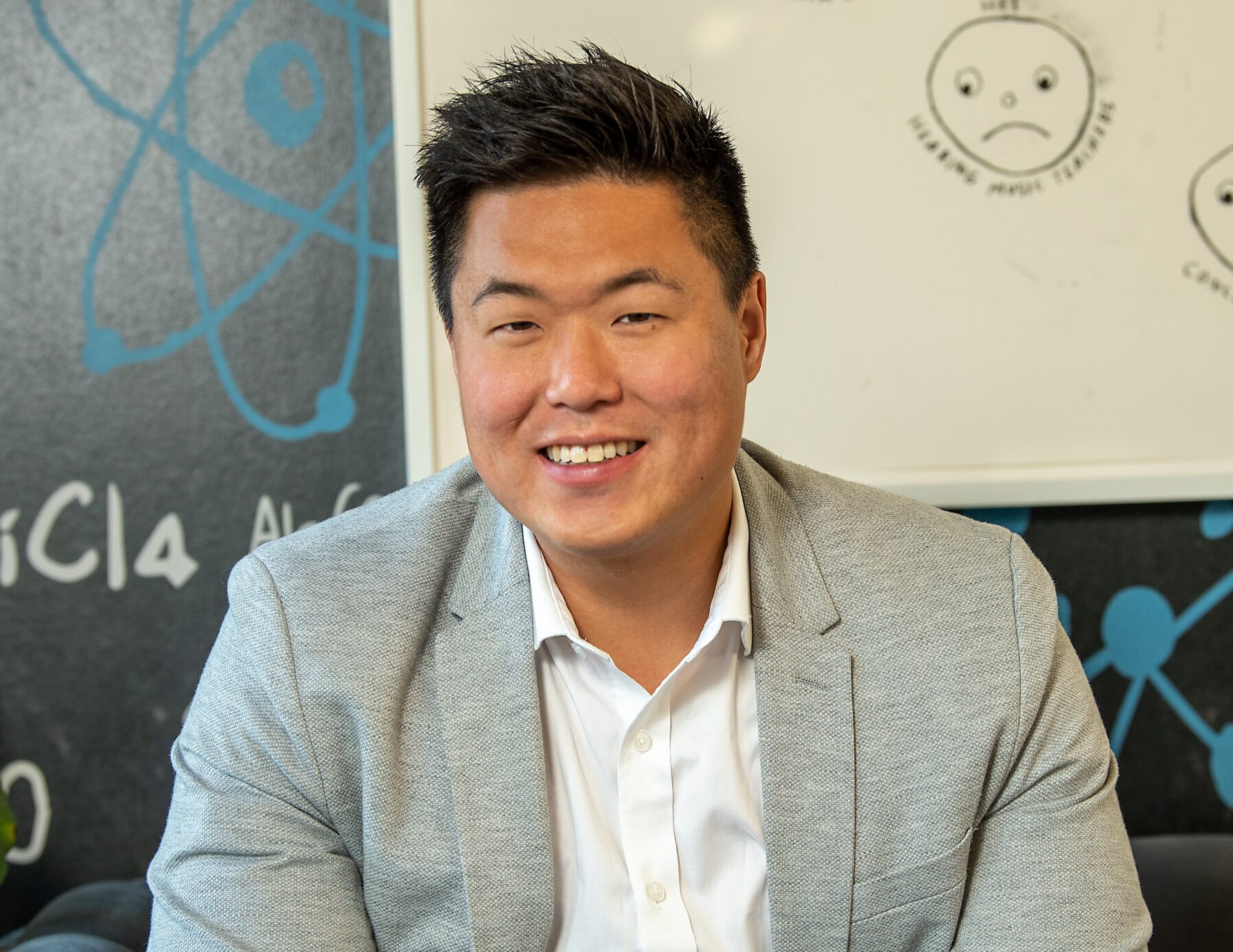
James Kim taught high school math before becoming a venture investor, and that classroom experience shaped how he evaluates startups today. During his time with Teach For America following an astrophysics degree from Yale, Kim was an early adopter of ClassDojo, which he calls "game-changing." He later moved through college access work and Yale admissions before earning graduate degrees in business and education from Stanford, eventually landing at Reach Capital.
Reach Capital itself has undergone significant transformation since its 2015 founding, when it spun out of NewSchools Venture Fund. The San Francisco firm initially concentrated exclusively on K-12 education technology but has broadened its mandate substantially. Today it invests across learning, health and work—sectors it views as foundational to human development. The firm announced its fifth fund in August, raising $265 million and bringing total assets under management to nearly $1 billion. With more than 180 companies backed to date, Reach plans to deploy capital into roughly 50 additional teams through pre-seed, seed and Series A rounds.
From Classroom to Venture Strategy
Kim's background as an educator informs Reach's investment philosophy in concrete ways. When asked how teaching shaped his view of education technology, he reflected on his experience with ninth through twelfth grade mathematics. "I was very early to ClassDojo. Back then, it was a very simple classroom management tool, and it was game-changing for me. It has since evolved into a sprawling suite, but I already knew technology could move the needle."
Reach's expansion beyond K-12 education followed a logical progression. The firm's founding partners observed the proliferation of devices in schools, one-to-one device ratios and growing broadband access. Early bets like Newsela, Nearpod and ClassDojo became established names in the edtech space. Over time, the firm moved into higher education and consumer learning, then began exploring adjacent sectors.
Healthcare and workforce development emerged as natural extensions. Kim explains the connection: "Health and wellbeing affect a learner's readiness for the classroom, so we were being pulled toward mental health, behavioral health and developmental health. On the work side, formal learning typically ends in college, but you still need the bridge to a job. Once you're on the job, you need to continue learning, especially in the current environment."
The firm formalized this broader mandate several years ago, now investing roughly 50% in learning, 25% in health and 25% in work. Despite operating across sectors with different buyers, regulations and business models, Reach's education background provided transferable expertise. Institutional buying complexity and regulatory familiarity from selling to school districts translated directly to healthcare and workforce contexts. Cartwheel, which provides mental health teletherapy through school districts, exemplifies how this experience proved advantageous both in winning the investment and supporting the company afterward.
The 'Elevating Human Potential' Framework
Reach's investment thesis centers on a specific mandate: "We look for products and services that increase access to quality education, quality care or quality earnings, or some combination of those. We really have to see the mechanism for that happening." Kim emphasizes that vague promises of productivity gains fall short. The firm requires concrete theories about how products actually expand access.
The firm addresses access from both supply and demand perspectives. On the demand side, Reach backs consumer-facing products like Brilliant, Stepful's allied healthcare training and Replit, which its founder describes as enabling "citizen developers." On the supply side, the firm invests in tools that help institutions function more effectively—WorkWhile, for instance, assists logistics and hospitality companies in hiring and treating hourly workers better.
AI Detection and Responsible Use
Reach's investment in GPTZero, the AI detection company that agreed to join Superhuman, reflected a distinctive thesis. Rather than viewing AI detection as a tool for clamping down on student usage, Kim saw GPTZero's positioning differently. "Their thesis was that AI use in education should not be banned. It shouldn't be punitive or become a cat-and-mouse game between the educator and the learner."
Kim elaborated on this philosophy: "Since all of us as professionals use AI in our jobs, students should learn how to use it responsibly and thoughtfully. It was the first AI detector company I had seen with that positioning, as opposed to helping schools, districts and universities clamp down on AI usage. That's why I liked it. I don't see it as a problem for students to use AI for certain purposes, such as brainstorming, organizing thoughts and editing. GPTZero helps educators work with students and teach them how to use AI responsibly."
Looking ahead, Kim sees opportunities in AI governance and compliance infrastructure. "Going back to regulated categories, you need to make sure AI is not irresponsibly using personally identifiable information in education or healthcare. Those categories have very strict regulations, and infrastructure companies are emerging to help ensure AI products interact with that data responsibly."
Regarding whether AI detection can exist as a standalone category, Kim remains agnostic. GPTZero fielded acquisition offers early on, and the Superhuman opportunity emerged earlier this year with compelling synergies. However, competitor Pangram remains independent and venture-backed. "It's not clear to me that this category can't exist on its own. We have to be very case-by-case."
Patterns Among Outperformers
With more than 180 companies in its portfolio, Reach has observed recurring characteristics among its best performers. Kim acknowledges the challenge of identifying universal success predictors: "The reality of venture is that a very small share of investments yields the overwhelming majority of returns. Given the outlier nature of those successes, it's hard to identify unifying principles that always predict a successful exit. If we could, we would only make those investments."
Still, several patterns emerge. Reach looks for smart, gritty, mission-driven founders or founding teams with strong personal connections to the problems they solve. The firm also seeks nonconsensus market insights, often rooted in the founders' own experience as practitioners. Finally, defensible and scalable business models matter.
The nonconsensus insight proves particularly important—and polarizing. Kim notes: "The nonconsensus insight is funny because it's what makes these companies look weird and maybe uninvestable in the beginning. Even within our team, they're often the most polarizing opportunities. You look at the votes, and a bunch of people vote no, but it gets just enough yeses to pass. Then, 10 years later, it's one of our best investments."
Returns, Ownership and Secondary Sales
Reach's first two funds have returned investor capital, though through a concentrated set of exits. The first fund achieved a 2.2x return from just two investments, while the second fund returned 1.2x from a single investment. These represent actual cash distributions to investors.
This experience reshaped how Reach approaches ownership stakes. Kim explains: "We've had some great exits where, given how prominent the company is, you might be surprised that our share of the returns wasn't that large. That's purely an ownership calculation. From our first fund to today, we've meaningfully increased our initial ownership target. We now try to get as close to 15% ownership upfront as possible."
The shift means writing larger initial checks while reserving less for follow-on investments. This approach directly impacts exit and distribution mathematics.
Secondary transactions have become increasingly important to Reach's liquidity strategy. As companies remain private longer, early-stage investors increasingly achieve returns through secondary sales—selling shares in subsequent rounds before actual exits. Reach has become proactive about evaluating these opportunities, considering how long it has held the investment, how much capital it can recover and how much upside remains.
While Reach typically sells secondaries, it occasionally buys them. GPTZero exemplified this approach: after the Series A investment, Reach purchased secondary shares, a decision Kim credits with strong results. "For us, we sell more often, but occasionally we buy."
Read more

Legora closes $550M Series E as legal AI competition heats up
The legal automation platform reached an $8.8 billion valuation while doubling its annual recurring revenue to over $200 million, matching a rival's fundraising haul.

From Vague Pitch to Industrial AI Leader: How Nexxa's Philipp Wehn Found His Focus
Nexxa founder Philipp Wehn credits a shift in mindset—from playing not to lose to playing to win—with transforming his startup's pitch and attracting a16z's speedrun program.
Blacksmith reaches $1B valuation with $66M Series C from Sequoia
The developer platform for building and testing software, including AI-generated code, has achieved unicorn status just two months after its previous funding round.