Building Without the Billions: How Founders Can Thrive When VC Money Dries Up
As venture capital concentrates around a handful of AI companies, most startups face a funding desert. A bootstrapped founder shares the operational principles that built a multibillion-dollar business without a single VC check.

The landscape for venture investment has shifted dramatically in recent years. A concentration of capital around artificial intelligence companies now dominates funding flows globally. During the first quarter of 2026, four companies alone secured $188 billion in funding—representing 65% of all venture capital deployed worldwide, according to Crunchbase data.
The squeeze extends beyond headline numbers. Non-AI startups captured just 20% of global VC funding in the same period, while the total number of deals fell 30%, indicating that capital is flowing to fewer companies overall. For founders outside the AI bubble, the traditional venture route increasingly resembles a closed door.
Nacho De Marco, founding GP of BDev Ventures and chairman of BairesDev, built a multibillion-dollar company without accepting venture funding. His experience offers a roadmap for founders navigating a capital-constrained environment.
Prioritize customers and revenue, not fundraising

Many founders conflate fundraising success with business success, treating capital raises as the primary metric of progress. Yet funding alone does not generate outcomes. Building genuine customer confidence matters far more. Strong retention, repeat business and sustained user engagement create the financial fundamentals that drive real valuations. In B2B SaaS specifically, companies maintaining net revenue retention above 110% command valuations 2.4 times the median. Beyond financial metrics, customers supply the feedback mechanism that instills operational discipline—each satisfied user represents a compounding vote of confidence in the business.
Going to market: Take time on pricing strategy
Inexperienced founders frequently underprice their offerings, fearing that higher rates will discourage adoption. In practice, underpricing often communicates weakness rather than value. Customers associate quality with appropriate pricing and expect that premium products carry premium costs. Research reveals that only 22% of B2B SaaS companies undertake rigorous pricing analysis, and founders more frequently regret setting prices too low than too high. Startups should invest time determining what their product can genuinely command in the market, then improve quality if the sustainable price point falls short. In established service categories where pricing norms exist, differentiation through superior quality becomes critical—though founders must resist the constant temptation to compete on price, which inevitably triggers a destructive race to the bottom.
Hire the best talent
Many founders prioritize hiring speed over hiring quality, a mistake that compounds over time. Investing the effort to identify and recruit exceptional people multiplies the value extracted from every dollar spent. De Marco made a deliberate choice to focus on the top 1% of applicants, rejecting the volume approach. By securing the strongest developers, the company could compete on delivery excellence rather than cost alone. While maintaining lean expenses matters, compromising on talent quality is not a sustainable path to growth.
Use process automation efficiencies to drive growth
One of the most impactful decisions involved deploying proprietary machine-learning systems to handle manual hiring workflows early in the company's development. These systems screened developer applications, matched talent to projects and deployed teams—reducing the overhead of application review, shortening timelines and raising team quality. The company applied similar automation to digital marketing operations, ensuring that expansion did not require proportional increases in headcount. Whether applied to hiring, sales or operations, automation creates powerful leverage for growth and establishes the operational foundation necessary for scaling.
Operate as if cash is running out tomorrow
Startups flourish during tight funding cycles by enforcing strict financial discipline. This means relentless focus on unit economics, channeling resources exclusively toward revenue-generating activities, scrutinizing every expense and eliminating anything that fails to justify its cost. This discipline accelerates growth while simultaneously building organizational resilience. Scarcity forces leaders to identify efficiencies through workflow automation, process streamlining and novel operating models. De Marco's company adopted remote-work structures years before the COVID-19 pandemic made them standard, establishing systems and workflows that later provided a competitive edge when others scrambled to adapt. The infrastructure already in place enabled faster scaling when conditions shifted.
Long term: Stay married to the problem, not the solution
The past decade normalized venture capital as the default mechanism for building significant companies. Yet funding cycles fluctuate while the fundamentals of sound business practice remain constant. Capital can accelerate growth but cannot manufacture a strong company from nothing. The most durable founders commit themselves to solving genuine problems rather than simply selling products and chasing funding rounds. In an environment where capital is scarce, sustainable growth depends on this deeper commitment to the underlying problem.
De Marco is founding GP of BDev Ventures and chairman of BairesDev, one of the world's largest bootstrapped nearshoring firms. He established BDev Ventures in 2021 to support B2B companies in accelerating growth through a proprietary lead-generation platform. He also holds board positions and makes investments in biotechnology and e-learning enterprises. His career achievements include the EY Entrepreneur Of The Year 2024 Bay Area Award.
Read more

Legora closes $550M Series E as legal AI competition heats up
The legal automation platform reached an $8.8 billion valuation while doubling its annual recurring revenue to over $200 million, matching a rival's fundraising haul.

From Vague Pitch to Industrial AI Leader: How Nexxa's Philipp Wehn Found His Focus
Nexxa founder Philipp Wehn credits a shift in mindset—from playing not to lose to playing to win—with transforming his startup's pitch and attracting a16z's speedrun program.
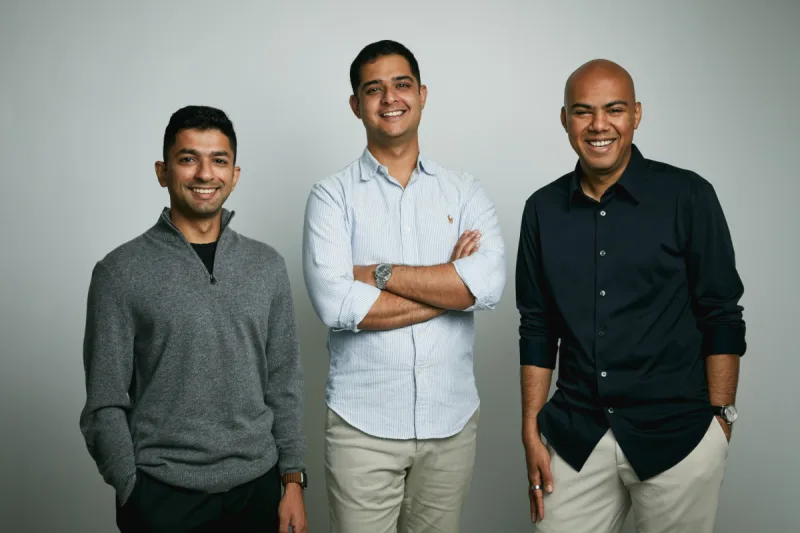
Blacksmith reaches $1B valuation with $66M Series C from Sequoia
The developer platform for building and testing software, including AI-generated code, has achieved unicorn status just two months after its previous funding round.