U.S. Homeland Security Orders Removal of DeepSeek AI From All Federal Civilian Agencies
The Department of Homeland Security has mandated that artificial intelligence systems from Chinese firm DeepSeek Ltd. be purged from federal civilian agency networks, citing security risks and potential unauthorized access by the Chinese Communist Party.
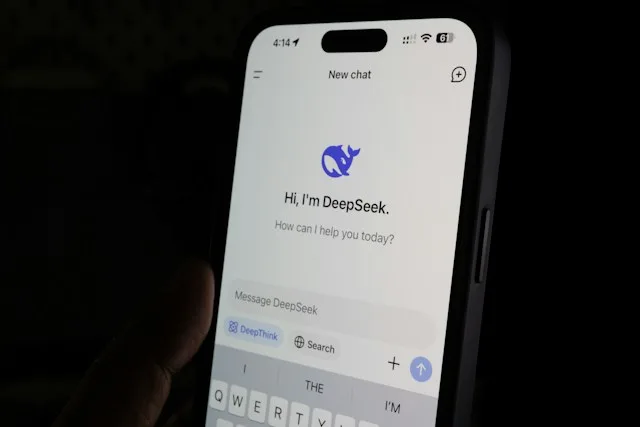
Federal authorities have directed the removal of DeepSeek's artificial intelligence technology across all civilian government agencies. The Department of Homeland Security published the directive on the Federal Register, characterizing DeepSeek's AI models as presenting "multiple threat vectors" that could grant the Chinese Communist Party "extensive authority" over American government infrastructure.
Despite ranking outside the top 10 in government surveys measuring public perception of AI models, DeepSeek's free application achieved millions of downloads among Americans in 2025, prompting alarm within U.S. government circles. Discussions about imposing a comprehensive prohibition on the app gained traction, with security specialists questioning the company's data protection commitments. One cybersecurity expert described DeepSeek's privacy policy as not "worth the paper it is written on."
The DHS directive requires civilian agency IT infrastructure to eliminate all DeepSeek-affiliated products from their systems, encompassing third-party applications and services built on the platform. Prospective acquisitions of DeepSeek offerings are now prohibited across these agencies. The DHS grounded its action in the 2018 Federal Acquisition Supply Chain Security Act, following an assessment conducted by the Federal Acquisition Security Council.
The DHS articulated multiple concerns regarding the technology's potential dangers to national security. Officials warned that the system could be leveraged to "track or digitally fingerprint" individuals and might facilitate the "transfer of sensitive data to the People's Republic of China if used by U.S. government or vendors."
Tensions surrounding DeepSeek have escalated since the preceding year, when the company introduced its R1 model and disrupted the technology sector. The open-source system achieved superior performance on complex benchmarks compared to offerings from American competitors OpenAI and Anthropic, despite relying on less advanced hardware and substantially lower development expenditures.
Prior restrictions on DeepSeek have already taken shape across government. The Commerce Department implemented a ban on DeepSeek access through government equipment last year. The U.S. Navy issued guidance prohibiting personnel from utilizing the model due to security considerations. New York State similarly prohibited DeepSeek from state government systems and infrastructure, citing "serious concerns" about data privacy and potential censorship implications.
DeepSeek unveiled its V4.1 Flash-1017 model in recent weeks. The iteration delivers enhanced speed alongside strengthened reasoning and programming functionalities, with preliminary assessments indicating it could rival some of the most sophisticated AI systems developed in the United States.
Read more

Nvidia shifts from selling chips to selling AI infrastructure as a complete system
At GTC Berlin, Jensen Huang repositioned Nvidia's strategy away from graphics processors toward end-to-end AI deployment, introducing containerized factories, agent security frameworks, and structured data models that address enterprise bottlenecks beyond raw computing power.

Five Technology Shifts Will Push CIOs From Passive Oversight to Active Design
Enterprise leaders must architect AI systems proactively rather than react to rapid technological change, according to Gartner research presented at its IT Symposium/Xpo in Orlando.

Comet Cloud eyes underserved SMBs as GPU inference demand shifts
With AI workloads moving from training to inference, neocloud providers see opportunity in small and midsize businesses that hyperscalers have deprioritized. Comet Cloud is positioning itself to serve that market with dedicated clusters and aggressive pricing.