Raymond James Deploys Knowledge Graphs to Ground AI Agents in Financial Services
Graph technologies are helping Raymond James Financial build trustworthy AI infrastructure that connects disparate data sources and enables agents to reason across business domains with accuracy.

Knowledge graphs are emerging as a foundational reasoning layer for agentic AI systems, enabling organizations to link data together and anchor AI agents within established areas of business expertise. At Raymond James Financial Inc., a diversified financial services firm, graph-based technologies have become essential to constructing reliable AI systems. Jeff Griffith, vice president of AI engineering and data science at Raymond James, emphasized the strategic value of this approach.
Using something like a data graph lets us harness the power of AI in dynamic ways. People already know how to go get the things that they're getting every day. But it's when you want to cross those domains or do some unique thing that this has a lot of value.
Jeff Griffith, vice president of AI engineering and data science at Raymond James
Griffith shared these insights during a conversation with John Furrier, executive analyst for theCUBE Research, at GraphSummit. Joining him was Naveen Mahankali, vice president of technology at Raymond James, as the two discussed how knowledge graphs and AI are reshaping the financial services landscape.
Knowledge graphs for data reliability
Raymond James, a Neo4j customer, leverages graph technologies to model relationships, dependencies and business context that AI applications require for sound reasoning. In the financial sector, where precision is paramount, Raymond James employs its knowledge graph to ensure agents interact with verified data and validate outputs against authoritative sources.
We have golden sources, we have systems that we can rely on today, and we're able to use agents to build and compare what we are building against the golden sources. With the knowledge graph, even when we pull the data from different sources, it sits in the Neo4j and we run evals compared to the golden sources and make sure they're 100% accurate before launching.
Naveen Mahankali, vice president of technology at Raymond James
The integration of AI through knowledge graphs is driving operational gains across Raymond James. Mahankali identified potential for AI to streamline the work financial advisors undertake when gathering client information.
One of the things we're trying to do is we're letting AI query the data dynamically so that our financial advisors get what they want without clicking on screens and without looking at a fixed dashboard. They can do more analysis rather than just looking at the data that they already see in other applications. They can do product analysis versus how accounts are balanced and things like that by asking a question.
Naveen Mahankali
Beyond client-facing applications, AI agents are transforming internal workflows at Raymond James. In January, the firm introduced Raimond, an internal digital AI operations agent designed to automate routine tasks.
https://www.youtube.com/embed/8OgyswtEyho?feature=oembed
We have an AI assistant … it's gotten huge adoption, and it's just going to get smarter. That's part of the core evolution of what we're doing in terms of engineering. We're changing how people, how everyone works with a desktop that gives people the best AI tools to move from doing all the menial tasks to managing agents that are doing those tasks. In terms of skills and what we are looking for, it is shifting just from people who can do tasks to people who have a drive to solve a meaningful problem.
Jeff Griffith
Read more
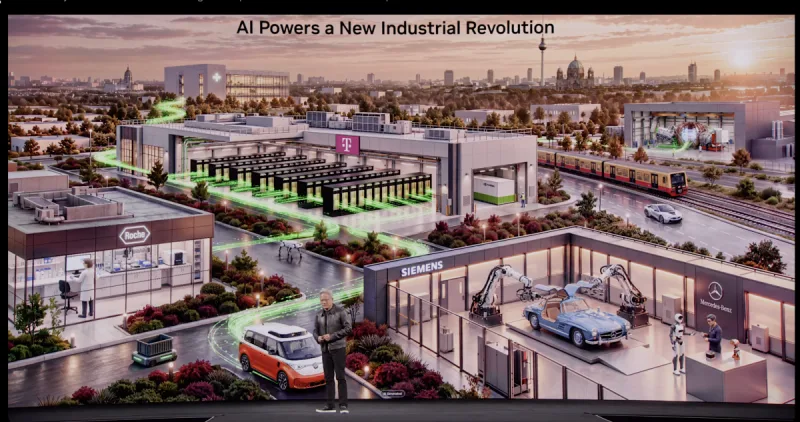
Nvidia shifts from selling chips to selling AI infrastructure as a complete system
At GTC Berlin, Jensen Huang repositioned Nvidia's strategy away from graphics processors toward end-to-end AI deployment, introducing containerized factories, agent security frameworks, and structured data models that address enterprise bottlenecks beyond raw computing power.

Five Technology Shifts Will Push CIOs From Passive Oversight to Active Design
Enterprise leaders must architect AI systems proactively rather than react to rapid technological change, according to Gartner research presented at its IT Symposium/Xpo in Orlando.

Comet Cloud eyes underserved SMBs as GPU inference demand shifts
With AI workloads moving from training to inference, neocloud providers see opportunity in small and midsize businesses that hyperscalers have deprioritized. Comet Cloud is positioning itself to serve that market with dedicated clusters and aggressive pricing.