Most CIOs Lack Plans for AI Agent Workforce, Gartner Study Finds
A Gartner survey of 2,002 technology leaders reveals that only 4% of CIOs have strategies in place to redesign roles for human-agent collaboration, leaving enterprises unprepared for the shift.
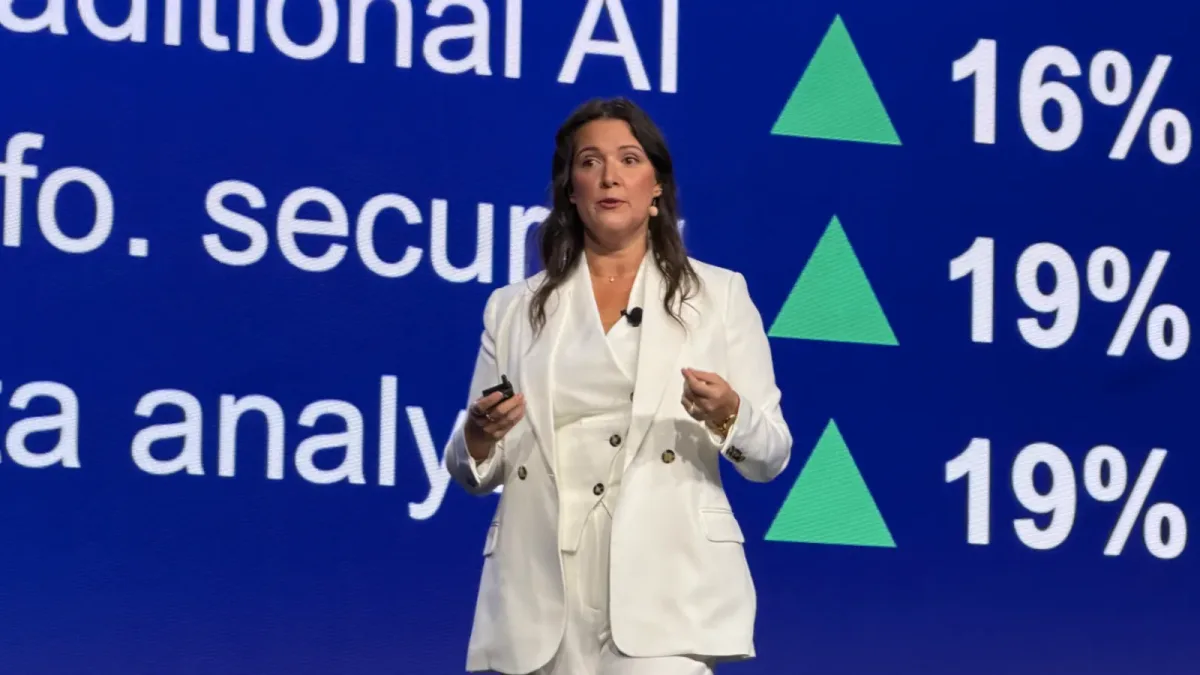
According to Gartner's latest research released Monday, the majority of chief information officers are avoiding the fundamental organizational restructuring required as artificial intelligence agents become embedded in the workplace. The analyst firm's 2027 CIO and Technology Executive Agenda report, which polled 2,002 CIOs and technology executives, found that preparedness for this transition remains minimal across the industry.
The numbers underscore the gap: merely 4% of surveyed CIOs indicated they have developed strategies to reshape job functions around a human-agent workforce model. By contrast, organizations that have taken this step demonstrate measurably stronger outcomes—they are 2.4 times more likely to rank among top performers in AI deployment and more likely to have their chief executives report tangible value from AI initiatives.
If you do not have a workforce that is ready to operate in this world that deals with this level of AI agents and governance … the costs are going to be played out because you're going to have a team that can't effectively deliver on it.
Alicia Mullery, VP analyst at Gartner
Competing Priorities Sideline Workforce Strategy
The CIO role has expanded considerably, with technology leaders now expected to oversee IT modernization initiatives, maintain fiscal discipline, pilot AI experiments, drive business results, and increasingly shape workforce strategy. This widening mandate has pushed talent considerations down the priority list for many executives.
Cost containment has become the dominant concern. Fifty-eight percent of surveyed leaders report mounting pressure from their organizations to extract cost savings from previous AI spending. This urgency reflects broader sentiment from corporate leadership.
Pressure is coming from the CEO, boards and leadership. I think we've passed the time of endless scale.
Alicia Mullery
Yet this pressure has not translated into results. Only 13% of CIOs report achieving significant or transformational value from their AI investments, according to Gartner. This disconnect has reinforced the tendency among many CIOs to deprioritize workforce redesign efforts.
There is so much that's a top priority that I think sometimes technology — the cost of it, managing that out — can overshadow some of the talent pieces because it's not as immediate as an expensive bill that's coming in.
Alicia Mullery
A Strategic Opportunity for CIOs
CIOs have an opportunity to reframe the conversation. By helping other senior executives understand how AI will reshape specific roles, alter compensation structures, and ripple across the organization as these technologies scale, technology leaders can elevate workforce considerations to a strategic priority.
That I think elevates the CIO to a more strategic conversation that the rest of the C-suite is very interested to talk about.
Alicia Mullery
Read more

Nvidia shifts from selling chips to selling AI infrastructure as a complete system
At GTC Berlin, Jensen Huang repositioned Nvidia's strategy away from graphics processors toward end-to-end AI deployment, introducing containerized factories, agent security frameworks, and structured data models that address enterprise bottlenecks beyond raw computing power.
Five Technology Shifts Will Push CIOs From Passive Oversight to Active Design
Enterprise leaders must architect AI systems proactively rather than react to rapid technological change, according to Gartner research presented at its IT Symposium/Xpo in Orlando.
Comet Cloud eyes underserved SMBs as GPU inference demand shifts
With AI workloads moving from training to inference, neocloud providers see opportunity in small and midsize businesses that hyperscalers have deprioritized. Comet Cloud is positioning itself to serve that market with dedicated clusters and aggressive pricing.