LogicMonitor Elevate: How AI Observability Is Reshaping Enterprise IT Operations
At LogicMonitor's Chicago event, enterprise leaders demonstrated how AI-driven observability and autonomous workflows are reducing alert noise, accelerating incident resolution and transforming IT operations across hybrid environments.
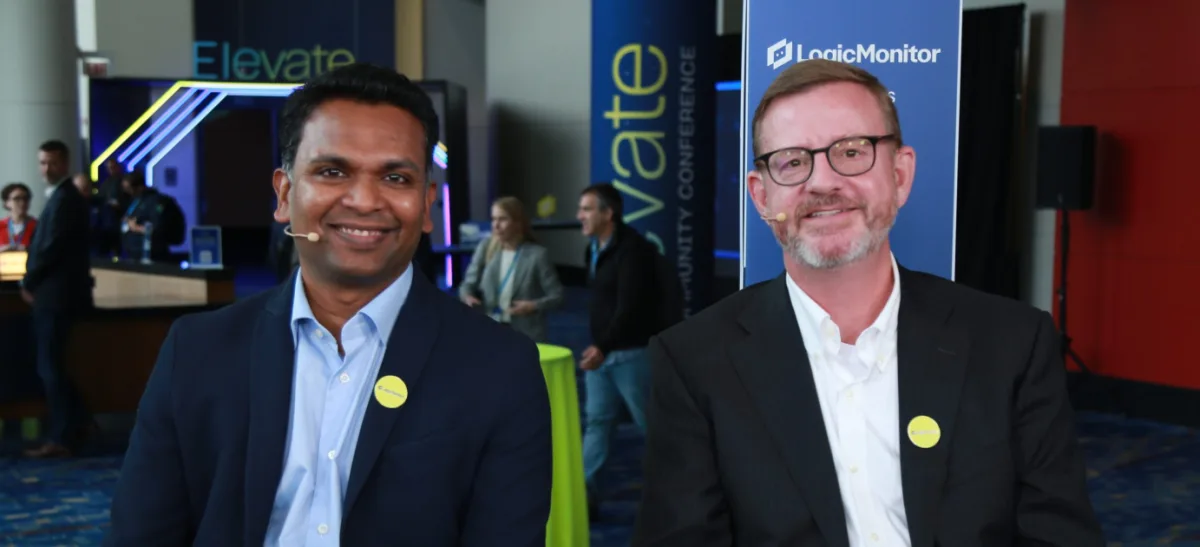
Traditional monitoring approaches are giving way to AI-powered observability systems that enable organizations to handle sprawling infrastructure and respond to incidents with greater speed. LogicMonitor's Elevate conference in Chicago this week centered on integrating operational telemetry, AI automation and governance frameworks to tackle challenges in hybrid IT environments. The momentum is visible in early results: GlobalFoundries cut alert noise by 98% using Edwin AI, while managed service providers reported gains in incident handling and team productivity. LogicMonitor's vision of autonomous IT is taking shape, though questions persist around how quickly enterprises will adopt these systems, whether they will trust autonomous decisions, and how to maintain human oversight.
Observability is becoming an important foundation for both human decision-making as well as autonomous workflows. The opportunity is to connect performance, availability, resources utilization, as well as costs, so that engineering teams can understand operational trade-offs behind the problem.
Paul Nashawaty, practice lead and principal analyst for application development at theCUBE Research
Nashawaty engaged with technology leaders, customers and ecosystem partners throughout the event. Coverage by theCUBE examined how Edwin AI, OpenTelemetry, application dependency mapping and governed automation are reshaping how enterprises run their operations. Discussions also touched on the rising role of digital experience monitoring, how managed service providers are evolving their business models and the real-world hurdles of moving AI from pilot projects into live production environments.
1. LogicMonitor's AI strategy shifts observability toward governed automation
Observability platforms are moving past static dashboards and alert fatigue as AI-driven operations require richer context, smarter automation and stronger control mechanisms. Steven Dickens, chief executive officer of HyperFRAME Research, joined Nashawaty to examine LogicMonitor's keynote announcements and its five strategic pillars: unified context, AI-governed action and trust. The conversation underscored how OpenTelemetry, Edwin AI and Catchpoint are helping LogicMonitor weave together complex hybrid infrastructure and surface insights that flow directly into teams' existing tools. Dickens stressed that customer uptake, sound governance practices and solid execution will determine whether LogicMonitor can translate its AI roadmap into real operational gains.
2. Autonomous IT gains ground as AI governance and trust take priority
Organizations are embracing autonomous IT to cut operational overhead, handle incident response without human intervention and establish confidence in AI-driven systems. A measured path that begins with low-risk, trustworthy automation can help enterprises roll out AI across more demanding environments, according to Karthik Sj, chief artificial intelligence officer at LogicMonitor, and Garth Fort, chief product officer. LogicMonitor's latest Edwin AI upgrades expand this capability through multi-agent investigations, hooks into existing systems and automation with guardrails. Catchpoint integration and governance safeguards further enable this shift by offering deeper visibility into how applications perform while keeping autonomous agents under human control.
3. AI adoption drives workforce transformation and measurable business results
Rolling out AI successfully demands more than installing new tools; it requires staff confidence, executive backing and structural changes to how organizations work. Alyene Schneidewind, chief performance officer of LogicMonitor, described how the company achieved 95% employee adoption of ChatGPT in four months and saw staff build more than 2,000 custom GPTs in the first year. The company's internal work has evolved into reworking how teams operate and tracking whether AI spending produces business value, including an AI sales assistant that cuts employee workload by half a day weekly. Governance, cross-team partnerships and fresh approaches to building workforce skills are helping LogicMonitor reshape operations and connect AI spending to measurable returns.
4. AI-powered managed services shift focus toward business outcomes
Service providers are overhauling how they run IT as AI automation opens doors to lower costs, faster fixes and frees engineers to tackle bigger problems. AI-powered observability and autonomous workflows are helping firms move away from firefighting toward planning ahead, according to John Grosshans, president of field operations at LogicMonitor, and Tim Wheeler, chief artificial intelligence officer of Bell Techlogix Inc. Bell Techlogix is using AI assistants to streamline how incidents are sorted, automate record-keeping and shorten fix times, while LogicMonitor is steering organizations toward autonomous IT through unified data, event correlation and automation with oversight. The shift is also redefining what managed service providers do, with greater weight on proving business value, deepening customer ties and catching problems before they happen.
5. Breaking down IT silos creates a path to autonomous operations
Scattered IT systems are forcing enterprises to rethink how they handle observability, automation and service delivery in hybrid setups. Merging disparate platforms and standardizing workflows can boost productivity and speed up AI rollout, according to Ryan Crosby, vice president of intelligent operations sales at AHEAD. One customer slashed its tool count from 72 to seven platforms, making support simpler and laying groundwork for broader automation. Moving toward autonomous IT also calls for leadership commitment, tight governance and a unified strategy that ties observability to incident handling, change management and automated fixes.
6. AI agents accelerate incident resolution and improve customer retention
AI is reshaping the business model of managed services as providers shift from reacting to outages to stopping them before they start and proving measurable value. Quicker fixes, stronger service guarantees and better customer loyalty are among the gains emerging from AI rollout, according to Kyle Hill, chief technology officer of ANS Group Ltd., and Steve Smith, CTO of cloud services at Specialist Computer Centres PLC. At ANS, Edwin AI adoption has lifted engineering output and customer loyalty, while Smith pointed to an AI agent that pinpointed a technical problem in roughly three minutes after engineers had spent 40 to 50 hours on it. Winning customer trust in autonomous IT is a gradual journey, with governance, regulatory compliance and proven outcomes helping service providers expand automation while keeping human oversight in place.
7. AI-driven observability cuts alert noise by 98% at GlobalFoundries
Keeping semiconductor production running smoothly demands the ability to spot infrastructure risks before they halt the line. GlobalFoundries U.S. Inc. rolled out an observability upgrade that reached 98% deployment in six months, with Edwin AI slashing alert noise by 98%, according to Vishal Mehra, chief information officer. The company is also consolidating observability platforms, using dependency mapping to make sense of older applications and feeding AI insights into ServiceNow to strengthen incident handling. With backing from senior leadership and a step-by-step rollout of automation, GlobalFoundries is building toward autonomous IT that can spot failures early and trigger preventive steps before manufacturing gets disrupted.
8. Five pillars of AI-driven observability point toward autonomous IT
https://www.youtube.com/embed/videoseries?list=PLQ90g6GnUTsQ
Enterprise observability is moving past basic monitoring toward a framework that merges telemetry, operational context and AI with guardrails to strengthen app reliability and speed up incident response. In his closing remarks at Elevate, Nashawaty outlined five areas driving this shift: enterprise data foundations, unified context, AI-governed action, integrated experiences and trust and governance. OpenTelemetry, Edwin AI and tighter hooks into teams' existing systems are helping enterprises link infrastructure performance to business outcomes while cutting alert fatigue and sharpening root cause analysis. The next frontier of observability will hinge on tying operational evidence to smart choices and controlled automation, allowing enterprises to move past AI pilots toward autonomous operations ready for production.
Read more
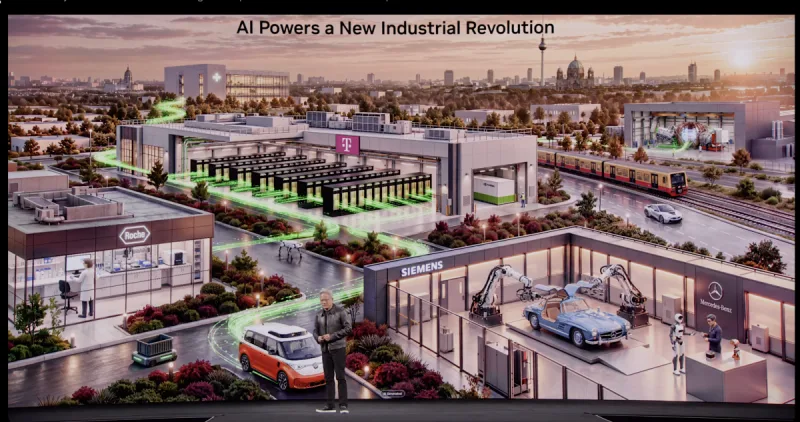
Nvidia shifts from selling chips to selling AI infrastructure as a complete system
At GTC Berlin, Jensen Huang repositioned Nvidia's strategy away from graphics processors toward end-to-end AI deployment, introducing containerized factories, agent security frameworks, and structured data models that address enterprise bottlenecks beyond raw computing power.
Five Technology Shifts Will Push CIOs From Passive Oversight to Active Design
Enterprise leaders must architect AI systems proactively rather than react to rapid technological change, according to Gartner research presented at its IT Symposium/Xpo in Orlando.
Comet Cloud eyes underserved SMBs as GPU inference demand shifts
With AI workloads moving from training to inference, neocloud providers see opportunity in small and midsize businesses that hyperscalers have deprioritized. Comet Cloud is positioning itself to serve that market with dedicated clusters and aggressive pricing.