Eugenia Kuyda's New Startup Wabi Realizes the Vision She Pitched at Disrupt a Decade Ago
Kuyda left Replika to launch Wabi, a multiplayer personal AI assistant that organizes tasks across separate threads rather than a single conversation—a design she says solves problems that plague competing products like Muse and Instinct.
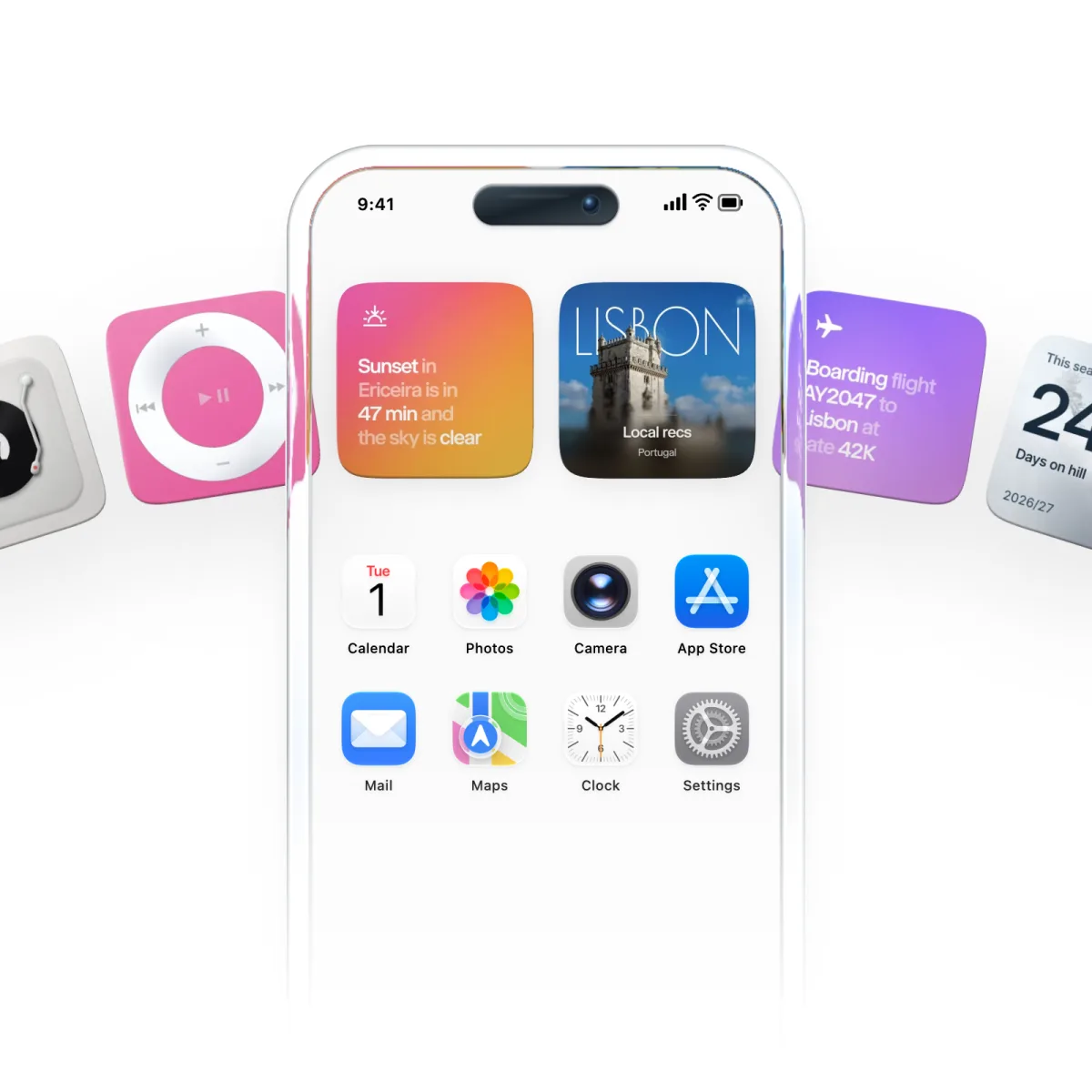
Twelve years ago, Eugenia Kuyda took the stage at TechCrunch Disrupt to unveil IO, a conversational chatbot from her startup Luka that functioned as a lifestyle concierge, handling restaurant reservations, vacation bookings and similar services. The product arrived before the deep learning advances that would eventually spawn today's large language models. "It still worked," Kuyda recalled in an interview with TechCrunch. "It was pretty magical…but, of course, it's nowhere near what we have today."
Luka eventually transformed into Replika, the widely-used AI chatbot companion platform. After stepping down as Replika's CEO last year, Kuyda launched Wabi, positioning it to compete against emerging personal AI assistants including Muse and Instinct, which claim to handle everything from inbox management to flight price optimization.
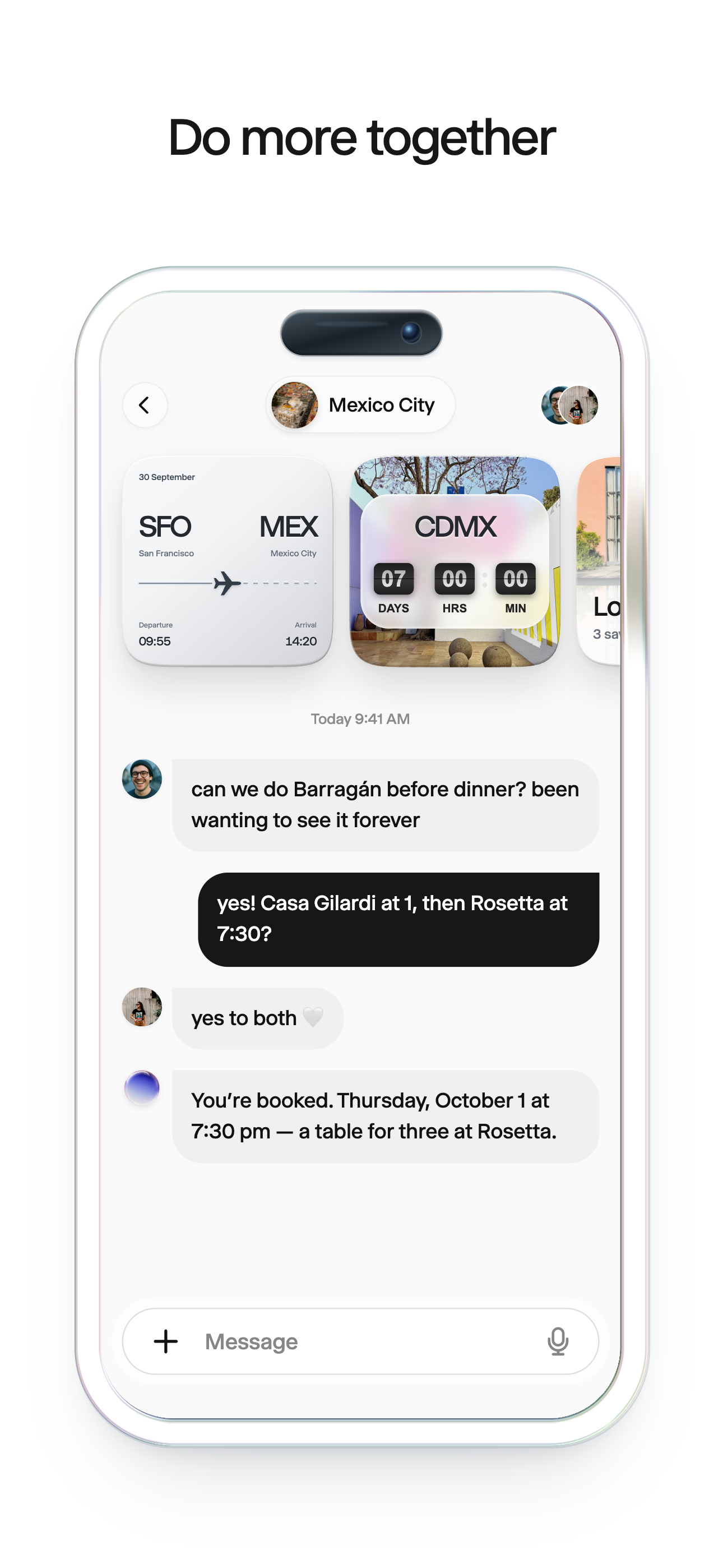
On Monday, Kuyda unveiled Wabi to the broader user base—a multiplayer personal AI assistant operating as a messenger application. The platform enables users to maintain separate agentic threads for distinct tasks and long-term objectives. Within each thread, users construct and deploy custom applications: a weight-loss monitor embedded in a health thread, or an app displaying nearby family-friendly activities within a family thread.
https://x.com/ekuyda/status/2107652765904478407?ref_src=twsrc%5Etfw
The rollout represents a significant shift in direction for Wabi, though Kuyda frames it as a natural progression. When TechCrunch first covered Wabi's debut last year alongside its $20 million pre-seed funding, the product was positioned as a social platform where users could develop small applications through prompts and distribute them to friends or across the broader community.
Throughout the past year, Kuyda's team discovered that while users gravitate toward personalized software rather than "one size fits all solutions in the App Store," they "maybe don't want to spend a lot of time, or any time, building it." In the updated version, the AI agent assumes responsibility for app creation. Upon connecting to a user's email, the system automatically generates multiple threads and applications, with users able to request additional custom applications or establish new threads.
"It's doing what Instinct and Muse do, but it also has all these apps, which helps users do more stuff," Kuyda said.
Multi-threaded design as a differentiator
Beyond app functionality, Kuyda is banking on Wabi's multi-threaded, multiplayer structure as its competitive advantage. "It's not just everything in one single thread like with Instinct and Muse, where you get buried in the information that it sends you everyday," Kuyda said. "Single thread experiences, if you think about it, get worse over time because it's just so much context in one endless conversation."
Extended conversations with AI chatbots increase the likelihood of hallucinations, context loss, and responses that bypass safety mechanisms, according to discussions with AI researchers. Threads within Wabi can be shared among multiple users, functioning as group conversations.
"Today, all the agentic apps are just [conversations] between you and the agent, and I feel like it should be a lot more about bringing people together in a group chat together," Kuyda said. "Not you doing it separately with your AI, and I'm doing it separately with my AI…I don't think anyone has yet cracked multi-player."
Shared threads and data sharing
Kuyda demonstrated her own shared threads to TechCrunch. In a thread with her boyfriend, a series of applications across the top facilitate connection and activity discovery: a live music finder, a daily relationship question tool, a running compilation of restaurant recommendations, shared calendar events, and a collaborative reading list with suggestions for upcoming selections.
Her family-oriented thread includes an application tracking her daughter's schedule, another identifying nearby kid-friendly activities, and a third that tests her daughter on Japanese language skills.
Within shared conversations, participants control the scope of information they provide, ranging from email and calendar data to financial account details. "So my partner can ask Wabi in the chat, 'Is Eugenia free next Thursday?' or 'Did she buy those tickets?'" Kuyda explained. She emphasized that access restrictions apply to individual chats, and all participants receive notification when someone's personal data is requested.
Regarding broader privacy considerations, Wabi maintains SOC 2 compliance, indicating its data security measures have undergone independent evaluation. The platform operates entirely on cloud infrastructure, with the majority of user information retained domestically, according to Kuyda.
Vision and business model
"My previous company Replika worked on AI that will make people feel…less lonely," Kuyda said. "To a degree, that is [in Wabi] as well. AI can bring people together, even when it comes to just helping you spend time better together in real life, whether it's going out and seeing a concert together or finding the next book that you will read together."
Wabi is currently available at no cost, and the company has not finalized its revenue approach. Kuyda indicated that Wabi is pursuing additional funding rounds.
Read more

Nvidia shifts from selling chips to selling AI infrastructure as a complete system
At GTC Berlin, Jensen Huang repositioned Nvidia's strategy away from graphics processors toward end-to-end AI deployment, introducing containerized factories, agent security frameworks, and structured data models that address enterprise bottlenecks beyond raw computing power.

Five Technology Shifts Will Push CIOs From Passive Oversight to Active Design
Enterprise leaders must architect AI systems proactively rather than react to rapid technological change, according to Gartner research presented at its IT Symposium/Xpo in Orlando.

Comet Cloud eyes underserved SMBs as GPU inference demand shifts
With AI workloads moving from training to inference, neocloud providers see opportunity in small and midsize businesses that hyperscalers have deprioritized. Comet Cloud is positioning itself to serve that market with dedicated clusters and aggressive pricing.