Dell shapes enterprise AI infrastructure strategy as companies move from pilots to production
Enterprise organizations are transitioning agentic AI from experimental projects into operational systems, forcing a rethinking of how infrastructure handles data, costs and governance at scale.

Agentic AI has shifted from a speculative capability to a practical tool deployed across enterprises. Organizations advancing beyond initial trials face mounting pressure to scale these systems while managing infrastructure, cost, reliability and oversight—a challenge Dell Technologies is positioning itself to address.
Sam Grocott, senior vice president of product marketing at Dell Technologies Inc., frames the challenge plainly: "Most enterprises don't have an AI ambition problem. They have an AI execution problem." As companies move past proof-of-concept phases, the infrastructure required to support agentic AI at production scale is becoming a critical differentiator.
Enterprise data remains at the forefront of priorities
Organizations hold vast quantities of data that power their current operations, yet shifting toward AI-integrated hybrid models requires fundamental changes in how that data is managed and accessed. Rather than moving data to centralized cloud environments, many enterprises prefer keeping compute and orchestration closer to where information already resides.
Travis Vigil, speaking during coverage of Dell Technologies World, explained the economics: "The vast majority of data still resides on-premises, and being able to bring the compute and the data management and the orchestration and the automation to where the data lives is not only cheaper, it's more efficient. Customers, more than ever, need to turn the data that they have [into results]. That's the oil — everything else is just piping to get value from the oil, and the ability to leverage that in place is critical to our customers."
Dell has responded by developing its AI Data Platform, which consolidates storage, security and data management functions to support AI workloads across enterprise settings. The platform aims to give developers consistent access to trusted, governed data throughout the AI lifecycle—a capability Paul Nashawaty, principal analyst for theCUBE Research, identifies as essential: "From an application development perspective, the competitive advantage is enabling developers to access trusted, governed data consistently across the AI lifecycle. As enterprises move beyond pilots, the organizations that connect their data infrastructure to production-grade application delivery will be better positioned to turn AI investment into measurable business outcomes."
Dell announced expanded AI Data Platform capabilities earlier this month designed to provide AI applications and agents with more reliable access to enterprise data, underscoring the importance of data readiness as organizations transition toward production environments.
Agentic AI creates new operational demands
As hybrid infrastructures mature, agentic AI is becoming integral to enterprise operations. These systems can handle extended, intricate workflows and reduce manual workload, but moving from experimentation to production introduces new requirements. Continuous monitoring, security protocols, governance frameworks and orchestration oversight are now essential as engineers manage increasingly autonomous systems.
Rather than retrofitting AI capabilities onto legacy systems, enterprises are increasingly considering purpose-built infrastructure designed for AI from the ground up. Dell's AI Data Platform exemplifies this approach by connecting enterprise data directly to AI infrastructure.
John Roese, global chief technology officer and chief AI officer at Dell, describes the strategic mistake many organizations make: "The biggest impediment to navigating the legacy environment into the AI era is this mistake of thinking you're doing it by having the legacy environment be the anchor. The only way it works is [if] you actually have an AI environment. You have to have a place to build agents and run them autonomously. You have to have a security architecture that works with things like agentic. The brownfield becomes a feeder system to the new AI environment, but if you don't have the AI environment at all, you're just putting some AI features around a brownfield."
The cost of moving from AI experimentation to production
As enterprises scale from pilot programs to full deployments, demonstrating return on investment becomes paramount. Simultaneously, proving that hybrid infrastructures can operate economically is critical. Token usage, inference expenses and data transfer costs all factor into deployment decisions, alongside choices between public cloud, private cloud, edge, endpoint and on-premises data center environments.
Dell has positioned its financial services division to help customers fund infrastructure investments supporting AI deployments. David Kennedy, executive VP and chief financial officer at Dell, highlighted the scale of demand: "We've booked $64 billion of AI demand last year, but it's accelerating. It was actually $34 billion in Q4 alone. When you look at that, you can see the appetite that's there. We have a financial services arm — we'll do our due diligence and the durability of that growth is the opportunity. There's many ways to kind of source and provide that capital to the tremendous buildout that's out there."
Dell has also adopted a disaggregated infrastructure model that allows compute and storage to scale independently, reducing unnecessary spending.
Dell's cost-saving infrastructure strategy
Dell is working with Nvidia Corp. to help enterprises deploy agentic AI across multiple environments—from individual workstations to data centers to cloud platforms. Deskside Agentic AI enables organizations to run AI agents locally rather than exclusively in cloud environments, offering multiple advantages. Companies can address data security concerns by processing information on-premises, reducing dependence on external cloud AI services. The approach also helps control costs that would otherwise accumulate through external data centers or third-party cloud providers.
As enterprises expand agentic AI usage, workload placement decisions increasingly hinge on data locality, latency, security, governance and sovereignty requirements—particularly in regulated sectors such as healthcare.
Jon Siegel, SVP of Dell portfolio marketing, describes the strategic value of starting with local deployment: "The PC is a great place to start. When you have a free token generator, you give your employees a free place to experiment, to innovate, and then when they want to run into production, they could then run it in another spot like in the data center or in the cloud."
By distributing workloads across appropriate platforms, enterprises position themselves for sustained cost reductions. Azure Local represents one solution enabling hybrid approaches while maintaining selected workloads on-premises. Kenny Lowe, technical staff member and cloud platforms evangelism and enablement lead at Dell, explains the shift: "What has worked in the past won't necessarily work moving forward. We need to be able to right size workloads in the right way on the right platform so you're not overpaying for the infrastructure that you're running on. The core foundational model of the data center is shifting — shifting away a bit from hyperconverged to a more disaggregated model."
Dell Private Cloud offers another option for organizations selecting appropriate platforms for their workloads. PowerStore Elite delivers storage performance and data reduction capabilities that, combined with Dell Private Cloud's disaggregated architecture, provide customers greater flexibility in managing compute and storage resources.
Caitlin Gordon, SVP of product management for private cloud and AI solutions at Dell, emphasizes the financial impact: "The reality is that Dell Private Cloud, with disaggregated infrastructure, with PowerStore now, has a six to one data reduction — you have up to 65% acquisition cost savings. On top of that, the private cloud software gives you the operational savings. It's really a cost benefit analysis that is undisputed for every one of our customers. We're really trying to help them get out of the handcuffs of HCI and get [them] into the freedom that they need with Dell Private Cloud."
Dell's broader AI infrastructure strategy comes into focus
Since Dell Technologies World, the company has rolled out additional capabilities addressing enterprise challenges in scaling agentic AI. Organizations must now determine data residency, implement continuous governance and manage autonomous system operations. Through offerings including the AI Data Platform and Deskside Agentic AI, Dell demonstrates how its infrastructure strategy is evolving to meet customer requirements.
Infrastructure economics, workload placement decisions and agentic AI operational management are likely to remain central concerns as enterprises move into production phases. Dell's approach reflects the growing necessity of integrating these priorities as organizations construct the infrastructure needed to support AI deployments at scale.
Read more
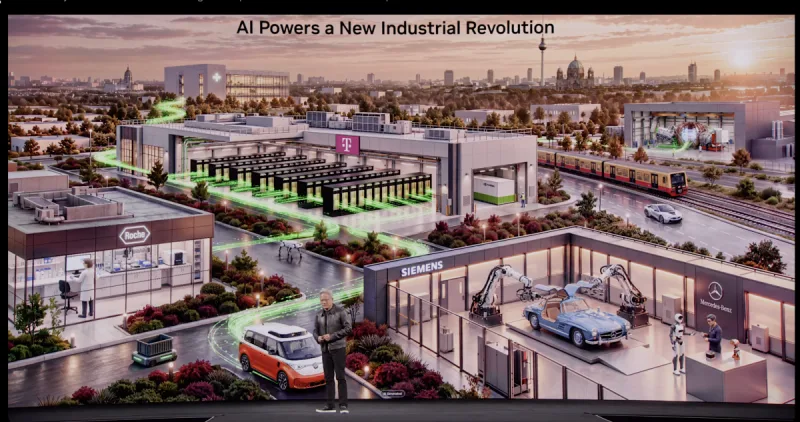
Nvidia shifts from selling chips to selling AI infrastructure as a complete system
At GTC Berlin, Jensen Huang repositioned Nvidia's strategy away from graphics processors toward end-to-end AI deployment, introducing containerized factories, agent security frameworks, and structured data models that address enterprise bottlenecks beyond raw computing power.

Five Technology Shifts Will Push CIOs From Passive Oversight to Active Design
Enterprise leaders must architect AI systems proactively rather than react to rapid technological change, according to Gartner research presented at its IT Symposium/Xpo in Orlando.

Comet Cloud eyes underserved SMBs as GPU inference demand shifts
With AI workloads moving from training to inference, neocloud providers see opportunity in small and midsize businesses that hyperscalers have deprioritized. Comet Cloud is positioning itself to serve that market with dedicated clusters and aggressive pricing.