AWS Challenges Nvidia's Grip on AI Development With PyTorch Integration Tool
Amazon Web Services unveiled TorchNeuron on Monday, a new tool designed to make it simple for developers to run PyTorch-based AI applications on AWS's Trainium chip, directly challenging Nvidia's dominance in AI hardware.
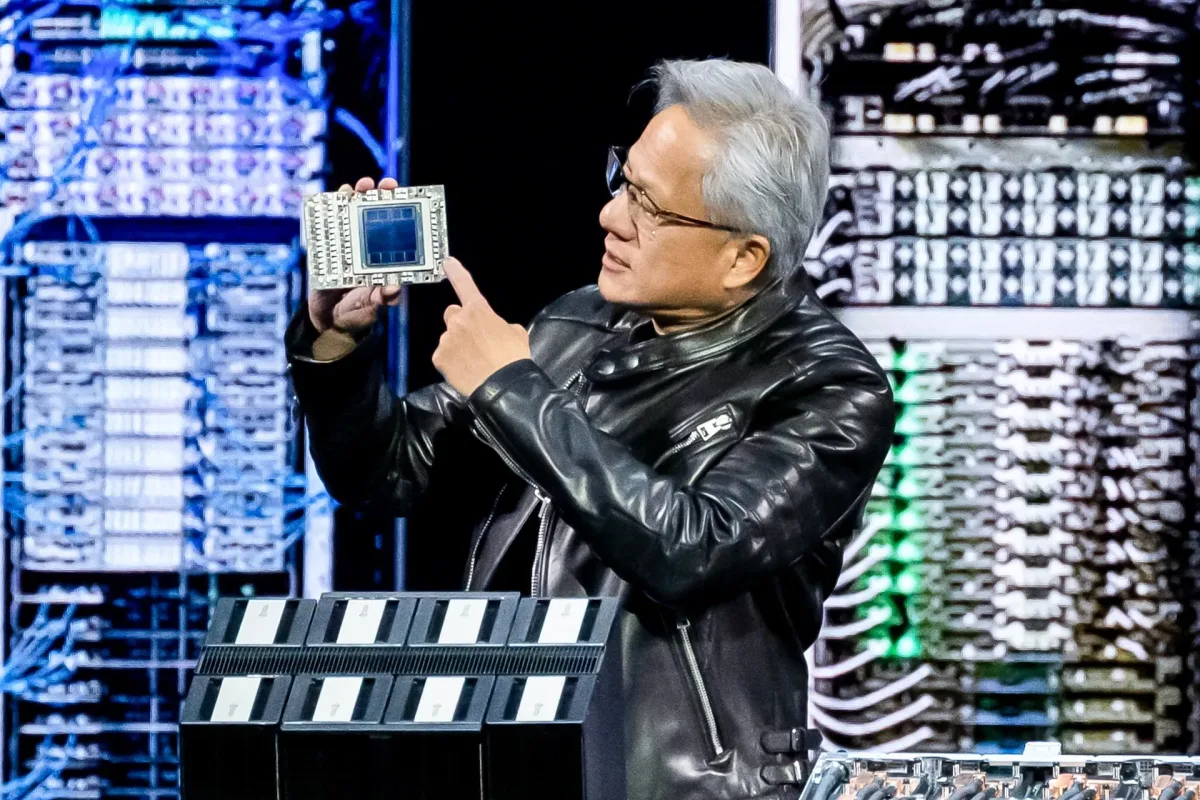
Amazon Web Services introduced TorchNeuron this week, enabling developers to port their PyTorch-based AI applications to Trainium, AWS's custom AI processor. The move represents a frontal assault on Nvidia's commanding position in AI infrastructure, a lead built substantially on software integration rather than hardware alone.
The tool operates by allowing PyTorch applications to execute on Trainium with just a single configuration modification—no rewriting of application code necessary. PyTorch, an open-source machine learning framework originally created by Facebook and now maintained by the Linux Foundation since 2022, powers roughly 85% of AI applications in production today.
Nvidia has invested years embedding its CUDA software infrastructure into PyTorch, making the framework's default behavior favor Nvidia GPUs and processors. This tight coupling has effectively locked developers into Nvidia's ecosystem by default. While competitors including AMD and Apple have created pathways to port PyTorch applications to their own hardware, AWS contends that moving to Trainium offers distinct advantages beyond mere technical compatibility.
AWS emphasizes that Trainium integration provides startups access to the full breadth of AWS cloud services, not merely compute capacity. The company positions this as superior to relying on specialized cloud providers focused exclusively on Nvidia hardware, such as Coreweave, Nebius, and Firmus.
You're building on AWS. You're not betting on a single-purpose compute provider and scrambling to build everything else around it. On AWS, the infrastructure to go from prototype to production is already there, allowing a founder to move fast and scale when they need to.
Colin Brace, VP of Technology Software at AWS Annapurna Labs
AWS highlights that Trainium handles both model training and inference—the two primary phases of AI workload execution—on identical silicon. This unified approach, combined with deep integration into cloud infrastructure, can deliver cost advantages even when per-token pricing appears higher elsewhere.
The company points to Deepgram, an AI voice platform competing with ElevenLabs, as evidence of Trainium's economic benefits. Deepgram transitioned to Trainium using native PyTorch support and now achieves 70% greater audio processing throughput per dollar while maintaining production-grade accuracy.
Trainium's value is price-performance plus the fact that it's one platform for both training and inference, which improves the economics across a full workload.
Colin Brace
Decoupling PyTorch from Nvidia
Beyond offering its own hardware alternative, AWS is pursuing a broader strategy to reduce PyTorch's dependency on Nvidia. The company intends to contribute code modifications upstream to the PyTorch project itself, working with the broader PyTorch community to eliminate framework code that inherently favors specific hardware vendors.
Amazon's approach extends beyond its own hardware. The company is contributing changes upstream to PyTorch itself, working with the PyTorch community to remove code that ties the framework to specific chips. The goal is to make PyTorch more hardware-agnostic for the entire developer community, not just Trainium users.
AWS, in its announcement blog post
This strategy carries significant implications. PyTorch's fundamental purpose involves abstracting away the technical complexities of deploying AI code across different hardware platforms. Reducing Nvidia's embedded advantage could either deliver genuine developer choice and more competitive pricing, as AWS suggests, or introduce additional configuration complexity that developers must navigate themselves.
If AWS succeeds in substantially decoupling PyTorch from Nvidia's ecosystem, the consequences could extend far beyond competition between chip manufacturers. As Brace framed it: "The real story is removing the lock-in that kept developers from having a real choice at all."
Read more

Nvidia shifts from selling chips to selling AI infrastructure as a complete system
At GTC Berlin, Jensen Huang repositioned Nvidia's strategy away from graphics processors toward end-to-end AI deployment, introducing containerized factories, agent security frameworks, and structured data models that address enterprise bottlenecks beyond raw computing power.

Five Technology Shifts Will Push CIOs From Passive Oversight to Active Design
Enterprise leaders must architect AI systems proactively rather than react to rapid technological change, according to Gartner research presented at its IT Symposium/Xpo in Orlando.

Comet Cloud eyes underserved SMBs as GPU inference demand shifts
With AI workloads moving from training to inference, neocloud providers see opportunity in small and midsize businesses that hyperscalers have deprioritized. Comet Cloud is positioning itself to serve that market with dedicated clusters and aggressive pricing.