Tech Buyers Face Tariff Uncertainty: Should You Upgrade Now or Wait?
As the Trump administration negotiates tariffs that could raise consumer electronics prices by up to 34%, technology shoppers are weighing whether to purchase devices immediately or hold off until trade policy stabilizes.
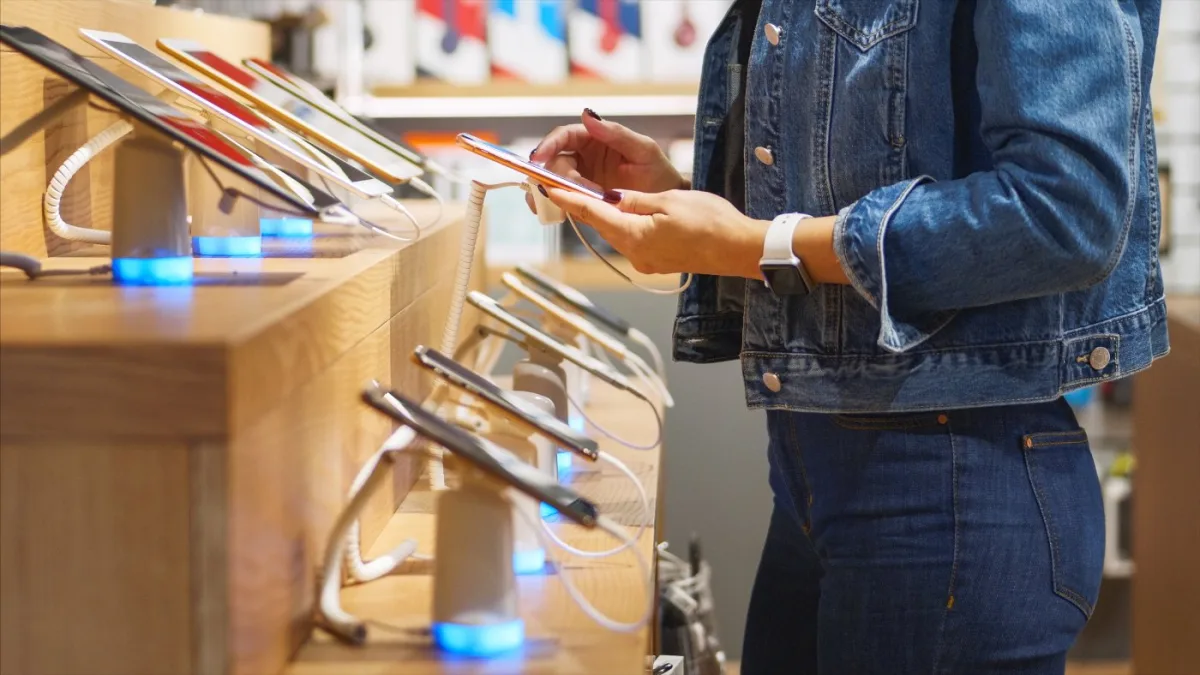
Trade negotiations are reshaping how the US conducts business globally, with President Donald Trump at the helm of renegotiations with multiple nations. The administration labeled the trade deficit a national emergency and initially floated a 145% tariff on Chinese goods before settling on 30% during a 90-day negotiation window. The Consumer Technology Association warns that a 25% tariff across consumer electronics could drive smartphone costs up 31% and laptop and tablet prices up 34%.
The question facing consumers is straightforward: should you purchase your next smartphone or television immediately, or should you hold out until international trade normalizes?
Those considering device upgrades in the near term may benefit from acting sooner rather than later. A practical approach involves determining whether the new device offers capabilities genuinely needed for work or home, and whether your current equipment still has useful years ahead.
Conversely, purchasing today ensures you obtain a current-generation product regardless of what trade conditions unfold over the coming years.
The tariff war is "going to lead to higher costs for consumers ultimately and for households,"
Ed Brzytwa, Consumer Technology Association vice president of international trade
Brzytwa noted that while the CTA does not advise consumers on spending decisions, families typically begin planning back-to-school technology purchases during summer months. Current tariff uncertainty has created an unusual environment for making these choices.
The administration is creating a lot more uncertainty with these varying dates: tariffs on, tariffs off, tariffs might come back on. And so, if you think that the tariffs are going to come back on July 9th, you would want to purchase something before that because prices might go up later,
Brzytwa
Those supporting tariffs contend that moving manufacturing back to the US, particularly for advanced chip production, would strengthen the American economy.
Court challenges and legal uncertainty
The U.S. Court of International Trade blocked tariffs from taking effect on Wednesday, determining they exceed presidential authority. The Trade Act of 1974 permits presidents to impose temporary trade taxes only up to 15%, the court stated, though the Trump administration reaffirmed its commitment to the original national emergency declaration on trade deficits. A reprieve for tech companies and consumers could materialize if the court's decision holds.
That reprieve is not yet guaranteed. A federal appeals court paused the ruling at the administration's request as of Thursday.
The Federal Circuit will hear arguments from plaintiffs—representatives of US states and small businesses—by June 5, with administration responses due by June 9.
Some economists have begun using the acronym "TACO" (Trump Always Chickens Out) when discussing the tariff strategy, a dismissive term suggesting the administration frequently retreats from severe tariff threats.
Raw materials and supply chain vulnerability
Many essential materials for global tech manufacturing originate in China. A trade conflict could severely damage US battery storage capabilities. China's restrictions on rare earth metal exports—components vital to computer chips—could also disrupt EU manufacturing operations. These controls are widely interpreted as China preparing for escalating trade tensions with the US.
Energy analytics firm Wood Mackenzie projects that elevated tariffs could reduce global GDP by roughly 3% by 2030, driven by effects on oil, gas, power, and metals sectors.
Apple pricing under tariff pressure
Consumers shopping for Apple products later this year should not anticipate significant price reductions. Tariffs will likely affect Apple devices since most manufacturing happens outside the US. An iPhone currently priced at $1,200 could reach $1,500 under new tariff structures. Full US-based iPhone production could push retail prices to $3,500 per unit, according to analyst estimates.
Apple has begun relocating portions of its supply chain away from China to mitigate these effects. CEO Tim Cook stated that most iPhones sold through June 2025 will be produced in India, where the company is expanding manufacturing. Vietnam also hosts Apple production facilities.
This relocation may not fully shield Apple from cost increases. According to Gartner analyst Ranjit Atwal, "Prices may still go up as India will not be as efficient in manufacturing as China but may be less impacted by tariffs."
The India shift has drawn political criticism. Trump objected to Apple's move to India and threatened a 25% tariff specifically on iPhones, though this policy remains unenforced for now.
Apple and comparable firms might absorb certain cost increases internally to shield consumers from price hikes. However, Atwal suggested Apple is more inclined to enhance manufacturing efficiency and streamline its cost structure.
There may be short-term impact on margins, but Apple may focus on pushing higher priced goods to users to maintain revenue and then margins,
Atwal
Regarding US-assembled devices: Apple manufactures certain semiconductors at a TSMC facility in Phoenix, but these are still transported overseas for final assembly.
Samsung faces similar tariff threats
On May 23, Trump indicated Samsung devices could receive the same 25% tariff treatment as Apple products. Most Samsung phones sold domestically are made in Vietnam or India. While Samsung operates facilities in South Korea, Brazil, and Indonesia, those plants primarily serve regional markets and do not export substantially to the US. The company also assembles televisions in Mexico.
During its April earnings presentation, Samsung CFO Soon-cheol Park warned of "potential risk of demand slowdown" stemming from US tariff uncertainty. Samsung may relocate manufacturing operations if elevated tariffs persist.
Google and Microsoft face different tariff exposure
Despite being US-based, Google and Microsoft both manufacture substantial portions of their hardware internationally. Both companies likely are accumulating inventory in American warehouses before tariffs take hold; once supplies deplete, higher import expenses may transfer to customers.
Microsoft produces numerous laptops and tablets in China and Vietnam. Gaming consoles may also experience price increases. The company could also face elevated hardware expenses for its own infrastructure.
As a software-focused enterprise, much of Microsoft's earnings face reduced tariff exposure. During an April earnings call, CEO Satya Nadella noted the company may be well-positioned to assist businesses in controlling expenses through software tools during economically uncertain periods.
Google's primary revenue source—digital advertising—should remain largely unaffected by tariffs on physical goods. That said, Google could suffer if advertisers cut spending as prices climb. Google's data center infrastructure investments—encompassing servers and networking gear—could encounter cost increases if tariffs hit components.
Overall, Apple and Samsung face substantially greater product price increase risks than Google or Microsoft.
Nevertheless, all technology providers would likely encounter elevated infrastructure costs under an aggressive tariff regime. AI data center components, a rapidly expanding category, originate from overseas sources.
Those costs will be borne by the consumer in the form of higher prices because it's going to filter through the supply chains, and maybe even into the services that are provided by US companies to consumers,
Brzytwa
Smart home and IoT devices at risk
Smart home and Internet of Things device pricing could also suffer from tariffs. Manufacturers including LG and Dyson may experience cost pressures. General Electric produces most components domestically, potentially helping it maintain pricing stability. Though GE's appliance unit was sold to Chinese manufacturer Haier, those products continue assembly in Kentucky.
Amazon's smart home offerings, including Alexa and Kindle devices, are manufactured by Foxconn in China, making them susceptible to tariff impacts.
Tariffs on lithium-ion batteries and numerous small home electronics—predominantly made in China—are anticipated to raise prices across many consumer product categories.
What happens next
Reciprocal tariffs are projected to commence in June, and with the US administration leveraging device prices as a negotiating tool, the situation remains fluid. Analysts believe Trump may be opening negotiations with extreme tariff proposals to pressure trading partners into concessions, with final rates likely falling below initial demands.
Should the 145% tariffs materialize, according to Brzytwa, "no one's going to pay that 145% tariff rate, so that leads to unavailability."
There won't be goods and empty shelves, and that's always been the worry that we won't have those products at all on the shelves in the United States because of the high tariff rate,
Brzytwa
Read more

TechCrunch Disrupt 2026 offers $75 passes for laid-off workers seeking their next opportunity
Those affected by recent tech layoffs can attend TechCrunch Disrupt 2026 at San Francisco's Moscone West for $75, with the discounted Expo+ Pass limited to the first 100 qualifying applicants before the event opens October 13.

How AI Created the GTM Engineer: Clay's Kareem Amin on a Rapidly Emerging Role
A position that barely existed two years ago is now appearing across technology companies. At TechCrunch Disrupt 2026, Clay's founder will explain how AI and automation are reshaping go-to-market work.

Deadline Tonight: Last Chance to Host a Side Event at Founder Summit 2026
Applications to host a Side Event during TechCrunch Founder Summit 2026 in Boston close at midnight PT tonight. The event runs November 1–7 and will draw over 1,000 tech leaders.