Federal AI Moratorium Could Upend State Compliance Strategies for CIOs
A proposed 10-year freeze on state and local AI regulations faces a narrow path through Congress, but technology leaders should prepare for significant shifts in compliance planning regardless of the outcome.
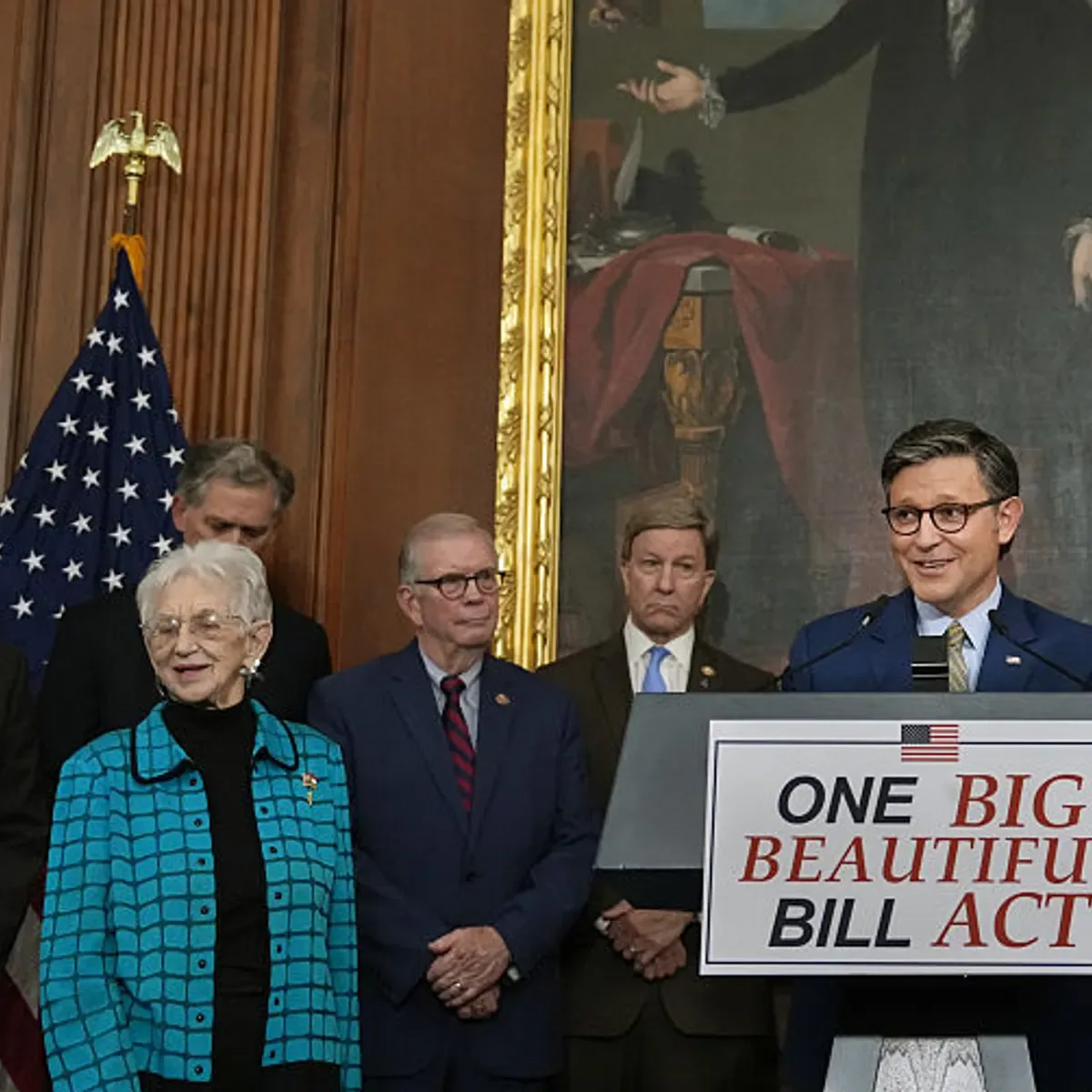
Lawmakers are preparing to debate legislation this summer that would impose a decade-long pause on AI regulations enacted at the state and local level, as part of a sweeping fiscal package the Trump administration has branded One Big Beautiful Bill. The measure would halt new state-level AI governance, though it carves out room for laws that promote the technology's development and deployment.
The potential impact extends across the technology sector. More than 45 states introduced AI-related bills during the previous legislative cycle, while 31 states have already passed resolutions or enacted laws. A moratorium could disrupt compliance efforts that enterprises and their technology leaders have already undertaken, including hiring external consultants and legal specialists to navigate the fragmented regulatory landscape.
Supporters of the freeze argue that a unified national standard would replace the increasingly complicated web of state regulations. Opponents counter that the proposal creates more uncertainty than clarity. Ja-Naé Duane, faculty member at Brown University and research fellow at MIT's Center for Information Systems Research, observed that "This freeze might simplify things on the surface, but it raises the stakes for internal oversight and long-term thinking. For CIOs, the real work starts now."
The proposal has caught many legal and technology experts off guard, particularly given the federal government's historically hands-off stance on AI oversight. Niloy Ray, a shareholder at Littler and member of the firm's AI and Technology Practice Group, noted that "There was, at least on my part, no expectation that there would be something quite this drastic."
The Trump administration has signaled its deregulatory intentions since taking office in January, rescinding earlier AI policies and directing federal agencies to remove barriers to innovation. Vice President JD Vance promoted this philosophy internationally at the AI Action Summit in Paris during February, stating "I'm not here this morning to talk about AI safety. I'm here to talk about AI opportunity."
State-level policymakers have already begun responding to this shift. Texas rolled back its AI Act in March, while Virginia Governor Glenn Youngkin vetoed legislation in the same month that would have imposed requirements on AI developers and deployers with associated penalties.
Major technology firms including OpenAI and Google have advocated for centralized governance frameworks and would likely benefit from reduced state-level oversight. Leaders at Meta, Cohere, and other AI companies have suggested that current regulations are already sufficient.
Organizations that moved quickly to comply with emerging state regulations face particular risk. Nic Adams, co-founder and CEO of Indianapolis-based cybersecurity firm 0rcus, warned that "Suppose the freeze holds, every dollar spent on 50-state compliance is wasted. Anyone who overinvested in local AI compliance, data privacy or bias audits will struggle to unwind, renegotiate, re-architect and re-deploy. Early adopters, of course, get punished; late movers get a hall pass."
Predicting the unpredictable
The legislation has already passed a critical test, though by a razor-thin margin. The House approved the bill and sent it to the Senate with a 215-214 vote that broke along party lines.
Even if the moratorium advances, its future remains uncertain. Asha Palmer, senior vice president of compliance solutions at Skillsoft, told CIO Dive that "Even if this moratorium were to pass, which I think is still very questionable, it will be subject to constitutional challenges, among other things."
Technology leaders should maintain their compliance and governance work regardless of the bill's fate. Enterprises operating across multiple countries must still navigate international requirements, particularly the European Union's AI Act. Adopting the most stringent applicable standard can help organizations prepare for future regulatory shifts.
Experts anticipate that responsible and ethical AI practices will become a market advantage and a tool for building confidence among customers and employees. Additionally, litigation can proceed independently of legislative action.
Steve Wilson, chief AI and product officer at California-based cybersecurity company Exabeam, emphasized that "Enterprises pressing forward with aggressive AI adoption will need to track judicial rulings just as closely as any proposed law. Regulatory clarity may come slowly, but legal risk will not."
Vendor management and procurement practices will likely shift if the moratorium takes effect. Duane recommended that "Vendors need to be held to a higher bar. Every AI procurement process should include questions about model transparency, data sources, and long-term compliance planning. I recommend baking adaptability and ethical use directly into your vendor contracts now, not later."
Experts caution against certain missteps, including postponing initiatives while waiting for federal guidance. Adams cautioned that "Any enterprise sitting on its ass waiting for some golden calf federal roadmap will get demolished by tech-savvy operators who view compliance as yet another adversarial domain. Get creative, or get smoked."
Read more
TechCrunch Disrupt 2026 offers $75 passes for laid-off workers seeking their next opportunity
Those affected by recent tech layoffs can attend TechCrunch Disrupt 2026 at San Francisco's Moscone West for $75, with the discounted Expo+ Pass limited to the first 100 qualifying applicants before the event opens October 13.

How AI Created the GTM Engineer: Clay's Kareem Amin on a Rapidly Emerging Role
A position that barely existed two years ago is now appearing across technology companies. At TechCrunch Disrupt 2026, Clay's founder will explain how AI and automation are reshaping go-to-market work.

Deadline Tonight: Last Chance to Host a Side Event at Founder Summit 2026
Applications to host a Side Event during TechCrunch Founder Summit 2026 in Boston close at midnight PT tonight. The event runs November 1–7 and will draw over 1,000 tech leaders.