Collaborative Fund Joins Thrive in Betting Venture Capital on Sports Franchises
Following Thrive Capital's foray into pro sports ownership, the New York-based venture firm is acquiring a stake in D.C. United and its stadium, signaling a shift in how venture money flows into sports.
Collaborative Fund, a 15-year-old New York venture firm managing roughly $1 billion in assets with early investments in companies like Lyft, Reddit, Sweetgreen, and Olipop, is now acquiring an ownership stake in Major League Soccer's D.C. United and the team's home venue, Audi Field. The move represents the latest—and smallest—venture capital firm to pursue a strategy that Thrive Capital pioneered just months earlier: deploying venture capital into professional sports ownership.
Joshua Kushner's Thrive created Thrive Eternal, a dedicated investment vehicle designed to acquire and hold "iconic franchises and cultural institutions" over extended periods, drawing capital from existing Thrive venture and growth fund investors. The initiative began with an investment in the San Francisco Giants, then escalated when former Disney CEO Bob Iger, now a Thrive partner, led the acquisition of the Los Angeles Lakers for $12.5 billion—a record price.
Historically, professional sports ownership has followed two distinct paths: wealthy individuals deploying personal fortunes, or private equity firms making strategic acquisitions. This summer, Vinod Khosla and his family agreed to purchase the Seattle Seahawks for $9.6 billion, while the Khosla family also invested in the San Francisco 49ers alongside OpenAI chairman Bret Taylor—exemplifying the personal-wealth approach. Meanwhile, private equity has dominated institutional sports investment for years, with firms like Sixth Street holding stakes in the Boston Celtics, New England Patriots, and San Francisco Giants; Ares owning a piece of the Miami Dolphins and financing Chelsea's stadium through a $500 million preferred-equity arrangement; RedBird owning AC Milan outright and holding a minority position in Fenway Sports Group, which operates Liverpool and the Boston Red Sox; and Arctos maintaining minority positions across MLB, the NFL, the NBA, and European soccer leagues. Apollo, the newest private equity entrant, has primarily focused on sports financing rather than ownership stakes.
Thrive and Collaborative are charting different courses despite both being venture firms entering sports ownership. Thrive established a standalone, perpetual-capital vehicle specifically designed to acquire premium assets. Collaborative, by contrast, is deploying capital from its standard early-stage fund used for seed and Series A investments, treating the sports investment more as infrastructure than as a buy-and-hold asset.
In correspondence shared with TechCrunch, Collaborative Fund founder and managing partner Craig Shapiro characterized the investment as consistent with the firm's existing strategy. "A franchise is the ultimate consumer product," he stated, emphasizing that D.C. United's position as one of Major League Soccer's founding franchises provides access to an institution with decades of established fan loyalty.
Shapiro highlighted several factors supporting the investment thesis: momentum in American soccer driven by a recently completed World Cup and the upcoming Los Angeles Olympics, rising youth soccer participation across the United States, D.C. United's ownership of Audi Field in Washington, D.C., a player development system operating through Loudoun County, Virginia, and rights to a future Baltimore expansion franchise.
During remarks at a TechCrunch StrictlyVC event Thursday evening in New York, Shapiro outlined a thesis centered less on acquiring an appreciating sports asset and more on the opportunities the team creates. Collaborative intends to transform Audi Field into what he describes as a showcase for companies within its investment portfolio.
As an investor in fitness technology company Whoop and beverage maker Olipop, Collaborative Fund envisions activations such as Whoop wearables demonstrations for attendees or Olipop beverages integrated into stadium concessions. Shapiro views the stadium's regular foot traffic—tens of thousands of visitors on predictable game days—as a distribution channel, particularly valuable as artificial intelligence makes more everyday experiences feel manufactured, elevating the appeal of live events.
Though Shapiro does not emphasize it, team valuations have been climbing substantially, potentially justifying the investment on financial grounds alone. Soccer franchise values have surged notably: Inter Miami's valuation has roughly doubled since Lionel Messi's arrival two years ago, MLS's average club valuation has risen approximately 134% since 2019, and D.C. United's valuation has expanded from $35 million in 2008 to $785 million currently, including its ownership of Audi Field and adjacent real estate.
Should Shapiro's premise that a franchise functions as "the ultimate consumer product" prove sound, sports ownership could represent a solid investment opportunity. The outcome remains to be determined. The transaction requires approval from MLS.
Read more
TechCrunch Disrupt 2026 offers $75 passes for laid-off workers seeking their next opportunity
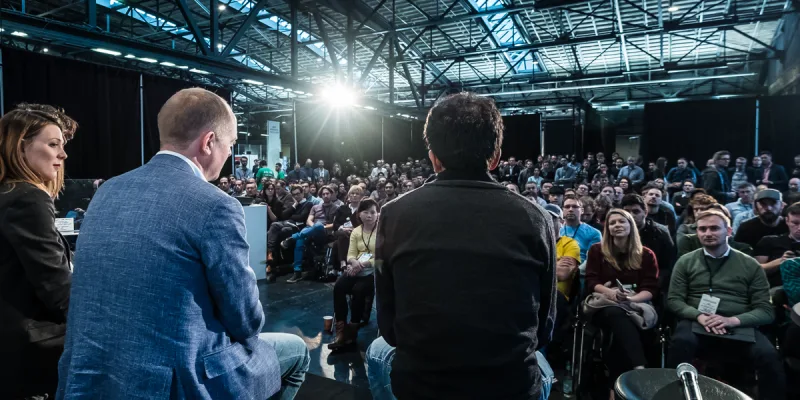
Those affected by recent tech layoffs can attend TechCrunch Disrupt 2026 at San Francisco's Moscone West for $75, with the discounted Expo+ Pass limited to the first 100 qualifying applicants before the event opens October 13.

How AI Created the GTM Engineer: Clay's Kareem Amin on a Rapidly Emerging Role
A position that barely existed two years ago is now appearing across technology companies. At TechCrunch Disrupt 2026, Clay's founder will explain how AI and automation are reshaping go-to-market work.
Deadline Tonight: Last Chance to Host a Side Event at Founder Summit 2026
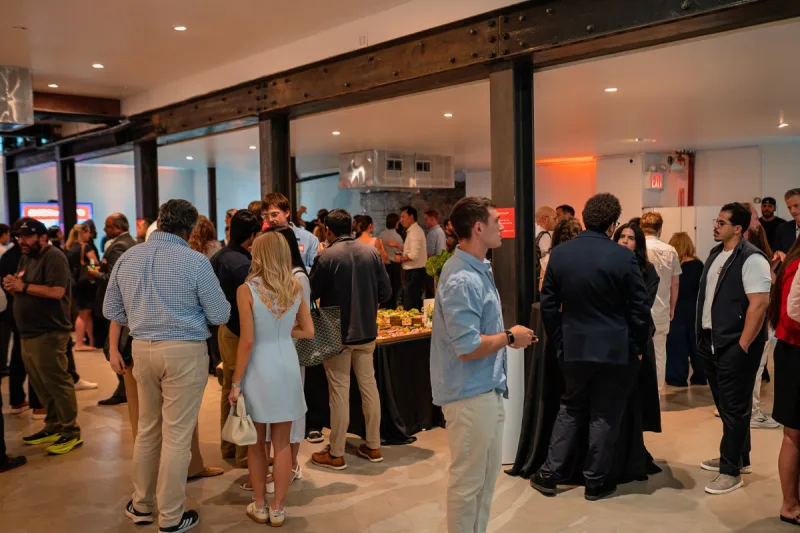
Applications to host a Side Event during TechCrunch Founder Summit 2026 in Boston close at midnight PT tonight. The event runs November 1–7 and will draw over 1,000 tech leaders.