XPENG's IRON Robot Exits First Production Line as Humanoid Manufacturing Race Heats Up
The Chinese automaker has commissioned what it claims is the world's first automated assembly facility for advanced humanoid robots, with the first unit walking off the line autonomously in Guangzhou.
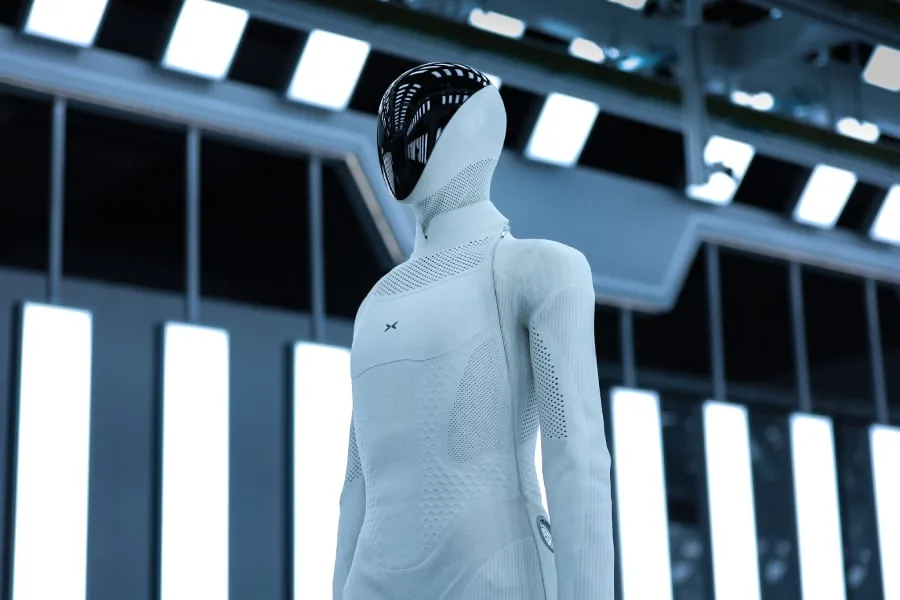
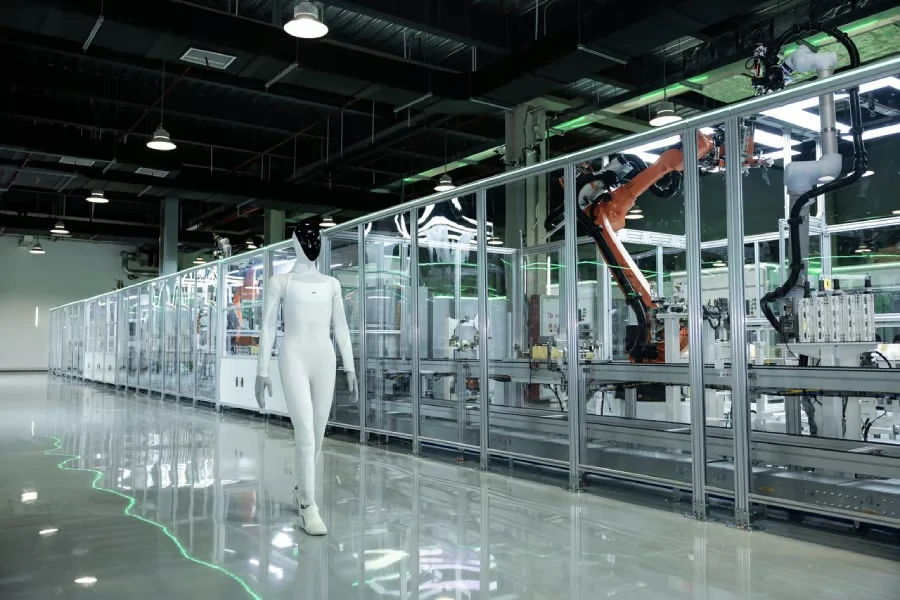
XPENG has achieved a significant production milestone with its IRON humanoid robot, which recently completed its journey through the company's newly operational assembly facility in Guangzhou. The robot's lifelike motion had previously sparked debate about whether a human operator was controlling it, but the autonomous exit from the production line demonstrates genuine autonomous capability.
The dedicated manufacturing facility represents a transition for XPENG from laboratory-based development to standardized, repeatable manufacturing processes. The company characterizes the facility as the world's first automated production line for advanced humanoid robots, though this assertion remains unverified by independent sources.
Automation handles more than 80% of the line's essential operations. XPENG constructed the system using automotive-industry quality standards and engineered it to accommodate expanding production volumes as the robotics division scales.
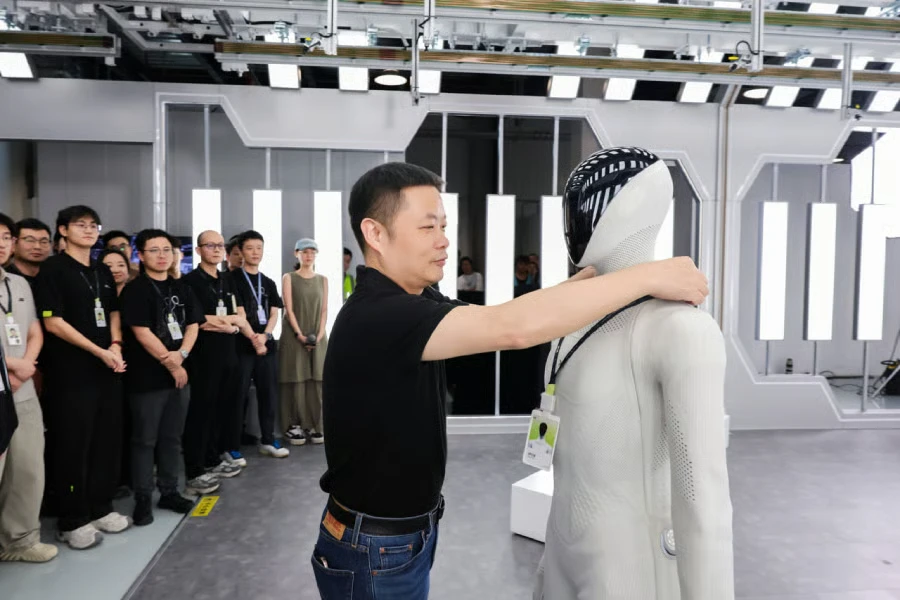
The robot production lines were created from scratch with no precedent to follow. Today's step is small, but XPENG is building the production lines for an entirely new product category.
XPENG Chairman and CEO He Xiaopeng
What makes IRON different
IRON is engineered as a multipurpose humanoid platform rather than a specialized machine designed for a single function. The robot incorporates 76 degrees of freedom throughout its structure, with 21 degrees in each hand alone.
Three custom Turing AI chips deliver up to 2,250 TOPS of computational capacity, enabling XPENG to deploy its Physical AI foundation model directly within the robot. This embedded processing approach permits IRON to tackle demanding tasks independently, minimizes communication delays, and strengthens data privacy.
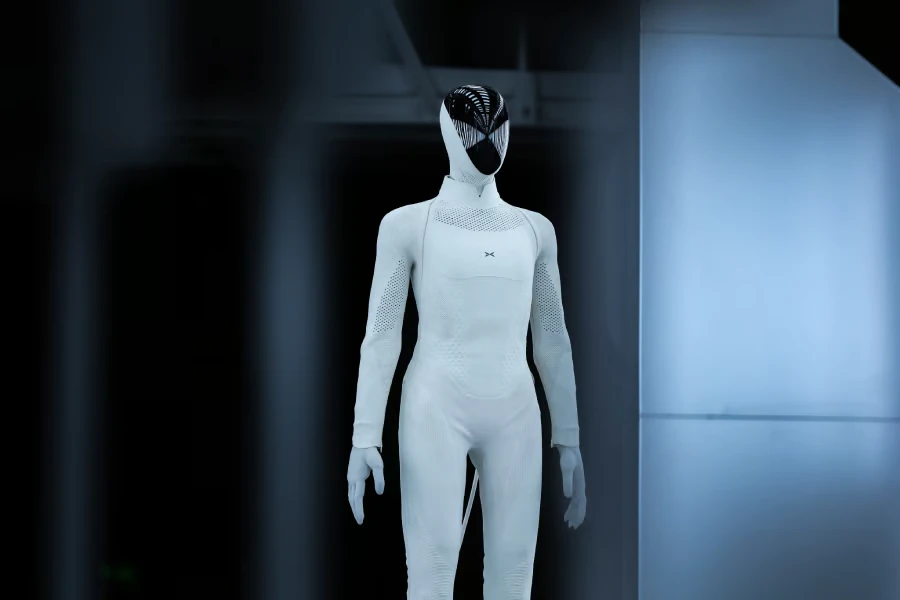
XPENG engineered IRON with a completely sealed flexible lattice design that balances human-like proportions with protective features.
The hard part starts now
Establishing a production line represents progress, yet it does not guarantee that XPENG can achieve cost-effective or high-volume manufacturing of humanoids. XPENG has withheld information about production capacity and IRON's retail price, both critical factors for the industry.
Real-world viability depends on factors beyond technical specs. Prospective buyers will prioritize cost, reliability, maintenance demands, and whether robots can execute meaningful work with minimal human intervention.
XPENG projects that IRON will transition to full-scale production by late 2026, with initial rollouts occurring at company facilities and retail locations. The company plans to expand availability to broader Chinese and international markets during 2027. This phased approach allows XPENG to validate IRON's performance in controlled settings before confronting the demands of external clients.
XPENG bets on robotics as a new business
The manufacturing initiative follows a major funding round for XPENG's robotics division, which raised over $900 million at a post-money valuation exceeding $6.3 billion.
XPENG positions robotics alongside vehicle manufacturing and international growth as a core expansion avenue. Co-President Brian Gu has indicated that IRON might eventually deliver superior profit margins compared to XPENG's vehicle lineup due to technological barriers protecting the market. However, this projection lacks validation, as the robotics segment has not yet produced significant commercial returns.
The operational production line provides XPENG an opportunity to validate its robotics ambitions at manufacturing scale. The ultimate test will come through pricing decisions, production volumes, and performance results from early deployments, which will reveal whether IRON can mature into a commercially viable offering.
Read more

Identity governance faces new test as AI agents proliferate across enterprises
Autonomous AI agents are forcing organizations to rethink how they manage access and permissions at machine speed. SailPoint's Navigate conference will explore how identity security must evolve to handle this expanding population of non-human actors.

Vertical AI and Purpose-Built Hardware Drive Next Wave of Technology Growth
Specialized AI systems tailored to specific industries are emerging as the primary engine for the next phase of technology expansion, according to insights from the Bank of America Private Tech Trailblazers Conference 2026.
CrowdStrike and CoreWeave Partner to Automate AI Security at Machine Speed
As cyberattackers breach systems in seconds, CrowdStrike and CoreWeave are embedding automated defenses throughout AI infrastructure, turning attacks into training data for faster response.