CrowdStrike and CoreWeave Partner to Automate AI Security at Machine Speed
As cyberattackers breach systems in seconds, CrowdStrike and CoreWeave are embedding automated defenses throughout AI infrastructure, turning attacks into training data for faster response.
Defending AI systems demands security that operates as quickly as the threats themselves while keeping infrastructure running continuously. This convergence is pushing security expertise and specialized computing infrastructure together, with automation woven into the platforms where enterprises build and deploy machine learning models.
In 2025, CrowdStrike observed cybercriminals breaking into systems in as little as 27 seconds, according to Bartley Richardson, chief of AI at CrowdStrike Holdings Inc. Countering such speed demands both training and inference computing resources. "You can't have humans combat this alone," Richardson said. "You need machine-speed defense, and that relies on critical infrastructure."
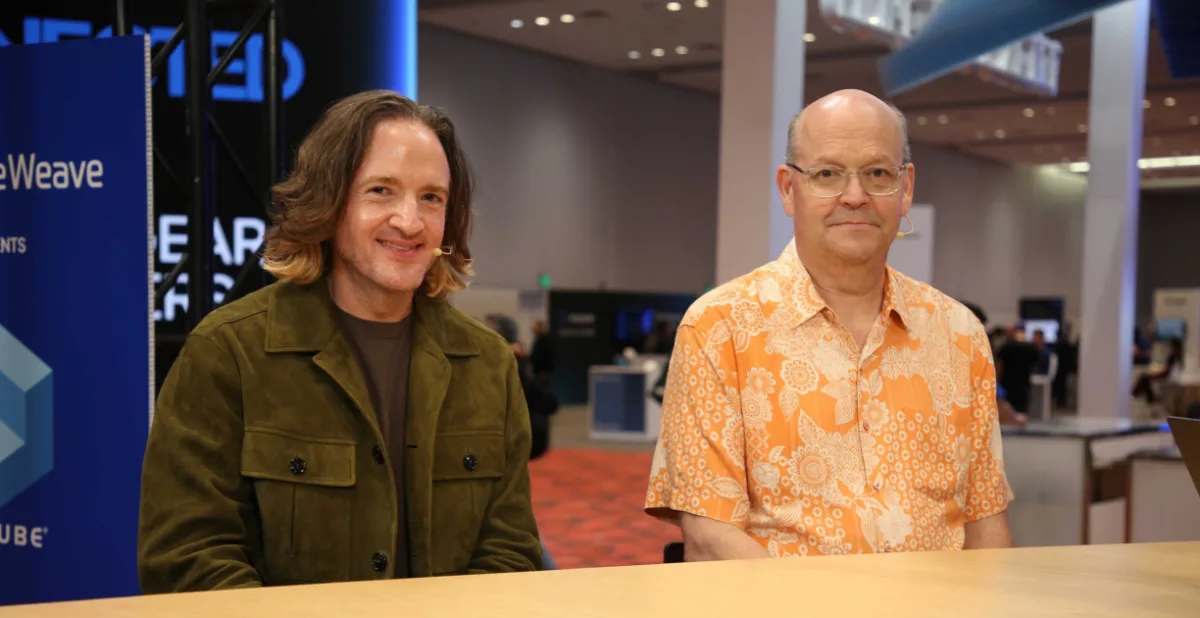
Richardson and Jim Higgins, chief information security officer of CoreWeave Inc., discussed the partnership during an appearance at the Fully Connected event, speaking with theCUBE Research's Dave Vellante and John Furrier.
Attacks become data for defensive models
The collaboration merges CrowdStrike's threat intelligence and attacker knowledge with CoreWeave's infrastructure for computing. CoreWeave provides the training and inference resources for SafeMind and serves as a design partner for CrowdStrike's Cyber Superintelligence Lab.
The strategy hinges on what Richardson calls adversarial co-evolution. "The name of the game … is adversarial co-evolution, which is a fancy way of saying, 'We train and we steer the best offensive capabilities to attack, to find ways around defensive operations,'" he explained. "But then, we train these defensive models on large-scale infrastructure to learn from those attacks."
CoreWeave faces the challenge of strengthening defenses without interrupting production systems. This means embedding security into live operations, according to Higgins. "That's what I refer to as the aikido of the security problem," he said. "Anything that I can do to affect security while the machine is running and use its own energy to promote the security needs is exactly what I do. Using AI to support and scan my code is incredibly important, but also to be in the [continuous integration and continuous delivery] pipeline to use automation to fix misconfigurations."
Fundamentals remain essential despite AI advances
Attackers operate under constraints of time and budget, making the simplest entry points the most appealing targets. Multiple basic vulnerabilities stacked together can create the access they need, Higgins noted. "When you say something is secure, test it and test it often to be sure, but also do the basics," he said. "Patch your stuff and continually test and monitor for those issues."
https://www.youtube.com/embed/Pdltp8QUcXA?feature=oembed
CrowdStrike is building automation into continuous security operations, but these systems must earn trust from CoreWeave and its customers. Richardson emphasized the relationship between AI and trust. "People ask, 'When do we get to the end of AI?' And I say, 'Never,'" he said. "And then I tell them, 'It's because it's AI until you trust it. Then you start to think of it as automation.' As we make our investment into AI that's always on, what's so important for us is how trust is built into the system."
Read more
Identity governance faces new test as AI agents proliferate across enterprises
Autonomous AI agents are forcing organizations to rethink how they manage access and permissions at machine speed. SailPoint's Navigate conference will explore how identity security must evolve to handle this expanding population of non-human actors.

Vertical AI and Purpose-Built Hardware Drive Next Wave of Technology Growth
Specialized AI systems tailored to specific industries are emerging as the primary engine for the next phase of technology expansion, according to insights from the Bank of America Private Tech Trailblazers Conference 2026.

Enterprise AI Thrives While Consumer Adoption Stalls at 2%
Tech leaders gathered at the White House this week to pledge AI safety commitments as the industry rebrands the technology, but consumer uptake remains minimal while enterprise spending accelerates.