Open versus closed AI: The strategic choice reshaping startup economics
At TechCrunch Disrupt 2026, Nvidia executives will explore how founders should navigate the trade-offs between proprietary and open AI models—a decision that ripples through cost, margins, control, and competitive advantage.
Building an AI product forces founders into a fundamental choice: pursue a proprietary frontier model for speed, develop on an open foundation for control, fine-tune a custom version, deploy locally, or juggle multiple models simultaneously. The decision carries weight. Getting it wrong cascades through nearly every aspect of a startup—pricing, infrastructure costs, profit margins, differentiation, execution velocity, and strategic flexibility.
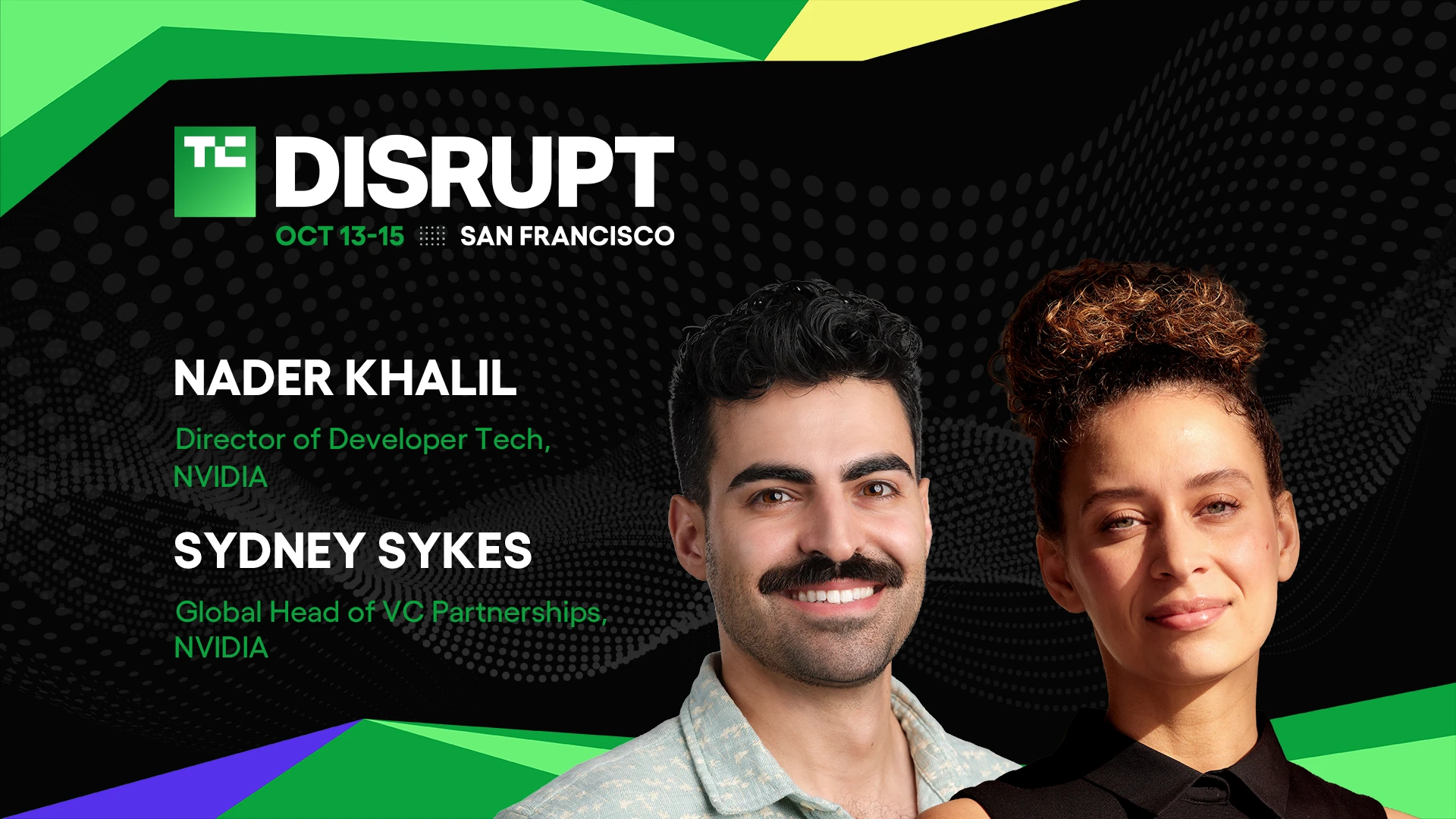
This tension sits at the heart of "The Open vs. Closed AI Debate Is Just Getting Started," a session scheduled for the Builders Stage at TechCrunch Disrupt 2026, running October 13-15 in San Francisco. Nvidia's Nader Khalil, Director of Developer Tech, and Sydney Sykes, Global Head of VC Partnerships, will examine the practical trade-offs between these approaches and whether either delivers lasting competitive advantage.
The gap narrows, but the choice stays complex
Open-source models have matured rapidly. Nvidia reported in July that 145 papers presented at ICML 2026 referenced its Nemotron open models and datasets, with additional research deploying other Nvidia open families in robotics, autonomous vehicles, and biomedical applications.
Simultaneously, proprietary frontier labs continue advancing their capabilities. The market has shifted: the question is no longer whether open models work, but rather where each approach makes business sense.
Even Nvidia resists a binary framing. CEO Jensen Huang stated at GTC earlier this year that the future belongs to proprietary and open, not proprietary versus open. That clarity evaporates once you must build a company on the decision. If two models perform equally, does lower cost prevail? If one grants superior data control, does that outweigh the burden of maintaining your own infrastructure? When capabilities shift every few months, how tightly should your product depend on any single model? These questions will structure the Disrupt conversation.
Two angles on the same stack
Khalil brings a builder's and infrastructure perspective. Before joining Nvidia as Director of Developer Tech—overseeing open source and local AI—he co-founded Brev.dev, an AI infrastructure startup that Nvidia acquired in July 2024. Brev.dev focused on simplifying GPU infrastructure access across different environments. Nvidia's documentation described the platform as enabling developers to run AI software across public cloud, private cloud, and on-premises systems without vendor lock-in.
Sykes contributes the venture ecosystem lens as Nvidia's Global Head of VC Partnerships. Together, they can dissect the same decision from multiple angles: what builders require to ship products and what companies need to become investable, scalable enterprises.

Your model isn't your moat—until it is
An uncomfortable question lurks beneath the open-versus-closed debate: where does your actual competitive advantage originate?
When rivals can access the same proprietary API, differentiation must emerge elsewhere—proprietary datasets, workflow design, distribution channels, customer relationships, product quality, or specialized capabilities. Selecting an open model, however, doesn't automatically create a moat either. You gain flexibility and potentially stronger control, but you inherit decisions around deployment, optimization, and infrastructure. Economics shift based on workload and scale.
Nvidia is pouring resources into the open ecosystem. Its Nemotron 3 Super, released in March, is a 120-billion-parameter open model engineered for agentic workloads. Companies are already layering it with proprietary models rather than treating the two as mutually exclusive. This hybrid reality may prove the most revealing aspect of the debate.
Why this matters beyond the engineering team
The session reaches beyond AI engineers. For founders, the choice shapes margins, investor narratives, and product strategy. For investors, recognizing where value sits in the stack helps separate genuine defensibility from a thin application layer built on someone else's foundation. For business leaders, it touches procurement, security, data governance, infrastructure, and the ability to switch vendors. For developers and students, it connects today's technical decisions to tomorrow's business models.
The industry doesn't need another abstract debate about whether open or proprietary AI is philosophically superior. What builders need is clarity on the actual trade-offs. Khalil and Sykes will provide that perspective on the Builders Stage at TechCrunch Disrupt 2026 in October.
Read more
Identity governance faces new test as AI agents proliferate across enterprises
Autonomous AI agents are forcing organizations to rethink how they manage access and permissions at machine speed. SailPoint's Navigate conference will explore how identity security must evolve to handle this expanding population of non-human actors.

Vertical AI and Purpose-Built Hardware Drive Next Wave of Technology Growth
Specialized AI systems tailored to specific industries are emerging as the primary engine for the next phase of technology expansion, according to insights from the Bank of America Private Tech Trailblazers Conference 2026.

CrowdStrike and CoreWeave Partner to Automate AI Security at Machine Speed
As cyberattackers breach systems in seconds, CrowdStrike and CoreWeave are embedding automated defenses throughout AI infrastructure, turning attacks into training data for faster response.