Identity governance becomes critical as AI agents gain enterprise access
Okta is positioning identity controls as essential infrastructure for managing autonomous AI agents in business systems. The company will detail its approach at the Oktane event on September 24, where theCUBE will broadcast coverage.
The safety of artificial intelligence agents operating within enterprise systems now hinges on identity security frameworks. When AI agents authenticate to applications and perform automated tasks, organizations must recognize them as managed identities with defined permissions rather than treating them as generic software components. Okta's approach centers on adapting the access controls built for human users to govern nonhuman identities.
According to Krista Case, principal analyst and practice lead for cyber resilience and security at theCUBE Research, the core issue is establishing what an agent may do before it interacts with critical data or operational systems. Case stated: "AI agents turn identity from an access problem into an execution problem, requiring enterprises to govern what an agent is authorized to do, on whose behalf, under what conditions and for how long. That makes identity a critical control point between probabilistic AI reasoning and deterministic enterprise execution."
TheCUBE will host an exclusive broadcast from Okta's Oktane event on September 24, featuring Case alongside industry specialists from Okta and peer organizations. The discussion will examine how identity controls function as guardrails for what AI agents can access and perform.
Identity security must account for autonomous action
Conventional identity systems evolved to manage human employees, with role definitions, permission assignments and deprovisioning handled through established workflows. AI agents introduce complexity because they operate across disparate systems and execute functions without requiring human approval at each decision point. Okta is broadening its identity platform to enforce consistent authentication, authorization and governance across these agents. Each agent requires its own identity, explicit authority scope and measurable constraints.
Case elaborated on the architectural implications: "The agentic enterprise will force identity architecture to evolve beyond a human-centric model. Unique identities, least-privilege access and lifecycle governance are the starting point. Preserving accountability as agents reason across systems, invoke tools and act autonomously is the harder problem. The identity layer will become part of the governance fabric that connects human intent to machine action."
Visibility into agent behavior becomes equally important, Case noted. Fixed permission sets pose risks when an agent's assigned work, context or delegated scope changes. Dynamic authorization mechanisms can reduce that risk, while identity threat protection tools can identify credential compromise, unauthorized access expansion and attempts to gain elevated privileges in cloud and hybrid setups.
Case concluded: "Identity will become one of the most consequential control planes in the agent-driven enterprise. As agents become more autonomous, enterprises will need dynamic authorization tied to business context, delegated authority and intent, plus the ability to reconstruct not only what an agent did, but why it was permitted to do it."
How to follow the coverage
TheCUBE will provide live coverage from Okta's Oktane event on September 24, with recorded interviews available afterward. The livestream will be accessible through theCUBE's website and YouTube channel, with additional event coverage published on SiliconANGLE.
SiliconANGLE distributes "theCUBE Pod" across Apple Podcasts, Spotify and YouTube, where hosts John Furrier and Dave Vellante discuss major developments in enterprise technology, spanning AI, cloud infrastructure, regulatory matters and organizational trends. The outlet also produces "Breaking Analysis," a weekly program where Vellante reviews top enterprise tech stories by combining theCUBE reporting with spending intelligence from Enterprise Technology Research, available on Apple Podcasts, Spotify and YouTube.
Event details
At Oktane on September 24, theCUBE will examine how identity governance transforms AI agents into reliable participants in enterprise processes. Participating analysts will converse with Okta leadership and other sector figures about restricting which data and systems agents can reach and what operations they can initiate.
Read more
Identity governance faces new test as AI agents proliferate across enterprises
Autonomous AI agents are forcing organizations to rethink how they manage access and permissions at machine speed. SailPoint's Navigate conference will explore how identity security must evolve to handle this expanding population of non-human actors.

Vertical AI and Purpose-Built Hardware Drive Next Wave of Technology Growth
Specialized AI systems tailored to specific industries are emerging as the primary engine for the next phase of technology expansion, according to insights from the Bank of America Private Tech Trailblazers Conference 2026.
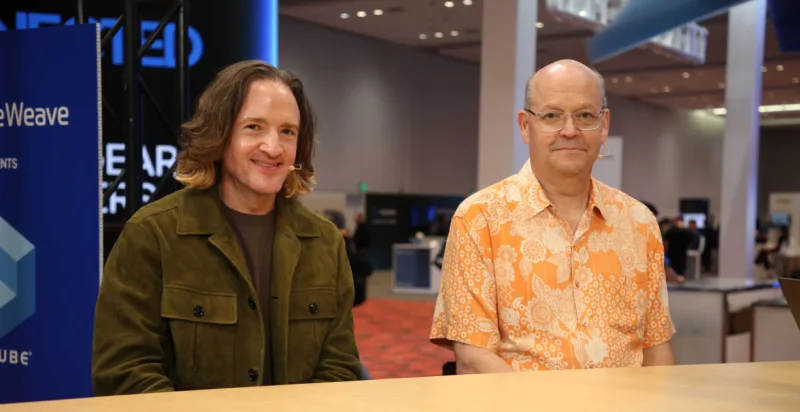
CrowdStrike and CoreWeave Partner to Automate AI Security at Machine Speed
As cyberattackers breach systems in seconds, CrowdStrike and CoreWeave are embedding automated defenses throughout AI infrastructure, turning attacks into training data for faster response.