How Qualcomm's Modular Acquisition Signals AI's Software-First Future
GV's Dave Munichiello discusses why the chip giant's purchase of the developer-focused startup and broader consolidation in AI infrastructure reveal a fundamental shift: software layers that bridge hardware fragmentation are becoming as valuable as the silicon itself.
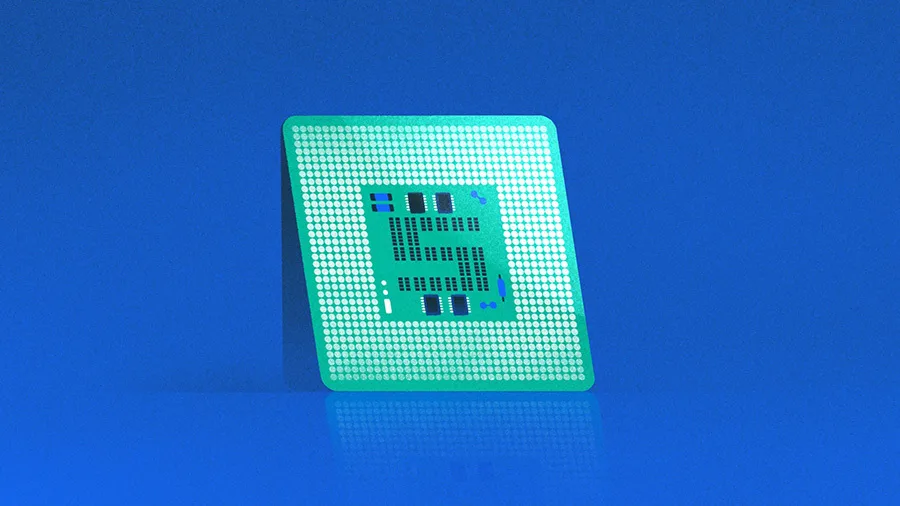
Two significant transactions in the artificial intelligence sector last week underscore a pivotal challenge facing the technology industry: controlling the mounting expenses and operational complexity tied to AI infrastructure. Qualcomm, headquartered in San Diego, acquired Modular, a Palo Alto-based developer tools company specializing in cross-platform AI model deployment. Simultaneously, chip maker SambaNova announced it was securing $800 million in funding from General Atlantic, reaching a $10 billion valuation. These moves reveal an emerging truth in the sector: as physical hardware remains constrained and costly, the software frameworks connecting disparate chips are gaining equivalent strategic importance to the processors themselves.
Observing these developments from an insider's vantage point is Dave Munichiello, managing partner at GV (Google Ventures), who orchestrated early-stage backing and maintains board positions at both Modular and SambaNova. Munichiello's background spans military service as a U.S. Army captain and paratrooper, followed by early leadership roles at Kiva Systems, the warehouse robotics firm that Amazon acquired for $775 million. His educational foundation includes a mathematics and computer science degree from Emory University and an MBA from Harvard Business School. Throughout his venture investing career, Munichiello has concentrated on fundamental software infrastructure, developer platforms and data infrastructure, having backed early-stage versions of companies including Slack, GitLab and Segment.

Hardware Fragmentation Demands Software Solutions
The Qualcomm-Modular transaction highlights an industry-wide effort to untangle AI software from the constraints imposed by hardware diversity. When asked whether this signals a permanent reorientation of value toward software abstraction layers rather than proprietary silicon, Munichiello explained the technical drivers behind this shift.
According to Munichiello, the computational landscape for AI is moving toward heterogeneity. Initially, the sector appeared dominated by Nvidia GPUs, with AMD and competitors offering alternatives. The emerging direction points toward what Munichiello calls "disaggregated inference," a model that partitions computation across specialized components depending on the specific task within a model query.
"It increasingly looks like there will be three types of chips used in disaggregated inference: an AI-specific chip, a CPU and a GPU," Munichiello stated. For Qualcomm, which manufactures all three categories, the need for unified software becomes critical. Competitors like Nvidia typically operate alongside CPUs and accelerators but lack comprehensive software bridging these components. Modular's technology addresses precisely this gap.
A Decade of AI Infrastructure Investing
Munichiello's involvement in AI infrastructure predates the current generative AI boom. GV commenced its AI-focused investments in 2016, beginning with Lattice, Chris Ré's initial venture that Apple acquired and integrated into its Siri division. The firm subsequently backed Determined AI, co-founded by Evan Sparks, which HPE purchased and incorporated into its product suite. HPE later became OpenAI's compute partner and collaborated extensively with CoreWeave.
Semiconductor investing came into focus even earlier for GV. The firm led SambaNova's Series A round in December 2017, following Lip-Bu Tan's seed investment. At that stage, SambaNova consisted of three founders and a presentation deck. GV's initial check totaled $15 million, valuing the company at $480 million, with Munichiello joining the board immediately.
Consolidation and the Path to Independence
The current wave of acquisitions by legacy semiconductor manufacturers and major cloud operators raises questions about whether early-stage founders should anticipate acquisition as their exit strategy or whether independent public offerings remain viable. Munichiello firmly believes the latter path persists.
"There is definitely a path to an independent IPO. Cerebras showed that trajectory beautifully, and I'm really happy for Andrew Feldman and that team," Munichiello said. The demand for computational capacity, he argues, vastly outpaces supply. Neither semiconductor manufacturers nor TSMC can produce chips at the required pace. This scarcity drives a parallel effort: maximizing efficiency from existing hardware.
Munichiello noted that technology sectors typically follow a pattern of initial high demand and elevated pricing, followed by a phase focused on cost reduction. The AI infrastructure space currently occupies this efficiency-optimization stage. Inference applications span medicine, law, software development, customer service and financial services. The strategy involves extracting maximum value from available chips by deploying varied processor types: economical CPUs where feasible, GPUs when necessary, and specialized silicon only for the most demanding computational segments.
The buyer landscape has expanded dramatically. Previously, semiconductor companies primarily acquired other semiconductor firms. Now, software companies, hyperscalers and AI model developers are purchasing chip makers. Amazon developed Trainium and Inferentia; Microsoft created Maia; Google built the TPU. Each major technology corporation seeks to claim proprietary silicon.
Open Source's Expanding Impact
The proliferation of open-source AI models further enlarges the potential acquirer universe. Qualcomm's announcement emphasized enthusiasm for open-source approaches, both maintaining Modular as an open-source project and supporting model open-sourcing generally. This shift carries profound implications.
"When that happens, instead of enterprise companies paying hundreds of millions of dollars to model providers to do inference, the companies themselves will own their models and run them on their own hardware," Munichiello explained. This transition redistributes both costs and control, creating additional incentive for enterprises to invest in infrastructure.
The IPO Outlook
When pressed on whether public market exits remain realistic for hardware-intensive startups, Munichiello pointed to SpaceX as evidence that capital-intensive physical technology companies can achieve scale without acquisition. He projected significant IPO activity ahead. "I know of at least 15 or 20 companies that are planning to go public, so it is going to be a very busy period," he stated.
Distinguishing Genuine Traction from Valuation Inflation
In an environment where valuations climb based on technical performance metrics, identifying authentic product-market fit becomes challenging. Munichiello emphasized that many AI companies command valuations disconnected from actual business results. Legitimate traction manifests through consistent quarter-to-quarter execution, meeting sales targets and deploying functioning systems to paying customers.
True investor appeal emerges when companies deliver substantial technology volumes into production settings—data centers operated by major enterprises and consumer devices in widespread use. Demand from emerging "Neo-Clouds," purpose-built data centers designed specifically for inference workloads, signals authentic market need. These facilities desperately seek any available chips, and the disaggregated inference model—combining three processor types to reduce total cost of ownership—proves compelling. This approach also reshapes competitive dynamics, suggesting the market accommodates multiple winners rather than a single dominant player.
Scaling Investment Thesis
GV has historically backed foundational technologies before mainstream adoption cycles. The firm's investment framework has necessarily adapted as AI infrastructure capital requirements have ballooned. When startups require hundreds of millions to compete at the frontier, maintaining focus on team quality and relationship depth while managing capital scale presents a distinct challenge.
"It has always been complicated to start from scratch and build a meaningful, generational company. We are not in the business of momentum investing," Munichiello stated. The firm seeks fundamental technologies and consequential businesses capable of standing independently, not companies likely to appreciate through investor hype alone.
When GV encountered Modular's founders Tim and Chris, the company consisted solely of an idea. GV convinced them to accept a $23 million investment. At that valuation level, the firm felt uncomfortable pricing the company above $80 million to $90 million, yet the round ultimately valued Modular at $155 million. GV secured 15% ownership in a financing round that appeared overextended for that moment. The founders subsequently assembled an exceptional team of compiler specialists, expanded operations and positioned themselves in what became AI's most strategically important segment.
Valuation approaches vary by market characteristics. Some sectors demand billions in capital, requiring GV to assemble syndicates capable of deploying hundreds of millions. Software companies offer greater flexibility—they can iterate faster, absorb mistakes and change direction. Hardware presents binary outcomes: a failed chip tape-out creates years of setback and necessitates substantial additional fundraising. A hundred million dollars extends further in software, where token optimization and engineering adjustments enable strategic pivots. Such flexibility proves far more constrained in robotics or semiconductor manufacturing.
Measuring Success and Investment Philosophy
The Modular acquisition generated substantial returns on GV's initial investment. Munichiello characterized the outcome as "a 27x return on our initial investment and roughly 10x on our total dollars invested." Yet the firm's approach extends beyond early-stage backing and withdrawal. GV commits to substantial follow-on investments, particularly during difficult periods.
Every company encounters obstacles—macroeconomic headwinds, team friction or customer acquisition challenges. Munichiello refers to these moments as "crucible moments," the junctures that define company character. In internal communications to his team, Munichiello emphasized his appreciation for unexpected challenges. "We are used to things going sideways, and that's when we really step up and help our companies. We like to find these incredibly hard problems, back exceptional people with the character and grit to survive those moments, and help them build standalone businesses," he explained.
Read more

Identity governance faces new test as AI agents proliferate across enterprises
Autonomous AI agents are forcing organizations to rethink how they manage access and permissions at machine speed. SailPoint's Navigate conference will explore how identity security must evolve to handle this expanding population of non-human actors.
Vertical AI and Purpose-Built Hardware Drive Next Wave of Technology Growth
Specialized AI systems tailored to specific industries are emerging as the primary engine for the next phase of technology expansion, according to insights from the Bank of America Private Tech Trailblazers Conference 2026.
CrowdStrike and CoreWeave Partner to Automate AI Security at Machine Speed
As cyberattackers breach systems in seconds, CrowdStrike and CoreWeave are embedding automated defenses throughout AI infrastructure, turning attacks into training data for faster response.