Finance Firms Rush to Deploy AI While Lacking Essential Controls, Workiva Research Shows
Corporate leaders are eager to automate financial reporting with AI, but most organizations have not built the governance frameworks or data quality needed to safely do so, according to Workiva executives.
The integration of artificial intelligence into financial reporting workflows is forcing organizations to rethink governance structures. While business leaders are under mounting pressure to move faster on AI adoption, a significant gap persists between executive appetite and organizational capability. Workiva Inc. is working to bridge this divide by grafting time-tested reporting controls onto AI-driven processes, though internal research indicates that readiness lags behind enthusiasm.
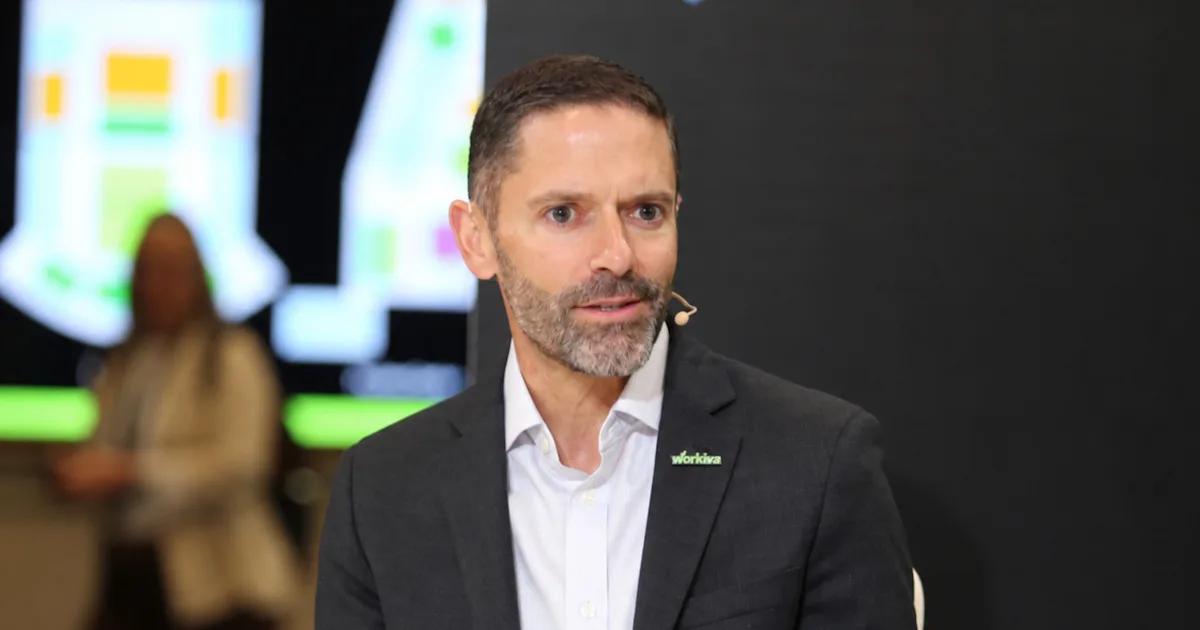
Steve Soter, vice president and industry principal at Workiva, highlighted a striking finding during remarks at the company's Amplify event, which aired on theCUBE, SiliconANGLE Media's livestreaming platform. Speaking with Krista Case and Alison Kosik, Soter discussed the safeguards necessary for responsible AI deployment in financial contexts.
The thing that stood out to me the most was a stat that actually surprised me significantly. It was that 84% of executives said that they were at least somewhat willing to trust AI to generate an annual report without human review.
Steve Soter, Workiva
Traceability and governance shape AI risk management
The dangers of deploying AI in financial reporting extend beyond simple computational errors. When organizations cannot establish an audit trail showing where data originated, who modified it, or how it underwent review, a single mistake can cascade into a systemic control breakdown. Soter emphasized that conventional financial controls remain indispensable even as machines assume greater responsibility for routine tasks.
To me, I think it's maybe a different flavor of the same risk. When I think about it, back to the days when I was a controller, it was really important for me to know where the data was coming from, who touched it, what happened to it, how did it get reviewed and approved?
Steve Soter, Workiva
Automation can amplify established workflows, yet velocity alone delivers minimal benefit when underlying processes lack reliability. Finance departments must maintain strict governance over data sources and preserve documentation of all approvals. Without these foundations, accelerating a workflow through AI can spread errors more widely and obscure their origins, creating additional complications during investigation.
To me, AI doesn't change that. It actually makes it even more important because accelerating a process, if you don't have it grounded by those things that we discussed, those four things, then speed doesn't become an asset. It really becomes a liability. It becomes a risk.
Steve Soter, Workiva
Human sign-off remains the final authority
Oversight by qualified personnel becomes critical when AI systems generate content destined for board presentations or public disclosure. Though an automated system may produce the initial material, legal and fiduciary responsibility rests with the human executive who authorizes it. Soter stressed that review functions as a permanent component of reporting discipline, not merely a temporary measure pending technological maturation.
An AI tool isn't signing off on the financial statements; a human is. If that human signs off on it, but yet trusted that AI had done everything that it was supposed to do and done it correctly, again, if that's not the case, that could be a big risk.
Steve Soter, Workiva
Data quality represents another substantial challenge. Workiva's research uncovered that merely 11% of executives viewed their information assets as adequate for AI applications, indicating that numerous firms are deploying automation before addressing fundamental data problems. While AI tools may eventually contribute to data remediation, poor-quality inputs will continue generating unreliable outputs.
https://www.youtube.com/embed/mYlG02ySzzk?feature=oembed
It makes you wonder, how bad was the data before we were even having this AI conversation? To me, that just underscores, honestly, the opportunity for AI, because I think AI actually has a role in potentially helping to clean that up, like maybe boosting that 11%, but AI is only as good as the data that it is using.
Steve Soter, Workiva
Read more

Identity governance faces new test as AI agents proliferate across enterprises
Autonomous AI agents are forcing organizations to rethink how they manage access and permissions at machine speed. SailPoint's Navigate conference will explore how identity security must evolve to handle this expanding population of non-human actors.

Vertical AI and Purpose-Built Hardware Drive Next Wave of Technology Growth
Specialized AI systems tailored to specific industries are emerging as the primary engine for the next phase of technology expansion, according to insights from the Bank of America Private Tech Trailblazers Conference 2026.

CrowdStrike and CoreWeave Partner to Automate AI Security at Machine Speed
As cyberattackers breach systems in seconds, CrowdStrike and CoreWeave are embedding automated defenses throughout AI infrastructure, turning attacks into training data for faster response.