DeepMind's AlphaGenome Atlas Opens 9 Billion DNA Variants to Global Research
Google DeepMind has released a free, searchable database of predicted effects from over 9 billion possible human DNA mutations, aiming to accelerate genetic disease research worldwide.

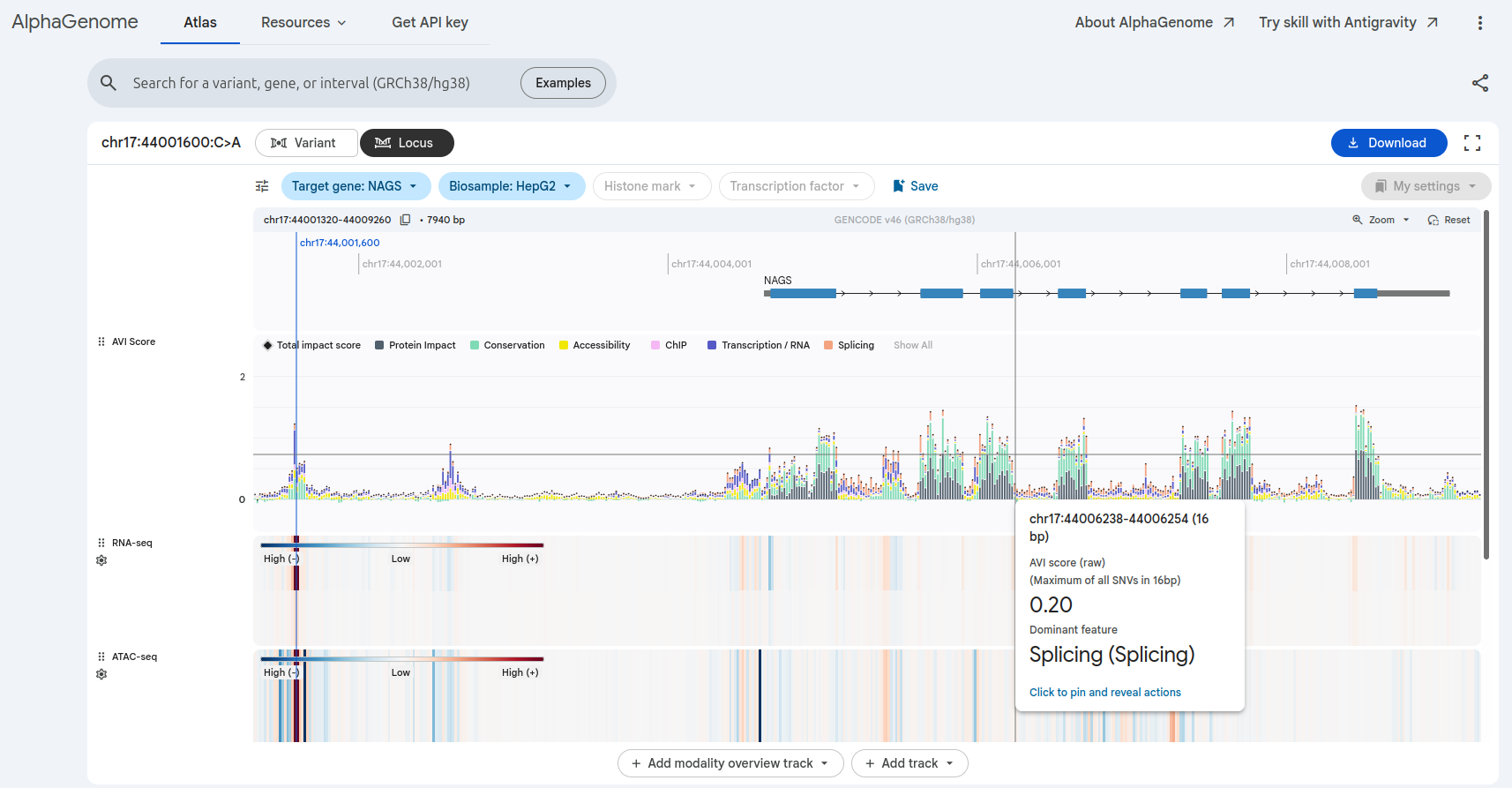
DeepMind, the AI research division of Google LLC, announced today that it has leveraged its AlphaGenome artificial intelligence system to forecast the biological impact of more than 9 billion conceivable single-letter modifications to the human genome. The organization is now releasing this data as the AlphaGenome Atlas, a freely accessible resource for the scientific community. This precomputed database catalogs how each substitution of a single DNA base would likely affect the regulatory systems controlling gene activation and deactivation. Containing over 1 petabyte of information, the Atlas dwarfs Google's AlphaFold database by approximately 30 times.
According to DeepMind's announcement, the Atlas should substantially accelerate genetic research efforts. Historically, scientists either manually executed models against individual variants sequentially or conducted laboratory tests—a laborious approach that would have required multiple human lifetimes to evaluate all 9 billion possible single-letter mutations. The new resource promises to streamline work for biologists and medical researchers, enhancing their capacity to comprehend genetic disorders and expedite investigations into therapeutic solutions. DeepMind is providing free access for noncommercial researchers via a web interface, the existing AlphaGenome application programming interface, and as a feature within Google Antigravity. Commercial access through a Google Cloud service will follow later.
The AlphaGenome Atlas extends the foundation established by DeepMind's AlphaGenome model, which debuted in January. This model enables researchers to process up to 1 million DNA letters and generate predictions for thousands of molecular characteristics, spanning gene expression, chromatin accessibility, and RNA splicing. According to Nature, AlphaGenome surpassed leading general-purpose models across 25 of 26 variant effect prediction benchmarks. DeepMind has now converted AlphaGenome's analytical outputs into an accessible resource with a user-friendly browser interface, eliminating the need for API submissions that previously required coding expertise. Since launch, approximately 9,000 researchers had adopted the API approach; the Atlas makes all predictions immediately available in a single, explorable platform.
DeepMind has also unveiled the AlphaGenome Variant Impact score, or AVI score, which merges AlphaGenome's forecasts with findings from AlphaMissense, a specialized model for analyzing protein-altering variants. This metric distills the anticipated biological consequences of a variant into a single numerical value, helping researchers identify which variants warrant priority investigation.
Early Research Applications
Collaborating institutions have already tested this methodology on various genetic and disease-related inquiries. Scientists at the University of Exeter employed Atlas predictions to identify uncommon, noncoding variants influencing protein concentrations in human blood. By applying the predicted molecular effect as a filter, they discovered 22% more associations compared to analyses conducted without the Atlas. In one instance, they reduced a pool of 526 candidates to merely four. "The human genome is a massive search space," explained Gareth Hawkes, a Medical Research Council fellow at the University of Exeter. "We can use it to shrink the haystack."
At the Stowers Institute for Medical Research, investigators utilized Atlas predictions to categorize transcription factors according to their roles across various cell types, distinguishing repressors that preserve DNA accessibility while preventing gene activation. "Without Atlas, mapping these factors would not have been possible," stated Julia Zeitlinger, an investigator at the institute, because doing the same work through experiments is just too laborious.
Limitations and Appropriate Use
Despite its potential to revolutionize biological research, the Atlas has notable constraints. Žiga Avsec, DeepMind's genomics lead, cautioned that predictions should not serve as a replacement for experimental validation. AlphaGenome performs effectively for certain variant categories, including those affecting promoters or splicing, but shows weaker performance with others, particularly enhancers. The Atlas predictions do not match the accuracy achieved by DeepMind's AlphaFold model in protein structure determination.
In a Nature publication, DeepMind characterizes the AlphaGenome Atlas as a research instrument intended solely to contribute to clinical diagnosis rather than serve as its foundation. The organization acknowledges persistent gaps in training data that constrain its capacity to model indirect effects, such as those stemming from shifts in regulatory protein concentrations. Consequently, Atlas predictions function best as directional guidance for researchers. According to Avsec, they are "accurate enough to really point us in the right direction for downstream studies," but should "not be treated as the universal truth."
Read more

Identity governance faces new test as AI agents proliferate across enterprises
Autonomous AI agents are forcing organizations to rethink how they manage access and permissions at machine speed. SailPoint's Navigate conference will explore how identity security must evolve to handle this expanding population of non-human actors.

Vertical AI and Purpose-Built Hardware Drive Next Wave of Technology Growth
Specialized AI systems tailored to specific industries are emerging as the primary engine for the next phase of technology expansion, according to insights from the Bank of America Private Tech Trailblazers Conference 2026.

CrowdStrike and CoreWeave Partner to Automate AI Security at Machine Speed
As cyberattackers breach systems in seconds, CrowdStrike and CoreWeave are embedding automated defenses throughout AI infrastructure, turning attacks into training data for faster response.