Cerebras CEO Feldman to examine AI scaling limits at Disrupt 2026
As AI models demand ever-greater compute and infrastructure, Cerebras Systems CEO Andrew Feldman will discuss whether the industry can sustain this trajectory and what happens when conventional hardware hits its ceiling.

The capabilities of AI systems continue to advance, yet each improvement requires substantial investments in computing power, energy, and physical infrastructure. The question of how long this expansion can persist remains open.
For over a decade, Cerebras Systems has questioned a foundational premise in AI computing: the necessity of relying on traditional chip designs for increasingly sophisticated AI. The company has constructed its business on wafer-scale computing technology, delivering AI processing capacity via both on-site installations and cloud-based services.
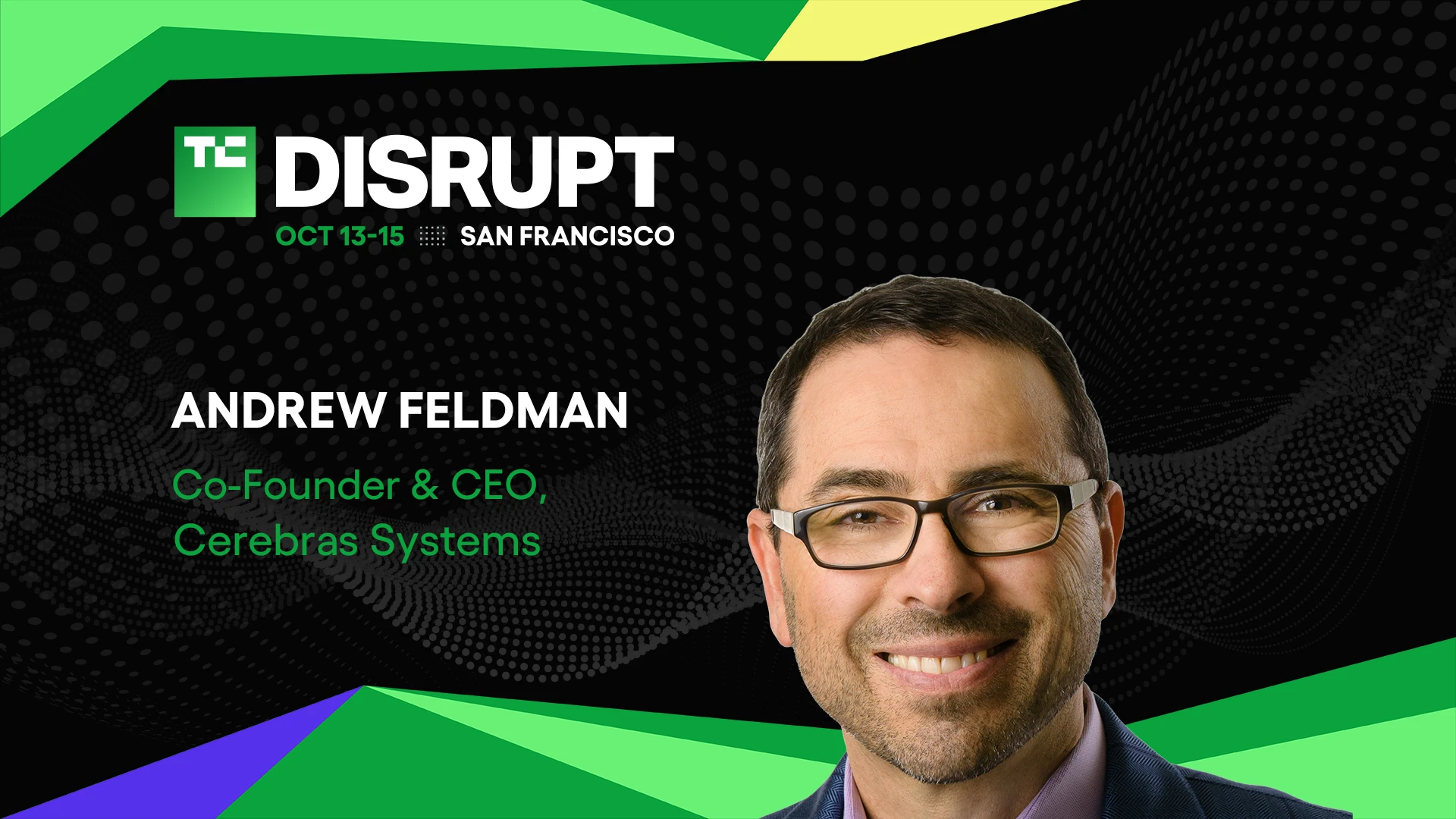
Feldman will appear at TechCrunch Disrupt 2026 to present "Can AI Keep Scaling?" During this session, he will examine the escalating requirements for computational resources, power consumption, and supporting infrastructure, detail Cerebras' distinct approach to managing these constraints, and consider what may occur if current AI hardware technology reaches its practical boundaries.
Cerebras challenges the conventional AI chip
Feldman established Cerebras in 2015 following an extensive career developing infrastructure-focused technology companies. He previously co-founded and operated SeaMicro, an energy-efficient microserver company that AMD purchased in 2012. His earlier positions included executive roles at Force10 Networks and Riverstone Networks.
At Cerebras, Feldman and his co-founding team tackled what many considered an unfeasible engineering problem: commercializing wafer-scale computing. Rather than dividing a silicon wafer into separate chips, Cerebras engineered a processor that occupies an entire wafer, with the architecture optimized specifically for intensive AI applications.
The company is now expanding this technology as AI compute demand accelerates. Cerebras generated $5.5 billion through its May IPO and inked a multiyear contract with OpenAI to supply 750 megawatts of Cerebras infrastructure spanning 2026 through 2028. The company unveiled CS-4, its newest wafer-scale AI computing platform, in August.
Scaling AI means scaling the infrastructure behind it
Developing faster processors represents only one component of the scaling equation. Supporting these systems requires data centers, power supplies, thermal management systems, and production facilities.
Cerebras is actively managing this reality. The company disclosed in August that it operates more than 600 megawatts of data center infrastructure that is either operational or scheduled for completion by the conclusion of 2027, while simultaneously planning to multiply its manufacturing output more than tenfold throughout 2026. The organization also intends to establish its first European data center facility this year and grow European capacity to 200 megawatts by the end of 2027.
Advancing AI infrastructure transcends processor innovation alone. It demands sufficient physical systems to deploy that computing capacity effectively.
Learn what happens when today's hardware reaches its limits at Disrupt
Cerebras invested in wafer-scale computing development well before the current wave of AI infrastructure expansion and is now ramping both its computing and production capabilities as AI demand intensifies.
Feldman's Disrupt presentation will address what surging compute, energy, and infrastructure demands signify for AI's trajectory and what could transpire should existing hardware technology become insufficient. This session offers valuable perspective for those constructing, financing, or implementing AI systems, providing insights from a founder pursuing an alternative strategy to address one of technology's most pressing bottlenecks.
The session is among 200+ presentations scheduled across six stages, roundtables, and breakout sessions at Disrupt, running October 13-15 at Moscone West in San Francisco. The event anticipates more than 10,000 attendees comprising founders, investors, operators, and technology executives, alongside 250+ speakers and 300+ participating startups. Beyond formal programming, the conference facilitates networking and business connections among founders, investors, and technology builders shaping industry evolution.

Read more

Identity governance faces new test as AI agents proliferate across enterprises
Autonomous AI agents are forcing organizations to rethink how they manage access and permissions at machine speed. SailPoint's Navigate conference will explore how identity security must evolve to handle this expanding population of non-human actors.

Vertical AI and Purpose-Built Hardware Drive Next Wave of Technology Growth
Specialized AI systems tailored to specific industries are emerging as the primary engine for the next phase of technology expansion, according to insights from the Bank of America Private Tech Trailblazers Conference 2026.

CrowdStrike and CoreWeave Partner to Automate AI Security at Machine Speed
As cyberattackers breach systems in seconds, CrowdStrike and CoreWeave are embedding automated defenses throughout AI infrastructure, turning attacks into training data for faster response.