Brands Must Now Court Both Humans and AI Agents—Here's the Strategy
As AI agents begin making purchasing decisions on behalf of consumers, companies face a new challenge: optimizing their messaging and brand voice for two distinct audiences simultaneously.
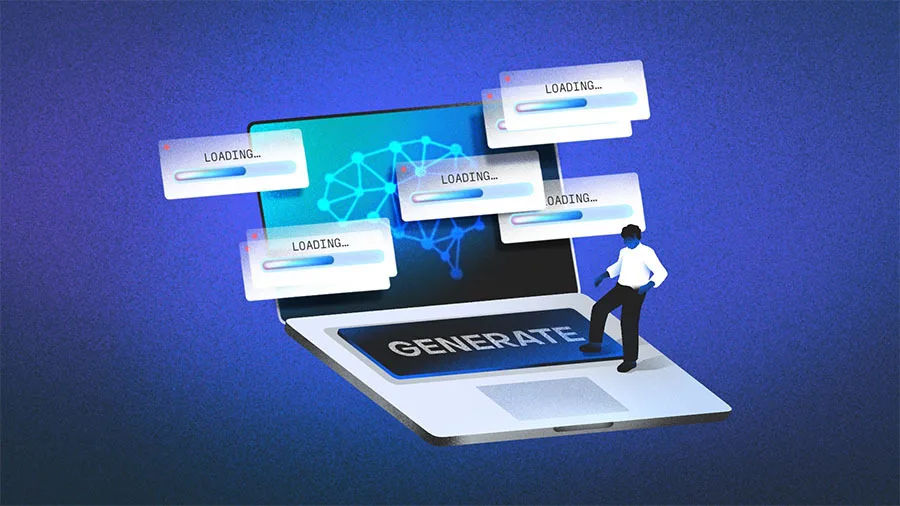
Picture yourself furnishing a newly empty home. A decade back, the path was straightforward: search engines, design publications, retailer websites. Fast forward to 2026, and the scenario shifts dramatically. You snap a photo of the barren room, feed it to an AI agent along with your budget and aesthetic preferences, and receive curated furniture recommendations—potentially with the agent completing the purchase itself.
The implication reshapes how companies think about their customer base. Brands now operate in a dual-audience marketplace, selling simultaneously to human shoppers and to artificial intelligence systems. These two audiences evaluate products through fundamentally different lenses. AI agents frequently make purchase recommendations or decisions before any human ever encounters a product listing, meaning carefully crafted marketing language risks being parsed, deconstructed and repurposed by algorithms. Traditional reliance on human-centered messaging no longer suffices.
Leave humans in the equation

Yet marketers must resist the temptation to abandon the human element entirely while preparing for an agent-driven future. The reality remains that each agent operates in service of a human user with distinct preferences, and personalization will only deepen. Success demands optimizing for both audiences at once, not sacrificing one for the other.
Newer companies enjoy a structural advantage here. Established enterprises must retrofit decades of accumulated copy, brand guidelines and approval workflows to become agent-compatible. Startups, by contrast, can embed a brand voice and messaging framework legible to both machines and people from inception.
The practical starting point involves establishing and documenting a distinct brand voice. In many young companies, brand voice exists primarily as tacit knowledge within the founder's mind. This works when a small circle of writers collaborates closely with leadership, but breaks down when either the writer or the reader is software. AI systems require explicit parameters and deteriorate without them. As someone who has spent years at Jacquard developing AI-driven content generation, I've observed that now agents operate on the receiving end of the process too—making those rules more critical than ever.
Tone and style matter, but equally important is what a brand deliberately avoids. Companies should catalog prohibited language and forbidden claims. These instincts often remain unwritten because they feel self-evident to internal teams. Documenting them before scaling content production—whether by humans or machines—prevents costly missteps later.
Verify your brand
Product descriptions have transcended their administrative function; they've become central brand assets. In an agent-mediated marketplace, they may constitute your most-consumed brand content, since agents consult them when evaluating or recommending items. When two separate AI agents shop for two different customers, they might surface the same product with descriptions tailored to each person's needs. The underlying description must preserve brand integrity across these variations.
Testing across both reader types—human and machine—deserves priority. Email represents the clearest current example of this dual-audience dynamic. Gmail and Apple both now generate message summaries displayed before recipients open the full email, meaning AI-generated previews may be read before the actual content. Before deployment, marketers should verify what the AI summary communicates about their message. Does the core offer survive the summarization? Does it retain what differentiates the brand? This check requires minimal effort and represents a habit any team can adopt immediately without additional software.
Marketing teams must also shift their measurement focus from output volume to actual outcomes. As AI accelerates content production, teams measuring success purely by quantity generated will find their metrics increasingly meaningless. Attention should concentrate on business results: conversions, revenue and tangible outcomes. These indicators reveal whether marketing efforts genuinely drive value.
Ultimately, the human audience remains central. The timeline for AI purchasing adoption remains uncertain. Humans continue to dominate the reading and decision-making process for most transactions today. Even AI agents, as the secondary audience, ultimately serve their human operators' preferences.
Emerging founders and nascent brands occupy the most advantageous position to navigate this transition toward a two-audience economy. While predicting retail's exact transformation over the next five to ten years remains speculative, the landscape will undoubtedly shift substantially. Embedding these considerations into brand strategy now proves straightforward. Attempting to retrofit them afterward becomes prohibitively expensive.
Toby Coulthard is chief product and growth officer at Jacquard, an AI platform that helps brands generate and optimize bespoke messaging at scale.
Read more

Anthropic's IPO Postponement Signals Deeper Market Doubts About AI Valuations
Anthropic's decision to push back its public offering reveals mounting concerns about the sustainability of AI company valuations, from pension fund objections to rival CEO skepticism and the rising threat of open-weight models.

Cognizant Deploys 18,000 Google Cloud AI Specialists in New Gemini Unit
The IT services firm is establishing a dedicated deployment group staffed with Gemini-trained engineers to help clients build and launch AI agents, marking an expansion of its partnership with Google Cloud.
OpenAI's Latest Models Coming to Google Cloud Through Multiple Services
OpenAI announced it will bring its advanced language models to Google Cloud, starting with GPT-6 Astra and two smaller variants, accessible through Model Garden and other Google services.