Basecamp Research Closes $140M Series C to Advance AI-Driven Cell Therapy Discovery
The AI drug discovery startup has secured funding led by Bill Maris's S32 fund, alongside backing from Nvidia, Anthropic's Anthology Fund and others, to scale development of its EDEN foundation model for medical research.
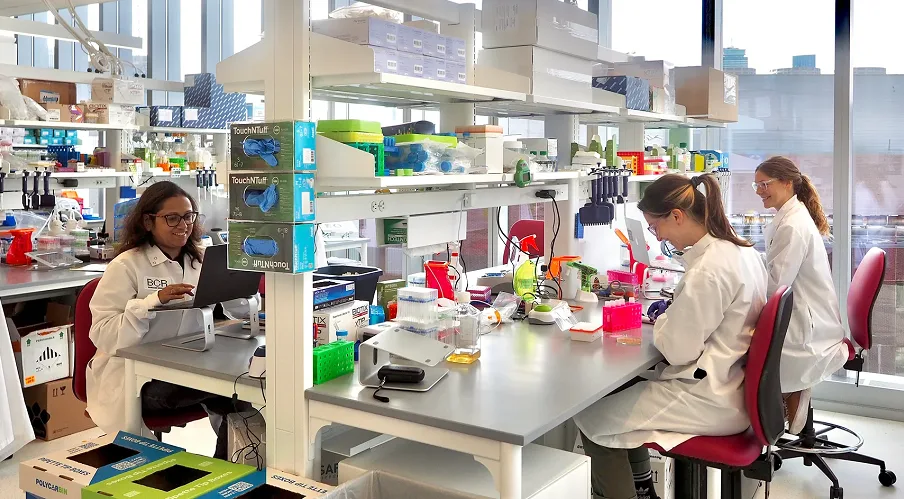
Basecamp Research Ltd. announced a $140 million Series C funding round backed by a consortium of high-profile investors. S32, the investment vehicle of Google co-founder Bill Maris, anchored the round alongside more than a dozen additional backers including NATO, Nvidia Corp. and the Anthology Fund, a $100 million partnership between Anthropic PBC and Menlo Ventures.
The EDEN Model and Trillion Gene Atlas
At the heart of Basecamp's platform sits EDEN, a foundation model purpose-built for medical research. The algorithm contains 28 billion parameters and was trained on the Trillion Gene Atlas, a dataset developed by Basecamp in collaboration with Anthropic, Nvidia and other partners. This dataset encompasses information spanning more than 100 billion genes.
Targeting In Vivo Cell Therapies
Basecamp's initial application focuses on leveraging EDEN to support researchers in developing in vivo cell therapies—medicines that treat disease by modifying a patient's own cells. Many such therapies work by inserting custom-designed DNA sequences into affected cells to repair or replace damaged genetic material.
Human cells contain multiple DNA double helices, each roughly seven feet in length. These helices function as instruction sets for producing biological molecules. Messenger molecules continuously read these instructions, copy them and transport them to cellular factories that manufacture the resulting proteins and compounds needed for cellular function.
Creating in vivo cell therapies requires modifying these double helices by temporarily separating them and inserting therapeutic DNA segments. This process presents substantial technical challenges, particularly because cells compress their DNA into tightly coiled structures that reduce surface exposure.
DNA Delivery and Immune Response Prediction
Developing an in vivo cell therapy demands that researchers both design appropriate DNA segments and devise mechanisms to deliver them into cells. Basecamp addresses this through large serine recombinases, DNA delivery systems derived from bacteriophages—viruses that infect bacteria.
Beyond DNA design and delivery, EDEN assists with additional research tasks. The model can forecast immune responses triggered by newly developed therapies and supports the engineering of entirely new cell types equipped with therapeutic payloads designed to combat disease.
We believe the future of medicine lies in reprogramming the body to repair itself. We design the models and the medicines to teach it how.
Glen Gowers, Basecamp Research co-founder and CEO
Capital Deployment Plans
Basecamp intends to deploy the newly secured capital to expand its drug development pipeline. The company also plans to establish additional partnerships with pharmaceutical firms capable of advancing AI-designed medicines through clinical development and toward market availability.
Read more

Identity governance faces new test as AI agents proliferate across enterprises
Autonomous AI agents are forcing organizations to rethink how they manage access and permissions at machine speed. SailPoint's Navigate conference will explore how identity security must evolve to handle this expanding population of non-human actors.
Vertical AI and Purpose-Built Hardware Drive Next Wave of Technology Growth
Specialized AI systems tailored to specific industries are emerging as the primary engine for the next phase of technology expansion, according to insights from the Bank of America Private Tech Trailblazers Conference 2026.
CrowdStrike and CoreWeave Partner to Automate AI Security at Machine Speed
As cyberattackers breach systems in seconds, CrowdStrike and CoreWeave are embedding automated defenses throughout AI infrastructure, turning attacks into training data for faster response.