Bank of America to Double AI Spending as Returns Become Measurable
Bank of America plans to significantly increase its artificial intelligence budget next year, citing growing evidence of returns from AI initiatives across the organization. The bank's leadership outlined concrete gains in software development productivity and customer service automation.
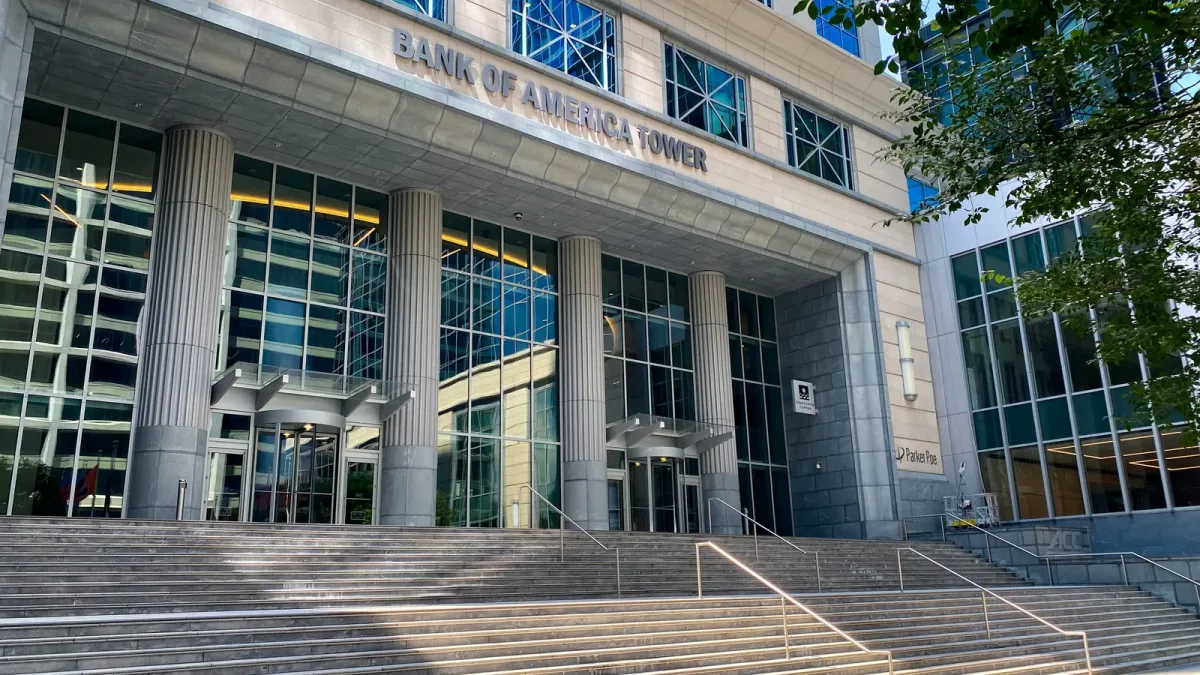
Mounting scrutiny over whether large enterprises will realize gains from their artificial intelligence investments has become a central concern for financial institutions. During remarks at a BofA Securities conference, Bank of America Co-President Jim DeMare highlighted the underlying tension driving this debate. "The question was really getting at, are we going to see returns quickly enough?" DeMare said.
The financial services sector has dramatically increased its AI spending, intensifying demands for measurable returns on those investments. Research from Accenture revealed that merely 20% of bank executives report experiencing broad, durable value from their AI programs, with implementation challenges at scale cited as a primary obstacle.
Within Bank of America, the clearest returns have emerged from AI applications in technology operations, particularly in software development and engineering. Across industries broadly, AI is driving coding productivity gains in the 15% to 20% range, DeMare noted. The bank's 20,000 software developers are already leveraging coding agents to streamline their work. Additionally, the bank's AI-powered virtual assistant Erica has substantially decreased the volume of help desk requests by handling internal self-service functions. According to the bank, Erica manages responsibilities equivalent to approximately 11,000 full-time employees.
Bank of America CEO Brian Moynihan announced at a Barclays conference last week that the Charlotte, North Carolina-based institution intends to double its AI expense budget in the coming year. The bank has deployed roughly 140 AI applications at a total cost of $400 million while generating $800 million in benefits, Moynihan disclosed. The $3.5 trillion-asset bank has reduced its workforce from approximately 213,000 employees at the start of the year to 209,000, with an attrition rate of about 8.5%. "We're not laying off anybody. We don't have to do that. All we do is just manage the hiring carefully," Moynihan said.
A significant implementation challenge involves employee apprehension about artificial intelligence technology and concerns about job displacement. "That's not unique to AI," DeMare said. "It's apparent every time we try to use new technology." Approximately 95% of Bank of America's workforce now has access to AI tools, which has fostered greater familiarity and confidence with the technology. "Then it's about general productivity, and how is it improving their life at work, and how is it improving workflows," he said.
The bank is evaluating external vendors and technology partners to enhance automation capabilities through AI, while also exploring more sophisticated and tailored solutions. Bank of America has also solicited suggestions from its own employees regarding potential AI applications that could enhance their work. Hari Gopalkrishnan, the bank's chief technology and information officer, emphasized that return on investment remains central to the evaluation process. "ROI is very much a part of the decision-making process," Gopalkrishnan said.
Employee proposals for AI applications have generated substantial enthusiasm. "As we tag them for AI, it's turning out that our level of AI investment interest is actually more than twice what it was last year," Gopalkrishnan said. "We will probably end up spending twice next year [what] we did this year because they're just good, rich ideas that are now starting to create the return on investment for us," he said.
The bank allocates approximately $4 billion annually toward new technology initiatives, with AI representing an expanding portion of that investment. "Our view is, well, if they've got all these ideas with revenues and expenses, then we ought to be able to invest more to give them that value. It happens to be that AI is now increasingly a part of the solution," Gopalkrishnan said.
Thousands of employees are now operating AI-enhanced customer relationship management systems that furnish them with relevant data and conversation guidance prior to client interactions. Looking ahead, Gopalkrishnan is examining how much autonomy the institution should grant to AI agents as they become increasingly sophisticated. "As these models get more efficient and effective, we will want to, over time, expand the autonomy, but we'll want to do that in a way that the guardrails are omnipotent," he said. "We're not going to do anything until such a time that we have the appropriate guardrails."
Broader concerns persist regarding human oversight of advanced AI agents, yet Moynihan stressed that Bank of America maintains a cautious stance on AI deployment with clear accountability structures. Employees bear responsibility for validating information generated by AI systems before using it. "The risk, for us, was really the risk of letting it start giving answers without humans checking to make sure the answer was right, both just common sense, but also literally making sure it's right," Moynihan said. "If you give a wrong answer to a client, the client's going to walk out on you," he said. "That will gate its application in some ways."
Read more

Identity governance faces new test as AI agents proliferate across enterprises
Autonomous AI agents are forcing organizations to rethink how they manage access and permissions at machine speed. SailPoint's Navigate conference will explore how identity security must evolve to handle this expanding population of non-human actors.

Vertical AI and Purpose-Built Hardware Drive Next Wave of Technology Growth
Specialized AI systems tailored to specific industries are emerging as the primary engine for the next phase of technology expansion, according to insights from the Bank of America Private Tech Trailblazers Conference 2026.
CrowdStrike and CoreWeave Partner to Automate AI Security at Machine Speed
As cyberattackers breach systems in seconds, CrowdStrike and CoreWeave are embedding automated defenses throughout AI infrastructure, turning attacks into training data for faster response.