Why Furo's Founders Ditched Silicon Valley for Germany—and Raised $4M Anyway
The three 28-year-old co-founders of Furo, a software company focused on industrial battery storage, rejected the old VC playbook by relocating to their native Germany instead of staying in the U.S.—and their strategy has attracted major funding and enterprise clients.
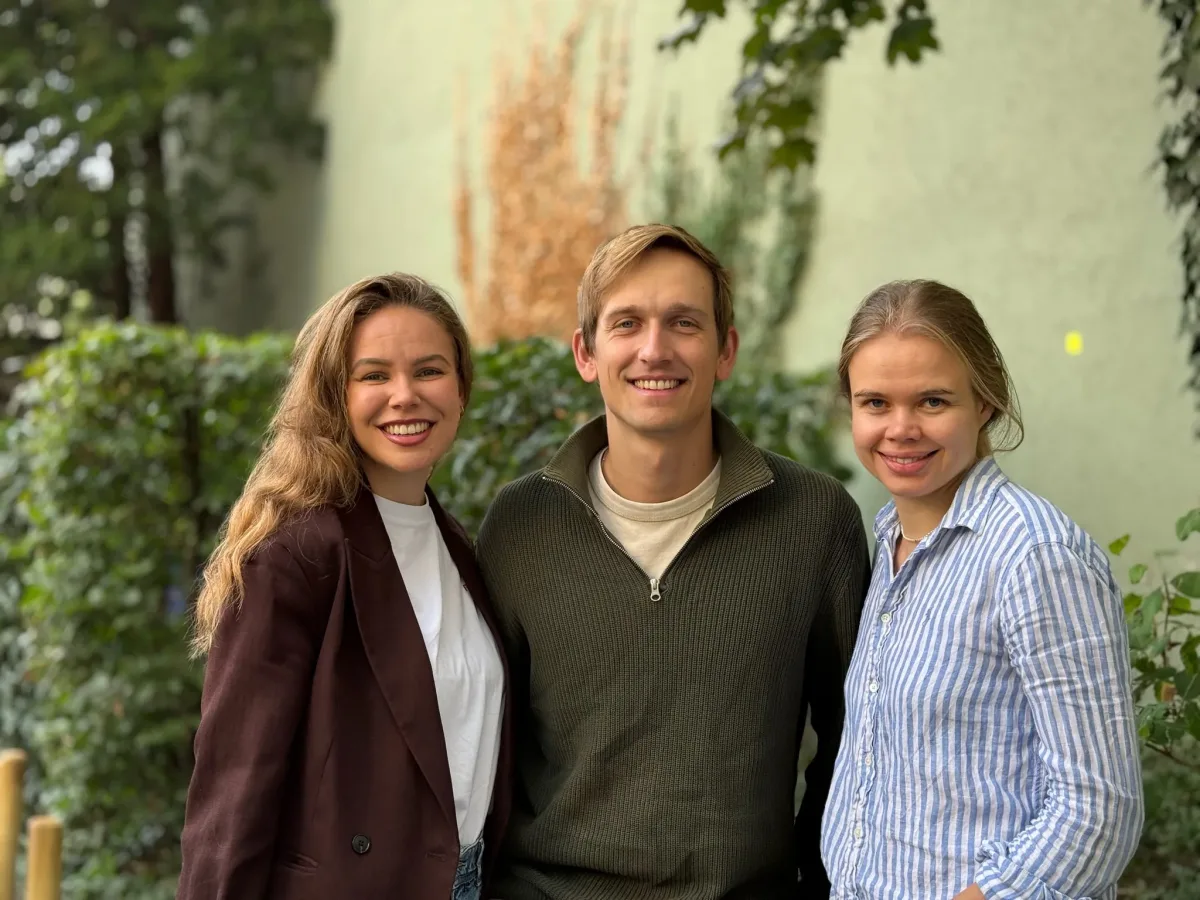
Venture capitalists in the United States once demanded that international startups establish themselves stateside as a condition for investment. Furo's three co-founders, all 28 years old, have demonstrated that the opposite strategy can work: they relocated from Silicon Valley back to Germany, and the move has delivered tangible results in both capital raised and customer acquisition.
Furo develops software designed to optimize industrial battery storage systems. The company has raised $4 million in funding, predominantly from U.S.-based investors. Within its first year of operation, Furo has already secured major enterprise customers, including Deutsche Bahn, Germany's national rail operator.
We're currently moving faster in Europe than if we'd have stayed in the U.S.
Lena Sophia Voß, Furo co-founder
Structurally, Furo operates as a Delaware C Corporation. Its funding round was spearheaded by TQ Ventures, a U.S.-based firm, with additional backing from Neo and Sandberg Bernthal Venture Partners, the fund established by Sheryl Sandberg. Munich's Center for Digital Technology and Management (CDTM) also participated in the round. This hybrid structure aligns with observations from venture capital firm a16z, which noted that "there is now an advantage to having one foot in your home country, and one foot in Silicon Valley."
The founders' connection to Silicon Valley originated through CDTM, an institution affiliated with their undergraduate alma mater, TU Munich. Voß and her co-founders Leonie Wagner and Simon Wittner used this program as a pathway to study at Stanford and UC Berkeley in California.
When launching Furo with the goal of helping industrial companies cut electricity consumption, the team identified Europe as the primary market for their solution. Voß emphasized that the challenge was particularly acute in Germany, which has cycled through successive energy crises over the past five years.
The startup briefly attempted to address the European market from the United States while enrolled in Neo's accelerator program under its former identity, Lumera Energy. However, Voß determined that geographic distance from their target market created operational friction.
If you are an early-stage company, very often it's mostly about your network, and also about being close to your customers.
Lena Sophia Voß
Voß clarified that the decision to return to Europe was not driven by necessity or immigration constraints, despite broader concerns affecting tech workers in the U.S. She noted that all three founders had received full-time employment offers from their previous employers—Apple, Google X, and AI startups respectively—and could have remained in America with valid visas.
So it was a decision to go back to Europe not because we needed to, but because we see that right now, it's a better time to build an energy startup in Europe instead of the U.S.
Lena Sophia Voß
Establishing Furo in Munich delivered multiple competitive advantages. Voß attributed significant growth to the strength of her professional network in the region, which generated introductions to initial customers. The move also provided access to operational guidance and mentorship. "Every time we have a challenge, we know exactly whom to call," Voß explained, noting that proximity to technical universities strengthened recruitment efforts.
Financial efficiency represents another material benefit. Engineering salaries in Germany are substantially lower than their U.S. counterparts. Voß recounted that American investors initially questioned whether Furo could attract qualified engineers within its budgeted compensation range—which actually represented the upper end of German salary expectations. "So it's definitely better that you can do more with the money," she said.
Beyond cost considerations, Voß emphasized that talent quality remains competitive. Recruitment is simplified by reduced competition from large technology corporations and by Furo's institutional ties through CDTM. "It's such a great network in Germany and in Europe that people somehow start to know you," she observed.
The company has not abandoned its American connections. Voß indicated that the team travels to the United States three to four times annually for administrative matters and to maintain relationships with existing and prospective investors.
The Furo story underscores a broader shift in startup strategy: even companies thriving in their home markets recognize the value of maintaining access to U.S. capital and networks. For many founders, the winning formula involves leveraging local advantages while preserving ties to Silicon Valley's investment ecosystem.
Read more

Spotify Founder's Health Screening Startup Neko Brings Preventative Medicine to the U.S.
The body-scanning company co-founded by David Ek has arrived in New York with a 300,000-person waitlist and backing from nearly $1 billion in funding.
FieldAI Seeks $700M at $10B Valuation as Robot AI Demand Accelerates
The robotics AI startup is in advanced fundraising talks that would quintuple its valuation from last year, according to sources familiar with the matter.
Tech hiring slows even as employers post record open positions
A surge in IT job listings to three-year highs masks a contraction in actual hiring, with technology sector roles declining and unemployment ticking upward.