Trump's H-1B Fee Creates Stark Divide Over Startup Impact
A $100,000 visa petition fee announced by President Trump has split the venture capital world between those who see it as catastrophic for immigrant founders and those viewing it as a chance to modernize immigration policy.
President Donald Trump recently announced plans to impose a $100,000 one-time charge for each new H-1B visa petition, a move that has divided Silicon Valley. The H-1B program annually brings tens of thousands of foreign professionals to American software, technology, and biotech firms. Though many acknowledge the program requires overhaul, venture investors and immigration specialists disagree sharply on whether this change helps or harms startup formation.
Sophie Alcorn, founder and CEO of Alcorn Immigration Law in Palo Alto, California, characterizes the proposal as an "immediate crisis" for venture-backed companies and describes it as an "insurmountable founder tax." She warned that "We're talking about stopping the next Eric Yuan of Zoom or Jensen Huang of Nvidia before they can even start. The administration's stated goal is to attract the best, yet this policy does the opposite."
Eugene Malobrodsky, managing partner at One Way Ventures, shares similar concerns. He contends the fee forces startups into an unwinnable competition against technology giants. "For somebody like OpenAI, Anthropic, Google or Microsoft – $100,000 is what they might spend on soap in their office," he noted. Though Malobrodsky supports H-1B reform, "this is not the way to reform it," he said. His firm focuses on seed-stage companies founded by immigrants.
Manan Mehta, founding partner of Unshackled Ventures—a firm exclusively backing immigrant entrepreneurs—takes a contrasting position. He sees the policy as "an opportunity to modernize a 35-year-old system for today's economy." Mehta suggests companies may shift toward alternatives like the O-1 visa and International Entrepreneur Rule, which he believes better serve innovation-focused startups. "Rather than deterring startups, I believe this creates a strategic opening for them," he told Crunchbase News.
Trump's announcement also included an executive order establishing a "Gold Card" pathway. Foreign nationals making unrestricted gifts of $1 million (individuals) or $2 million (corporations) to the U.S. Department of Commerce would receive expedited immigrant visa processing. The new fee applies only to fresh H-1B petitions, not renewals, and potential "national interest" exemptions may exist in certain circumstances.
Immigration's impact
The H-1B program has drawn criticism from American workers and immigration skeptics who argue it deprioritizes qualified domestic talent in favor of lower-cost foreign workers. Conversely, program advocates contend it fills genuine skill shortages and enables many foreign professionals to eventually launch American businesses.
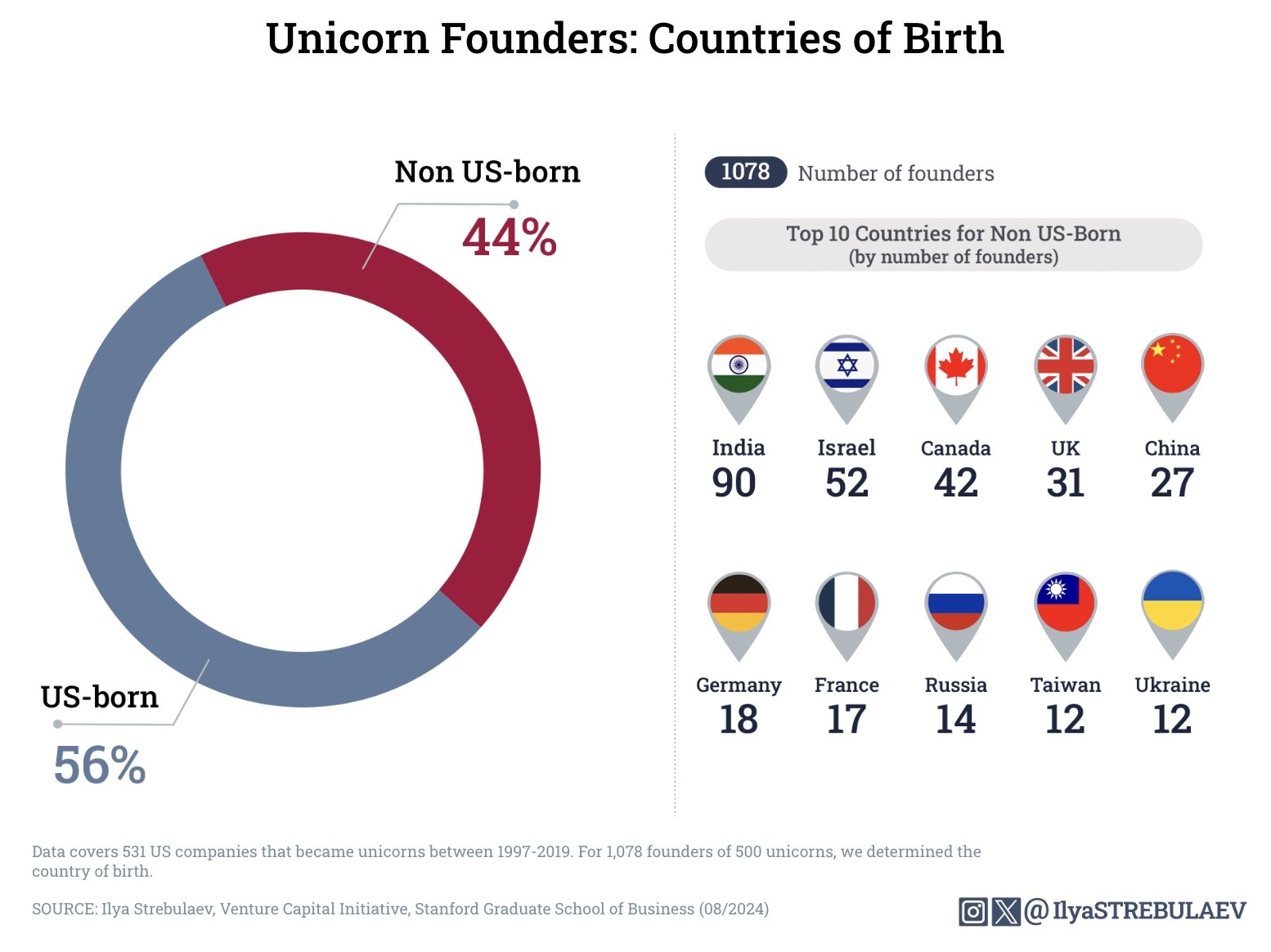
Research from Stanford's Venture Capital Initiative demonstrates the significance of immigrant founders. An examination of 1,078 founders behind 500 American unicorns revealed that 474—representing 44 percent—were born outside the United States. India, which receives the most H-1B visas by a substantial margin, produced 90 of these unicorn founders.
The American Immigration Council, a nonprofit advocacy organization, cites research indicating that rising H-1B worker numbers correlate with increased overall wages, more patent filings, and expanded job creation.
Opportunity or crisis?
Alcorn reports observing concerning trends in her practice already. "The next wave of AI startups freeze in their tracks" as immigrant founders preparing to leave established technology companies to build ventures are reconsidering their plans due to the $100,000 charge.
Mehta counters that the traditional H-1B system—with its lottery mechanism, scheduling obstacles, and bureaucratic complexity favoring large corporations with dedicated immigration teams—already posed challenges for young companies. He suggests the policy may encourage startups to explore more founder-friendly options. "The O-1 visa for individuals with extraordinary ability, the International Entrepreneur Rule, and other merit-based options become more attractive," he explained. "These pathways align perfectly with what startups need: exceptional talent solving hard problems."
Mehta believes the changes could ultimately benefit startups. Companies relying on H-1Bs primarily for cost reduction rather than accessing specialized expertise will face difficulties, he suggests. "For startups focused on innovation and job creation, this moment reinforces what we've always known: immigration should create opportunities, not exploit loopholes," he stated.
'Very few visa alternatives'
Few observers defend the current H-1B structure as adequate. Whether Trump's proposed modifications will ultimately strengthen the American economy remains uncertain.
Malobrodsky acknowledges the existing system needed updating but calls the new proposal "absurd." "Do I think that the whole H1-B program needed to be reformed? Absolutely," he said. "But this is not the way to reform it." He argues the fee creates advantages for established corporations while making the program inaccessible for startups with minimal or no funding.
Alcorn emphasizes that the charge becomes "simply impossible" for early-stage firms where critical hires represent essential personnel. "This policy is suffocating our most promising ventures in the cradle," she said. "There are very few visa alternatives, as most early-stage employees don't qualify for O-1A 'Einstein' visas yet." Additionally, a wage-based lottery system announced recently could push startups, which typically attract talent through vision and equity stakes, into salary competition with major technology companies—"a war they are designed to lose," Alcorn stated.
Mehta maintains a more hopeful perspective, predicting the changes will motivate talented immigrants working at large corporations to launch independent ventures. "The startup ecosystem that's positioned to 'catch' this talent as they transition from employees to founders will thrive," he said. "So while the increased fees create challenges for new flow, they also signal an important recognition: immigrant talent creates tremendous value. The question becomes not whether this talent should come to America, but how they arrive and what they build once here."
Alcorn, however, expects immediate and lasting negative consequences. "The result is a simple, brutal equation: without access to this talent, startups will die, move abroad, or never be founded in the first place," she said. "This is not just a brain drain; it's a 'brain push.' We are actively sending brilliant minds already in our country into the open arms of competitors in China and the Middle East, who are rolling out the red carpet."
Read more

Spotify Founder's Health Screening Startup Neko Brings Preventative Medicine to the U.S.
The body-scanning company co-founded by David Ek has arrived in New York with a 300,000-person waitlist and backing from nearly $1 billion in funding.

FieldAI Seeks $700M at $10B Valuation as Robot AI Demand Accelerates
The robotics AI startup is in advanced fundraising talks that would quintuple its valuation from last year, according to sources familiar with the matter.
Tech hiring slows even as employers post record open positions
A surge in IT job listings to three-year highs masks a contraction in actual hiring, with technology sector roles declining and unemployment ticking upward.