Thatch Hits $1B Valuation on Healthcare Cost Pressures and Employee Demand for New Treatments
The benefits platform raised $108 million from existing backers as employer healthcare spending accelerates and workers seek access to GLP-1 drugs and other treatments traditional plans don't cover.
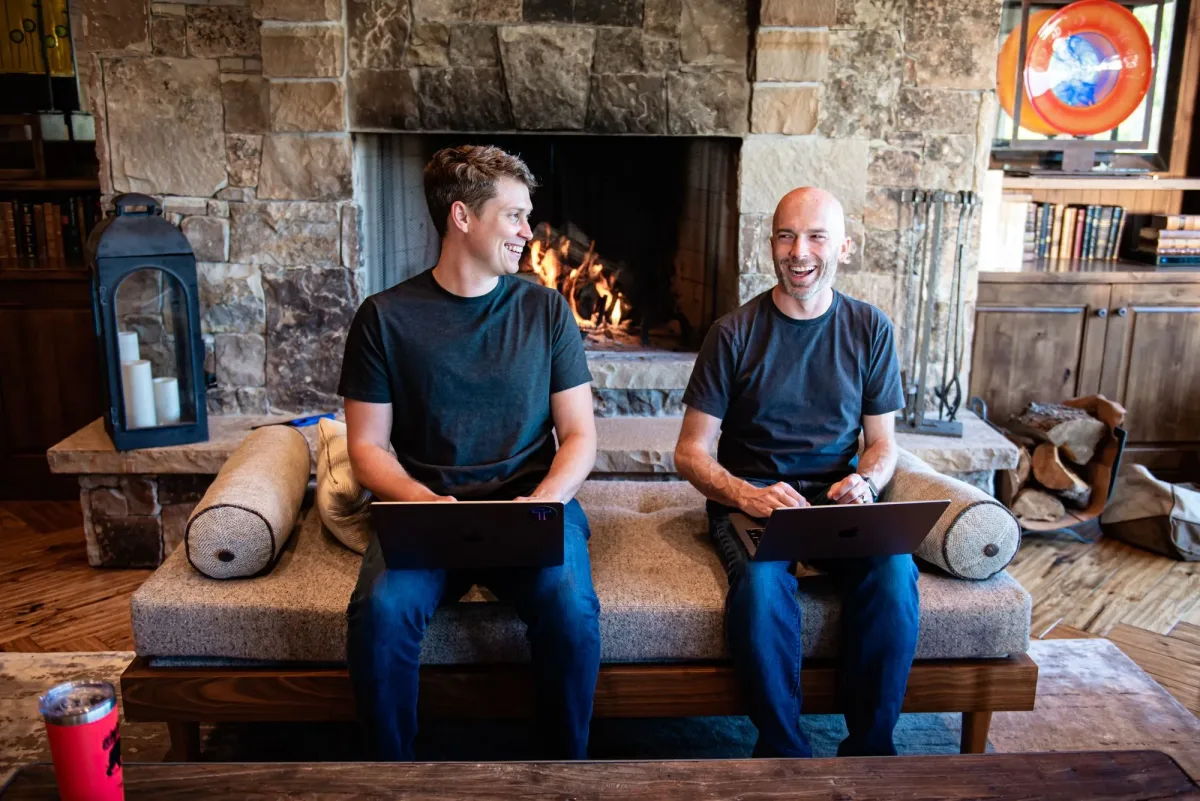
Thatch, which helps employers manage healthcare expenses while giving workers more plan options, has secured $108 million in fresh capital at a $1 billion valuation. The round came from returning investors The General Partnership, Index Ventures, General Catalyst, and Andreessen Horowitz.
The funding represents a dramatic jump from the company's Series B round 17 months earlier, when Thatch raised $40 million at a $410 million valuation, according to PitchBook data.
The valuation surge is striking for a company that doesn't position itself primarily as an artificial intelligence business. Co-founder and CEO Chris Ellis revealed that Thatch has expanded its annual recurring revenue roughly sevenfold. Ellis launched Thatch in 2021 alongside Adam Stevenson, a former engineering executive at Stripe.
What's Driving Growth
Two interconnected market dynamics are fueling Thatch's expansion. Healthcare spending by employers continues climbing, with projections showing 2027 costs will surge more than 8%—the steepest annual jump since 2003. Simultaneously, workers are demanding access to emerging treatments, particularly GLP-1 medications for weight loss and diabetes management like Ozempic and Wegovy, which conventional employer plans typically exclude.
How Thatch Works
The platform operates through what's called an ICHRA, or Individual Coverage Health Reimbursement Arrangement—a regulatory framework established in 2020 that permits companies to fund individual insurance policies for employees rather than purchasing a single company-wide plan. This model was recently rebranded as CHOICE.
Under this structure, employers bypass the traditional annual negotiation cycle with carriers such as Anthem or United Healthcare. Instead, they allocate a fixed health budget per employee, who can then draw on pretax dollars to select from dozens of health, dental, and vision options available through Thatch's marketplace. The platform employs AI to suggest the most suitable plan based on each worker's circumstances. Employees needing substantial medical care can add personal funds for more comprehensive coverage, while those in better health can choose cheaper plans and redirect unused allowances through a Thatch debit card toward eligible expenses including GLP-1 treatments or devices like the Oura Ring.
The Value Proposition
Ellis contends the arrangement benefits both sides of the employment relationship. "If [employees] don't like their insurance, they can switch to another one," he said. "It creates pressure on insurers to compete for better service, denying fewer claims because they want to keep you as a customer."
For employers, the advantage lies in eliminating annual carrier renegotiations while maintaining equivalent coverage levels, often at modestly reduced costs, according to Ellis.
Competitive Landscape
Thatch faces competition from other startups capitalizing on the six-year-old regulatory framework, including Take Command, Remodel Health, and Zorro.
"People are waking up to this because of costs, but then they're realizing this is a better, more efficient way to do it," Ellis said.
Read more

Spotify Founder's Health Screening Startup Neko Brings Preventative Medicine to the U.S.
The body-scanning company co-founded by David Ek has arrived in New York with a 300,000-person waitlist and backing from nearly $1 billion in funding.

FieldAI Seeks $700M at $10B Valuation as Robot AI Demand Accelerates
The robotics AI startup is in advanced fundraising talks that would quintuple its valuation from last year, according to sources familiar with the matter.
Tech hiring slows even as employers post record open positions
A surge in IT job listings to three-year highs masks a contraction in actual hiring, with technology sector roles declining and unemployment ticking upward.