Space Tech Funding Reaches Record Heights as Investor Enthusiasm Soars
Venture capital is pouring into space and satellite companies at unprecedented levels, with $20.3 billion deployed globally so far in 2026—already the highest annual total on record with four months remaining in the year.

The space technology sector is experiencing a remarkable surge in investor confidence. Following SpaceX's historic initial public offering—the largest in startup history—venture firms are betting heavily on the sector's potential for growth.
According to Crunchbase data, companies operating in space and satellite markets have attracted $20.3 billion in funding from seed through growth stages globally during 2026. This figure already surpasses any previous annual record, and the year still has four months to run.
The optimism extends well beyond the headline-grabbing IPO. Space Capital, a venture investment firm focused on the sector, recently stated that "the space economy has entered a new era," and that "capital is flowing at unprecedented scale," with little evidence suggesting a slowdown ahead.
This investment wave is not confined to any single region. The United States, China, and Europe together account for the vast bulk of capital flowing into the sector. American companies have captured roughly $12.7 billion, representing more than 60% of worldwide funding. China-based enterprises have received just over 20% of total funding, while European firms have pulled in approximately 10%.
Top fundraisers
While funding activity remains strong across the board, the largest capital rounds tend to concentrate in later-stage investments.
This pattern holds true for the year's leading fundraising recipients. Anduril Industries claimed the top spot, securing $5 billion through a Series H round in May. Though primarily a defense technology firm with diversified operations, Anduril maintains significant focus areas in space and satellite technologies.
Shanghai-based Yuanxin Satellite, also known as SpaceSail, emerged as another major fundraiser. The company, which is constructing a low-Earth orbit satellite internet constellation designed to compete with Starlink, closed a $1 billion funding round in August.
K2 Space, headquartered in Torrance, California, specializes in manufacturing large, high-powered satellites. The firm secured $500 million in Series D funding during July.
Exits rising
Space tech investors are not simply committing fresh capital—they are also realizing substantial returns through exits.
SpaceX's June IPO established an initial valuation near $1.8 trillion, making it by far the largest public offering ever conducted. The company raised over $80 billion through the offering. As a rocket developer, launch service provider, Starlink operator, and AI infrastructure company, SpaceX's shares have fluctuated since the IPO but have recently traded near their initial offering price.
No other space tech sector participant will approach SpaceX's scale. Beyond that exceptional case, however, several other offerings and acquisitions have achieved significance by conventional standards.
York Space Systems, a space and defense technology firm backed by private equity, went public in January with a valuation exceeding $4 billion. Since then, its stock has declined substantially, suggesting that space tech exposure alone cannot guarantee sustained share performance.
HawkEye 360, which operates a satellite constellation providing signals intelligence services to defense and government agencies, entered public markets in May. Its shares have also retreated from their opening-day closing price.
Merger and acquisition activity among startups continues as well. York Space Systems announced plans this year to acquire All.Space, a satellite communications terminal provider, in a transaction valued at $355 million. The company also completed acquisitions of two additional venture-backed firms for undisclosed amounts: Orbion Space Technology, which develops satellite propulsion systems, and Solestial, a solar energy for space specialist.
Voyager Technologies, another recent market entrant, executed a substantial acquisition of its own, purchasing Astrobotic Technology, a developer of lunar landers and rovers, for $300 million in June.
Risks and rewards
Even the most bullish startup investors recognize that space tech valuations will not perpetually climb. The sector carries inherent risks, and SpaceX itself—despite commanding the highest valuation among market newcomers—has experienced rocket failures and other notable setbacks.
Nevertheless, startup investors appear convinced that space tech opportunities justify the associated risks. Whether this conviction persists through the coming quarters remains to be seen.
Read more

Spotify Founder's Health Screening Startup Neko Brings Preventative Medicine to the U.S.
The body-scanning company co-founded by David Ek has arrived in New York with a 300,000-person waitlist and backing from nearly $1 billion in funding.
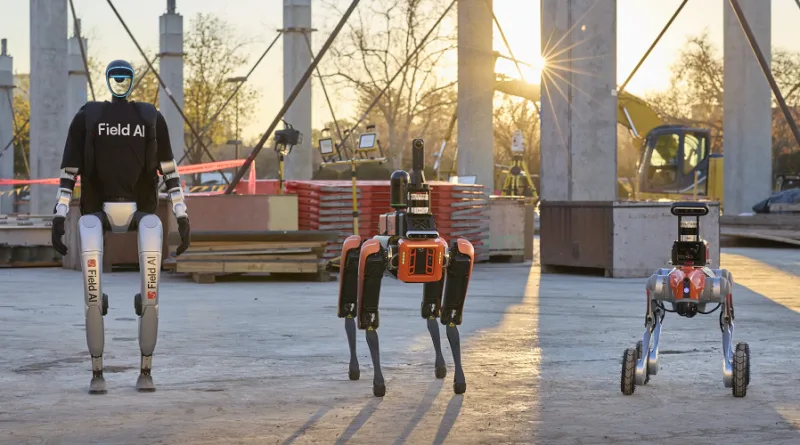
FieldAI Seeks $700M at $10B Valuation as Robot AI Demand Accelerates
The robotics AI startup is in advanced fundraising talks that would quintuple its valuation from last year, according to sources familiar with the matter.

Tech hiring slows even as employers post record open positions
A surge in IT job listings to three-year highs masks a contraction in actual hiring, with technology sector roles declining and unemployment ticking upward.