Six Major AI Investors Reveal How the Startup Playbook Is Shifting in 2025
As AI funding surged to nearly half of all global startup capital in 2025, leading venture firms shared their strategies for backing winners across the technology stack—from infrastructure to applications.

The artificial intelligence investment landscape transformed dramatically during 2025, with startups and investors racing to capture ground in what has become the defining technology wave. Crunchbase data shows that by the third quarter, AI companies were receiving nearly half of all startup funding worldwide. The broader venture market expanded 38% year over year in Q3, driven substantially by massive funding rounds for leading AI firms. In just the first six months of 2025, AI startups accumulated roughly $100 billion in capital—a figure that essentially matched the entire year's total for 2024.
Against this backdrop of explosive growth, six prominent AI investors offered Fathom Tech their perspectives on how the investment thesis is evolving. Their insights reveal shifting priorities around compute advantages, data differentiation, and novel approaches to company formation. These firms—Accel, Dell Technologies Capital, Foundation Capital, GV, AI Fund, and Sierra Ventures—collectively paint a picture of where opportunity lies as the sector matures.
Accel's Botteri: How startups can compete against behemoths
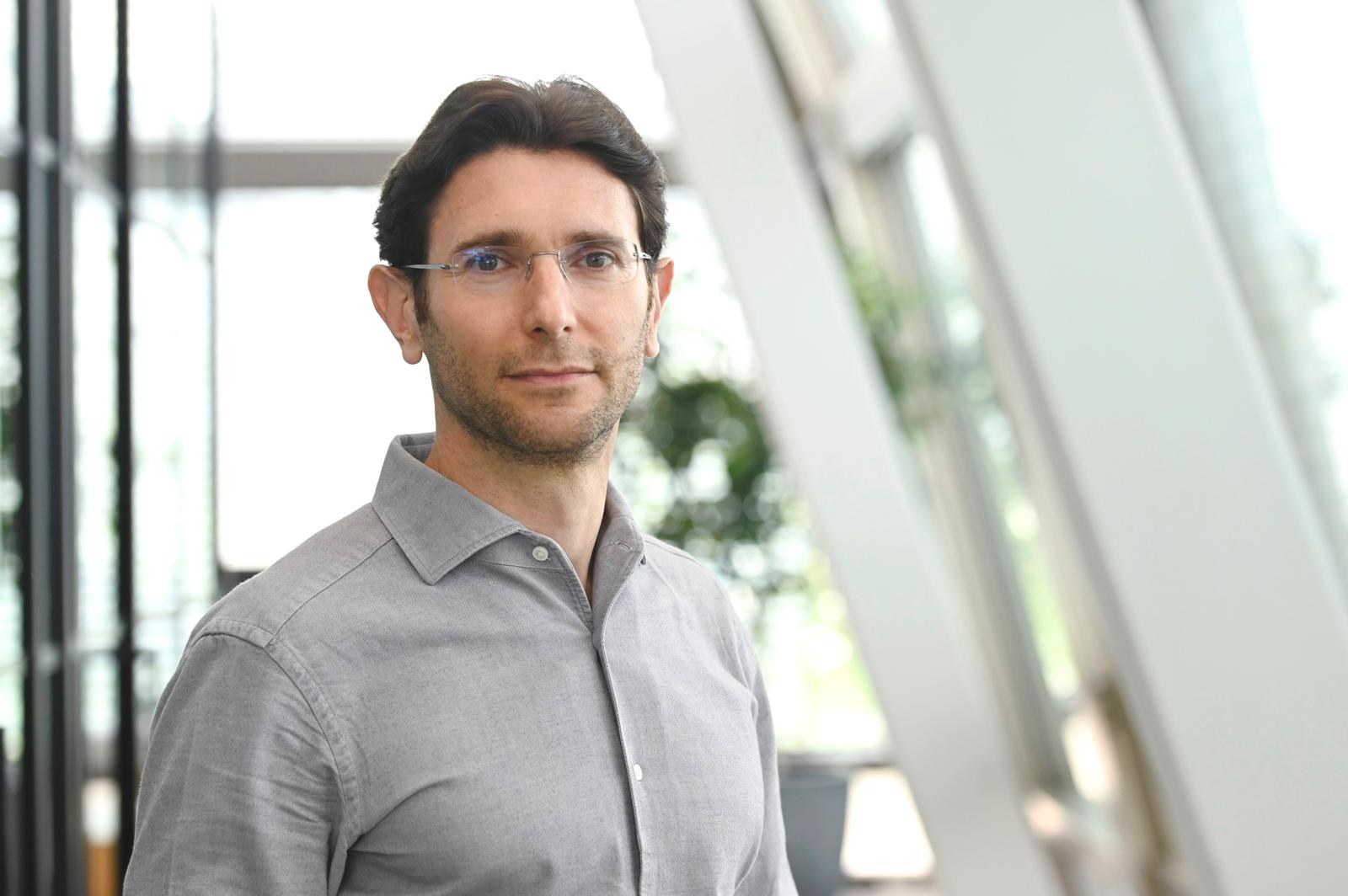
The dominant technology giants—Nvidia, Microsoft, Apple, Alphabet, Amazon and Meta—command enormous resources, generating hundreds of billions in operating cash flow that flows directly into AI infrastructure expansion. Accel partner Philippe Botteri and his firm's 2025 Globalscape report examined this new competitive landscape and identified pathways for smaller companies to establish themselves. Accel ranks among the three most-active investors tracked on the Crunchbase Unicorn Board, which has experienced significant valuation increases throughout the AI boom.
The firm has invested across multiple layers of the AI stack, backing model developers like Anthropic and H Co., infrastructure provider Nebius Group, and application-layer companies including Anysphere (maker of Cursor), Perplexity, Synthesia, and security firm Cyera. Despite the incumbents' dominance, Botteri believes focused, rapidly-scaling AI-native companies can still carve out new categories or reimagine existing ones.
If you don't think that GenAI is going to generate a 1%-2% increase in the global GDP, then I'm not sure why we're doing all this
Philippe Botteri, Accel
Where Foundation sees opportunities in physical tech
AI's explosive growth has surfaced a critical infrastructure challenge: whether the physical systems supporting the technology can keep pace with demand. Multiple investors highlighted that AI's real constraints are increasingly tangible—power generation, semiconductor availability, and data center capacity—and these limitations are creating compelling startup opportunities.

Botteri's research identifies a projected 117-gigawatt energy shortfall over the coming five years to meet anticipated AI consumption needs—equivalent to the power requirements of three major European nations combined. Foundation Capital general partner Steve Vassallo is tackling this challenge from the venture perspective. The firm incubated AI chipmaker Cerebras Systems in 2016, years before infrastructure became a mainstream investment focus, and has since backed more than 100 AI startups.
Vassallo reflected that semiconductor investments during the mid-2010s represented a difficult bet, yet his team recognized that accelerating AI workloads would eventually overwhelm conventional chip architectures. That thesis has proven prescient: Cerebras has announced public market plans, and Nvidia's valuation has surpassed $4 trillion. Vassallo contends that the most significant companies in this cycle will combine AI capabilities with understanding of human psychology—creating products that respect both physics and behavior. He highlighted reinforcement learning with human feedback as particularly important, where human input refines AI systems while building operator competency.
Foundation's portfolio includes early investments in Tennr, which automates healthcare authorization workflows previously handled through paper processes, and Jasper, a writing assistant built on OpenAI's GPT-3. The firm also participated in PlayerZero's Series A round; the company predicts and resolves software failures in AI-generated code before deployment.
We love working with founders who are living right at that edge
Steve Vassallo, Foundation Capital
Why Dell's venture arm invests at the silicon level
Dell Technologies Capital operates at the intersection of infrastructure supply and enterprise demand. The company projects $20 billion in AI server shipments by fiscal 2026. Since June, the venture arm has recorded six exits—one initial public offering and five acquisitions—a strong performance relative to broader venture exit challenges.

Dell's position as a leading GPU server provider gives its venture team direct visibility into enterprise AI adoption patterns. Managing director Daniel Docter and partner Elana Lian observe unprecedented velocity in AI startup funding. According to Docter, companies sometimes receive term sheets within days of initial investor meetings.
We'll meet with a company on a Tuesday for the first time and sometimes by Thursday, they have a term sheet that they've already signed
Daniel Docter, Dell Technologies Capital

At the infrastructure level, Dell has invested in AI chipmaker Rivos, which Meta intends to acquire pending regulatory clearance, as well as SiMa.ai, which develops chips for embedded edge applications in vehicles, drones, and robotics. Runpod, an AI developer platform offering on-demand GPU access, also received backing. Docter explained that silicon-level investments offer outsized potential for ecosystem disruption.
On the application side, Dell's portfolio includes Maven AGI, serving customer support for complex, highly-regulated enterprise scenarios, and Series Entertainment, a generative AI platform for game development designed to accelerate production timelines.
Sierra Ventures' layer-cake approach
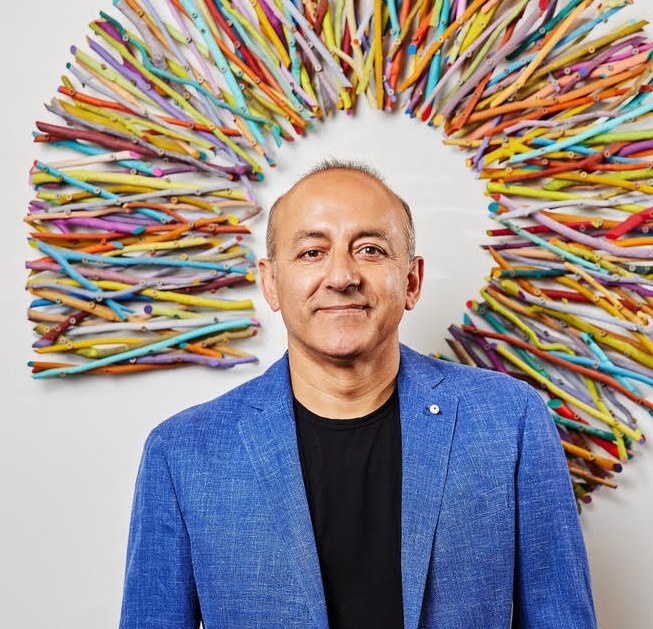
While computing capacity represents a critical constraint, data emerges as the true competitive differentiator. Lian succinctly characterized the dynamic: "AI is almost a data problem." Improving models requires high-quality, domain-specific datasets rather than simply expanding parameter counts.
Sierra Ventures managing partner Tim Guleri structures his firm's approach around identifying startups with a consistent profile: they address significant, painful operational workflows, deliver order-of-magnitude productivity gains, and operate atop valuable proprietary datasets. Sierra's investment framework divides AI opportunities into five tiers: foundational infrastructure; applied infrastructure layered on top of base models; horizontal applications; vertical applications; and entirely new innovations impossible without AI.
Rather than competing in the capital-intensive infrastructure layer, Sierra concentrates on applied infrastructure and applications where proprietary data and distribution networks establish defensible advantages, according to Guleri. Global GDP totals approximately $110 trillion, with agriculture representing roughly $6 trillion, leaving more than $100 trillion across services and industries where AI-driven efficiency improvements should accumulate.
AI is "the wave that's lifting everything on top of it." There's going to be a tremendous amount of value creation in the coming decades.
Tim Guleri, Sierra Ventures
How a Google Brain co-founder builds and backs AI startups
Andrew Ng, co-founder of Google Brain and Coursera, pursues a more direct path to proprietary data through corporate partnerships at AI Fund, his venture studio established in 2018. Corporate limited partners including AES, HP, Mitsui & Co., Mitsubishi, and others provide Ng's team access to specialized sectors—renewable energy, industrial operations, insurance—where internal data is both scarce and essential for building defensible AI solutions.
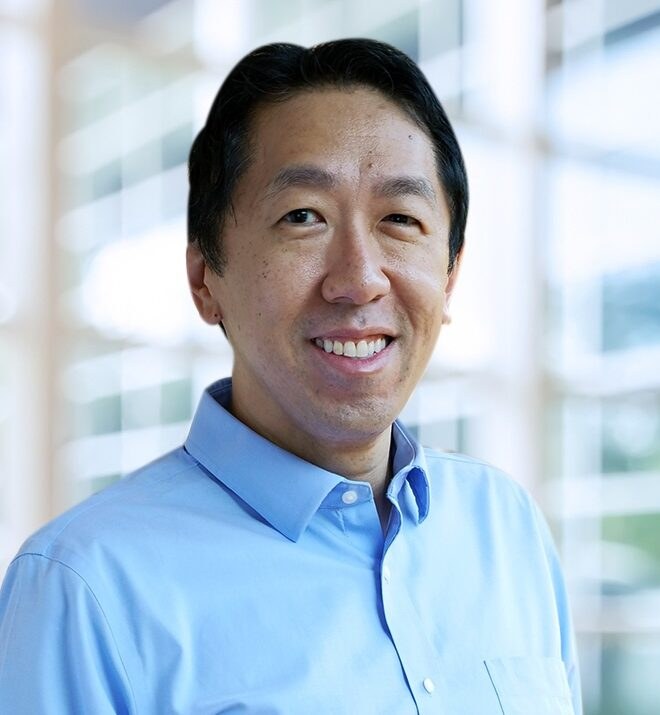
Many startup concepts at AI Fund originate when corporate partners identify gaps in large but under-digitized markets. Ng described this dynamic in his interview, noting that corporate partners frequently spot opportunities in economic sectors that are massive and critical yet unfamiliar to typical consumers or AI engineers.
It turns out a meaningful fraction of our startup ideas come from corporate partners that have spotted a market need, often in some sector of the economy, which is very large, very important but completely foreign to the typical consumer, or completely foreign to the typical AI engineer. I find that it's been interesting how often we get to play in these spaces. We think it's wildly exciting, while no one else cares.
Andrew Ng, AI Fund
Sequoia Capital and New Enterprise Associates also invest in the fund, but Ng emphasized that AI Fund's model differs fundamentally from traditional venture approaches. Rather than competing for deal flow, the fund's core activity involves identifying promising concepts, validating market and customer demand, then recruiting a CEO to co-build the company.
Ng sees continued expansion in specific domains such as visual and voice AI applications. "It feels like AI is not one thing; it is many different things that are creating new opportunities," he noted.
GV on being willing to invest at AI's premium valuations
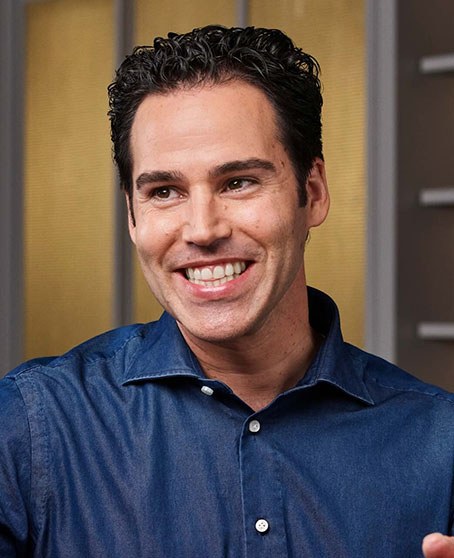
GV has emerged as one of the most-active and adaptable corporate AI investors, operating with Alphabet as its sole limited partner but maintaining independent investment authority. The firm demonstrates willingness to back startups that directly challenge Google's own offerings—previously with Slack and currently with AI companies competing against Alphabet's internal projects.
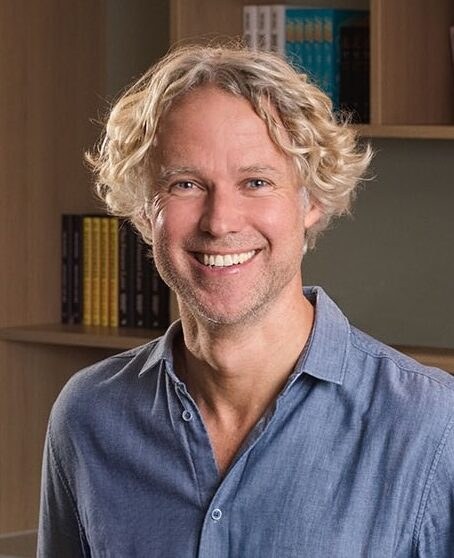
Managing partners Dave Munichiello and Tom Hulme deploy capital across the entire technology stack—from chips and compilers through applications—at both early and mature stages. They accept premium valuations for AI companies when the opportunity justifies the price.
When we look at companies that are coming in to raise, the revenue run rate is insane. These companies are growing incredibly fast, faster than ever before. And it's very hard to spend a lot of time looking at AI applications companies, and then go back to looking at other companies.
Dave Munichiello, GV
Read more

Spotify Founder's Health Screening Startup Neko Brings Preventative Medicine to the U.S.
The body-scanning company co-founded by David Ek has arrived in New York with a 300,000-person waitlist and backing from nearly $1 billion in funding.
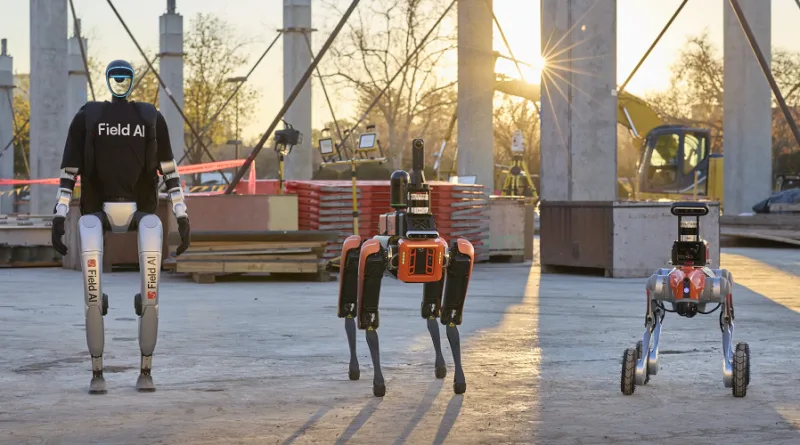
FieldAI Seeks $700M at $10B Valuation as Robot AI Demand Accelerates
The robotics AI startup is in advanced fundraising talks that would quintuple its valuation from last year, according to sources familiar with the matter.

Tech hiring slows even as employers post record open positions
A surge in IT job listings to three-year highs masks a contraction in actual hiring, with technology sector roles declining and unemployment ticking upward.