Proptech Funding Shifts as Investors Demand AI and Measurable Returns
Venture capital flowing into real estate technology remains well below pandemic peaks, but investors are becoming more discerning, channeling capital toward AI-driven solutions and companies with proven cost savings.

The proptech sector is experiencing a funding contraction as elevated interest rates—hovering between 6% and 7%—have made real estate investments less attractive. Compared to 2019, when the space attracted more than double today's venture funding levels, the current environment presents significant headwinds for startups seeking capital. The contrast is stark: during the COVID-19 pandemic, mortgage rates dipped to 2.5% on 15-year loans, creating a surge of investor enthusiasm that has since evaporated.
Rather than abandoning proptech entirely, venture firms are recalibrating their investment thesis. According to Crunchbase data, capital is concentrating on startups deploying artificial intelligence and advanced technologies to streamline construction, property management, underwriting and transaction processes. Meanwhile, generic real estate software and mature companies lacking exceptional growth trajectories face mounting obstacles in securing funding.
A geographic shift is also evident: four of the five largest deals completed in 2026 occurred outside the United States, signaling a rebalancing of proptech investment activity across global markets.
Funding by the numbers
Through mid-2026, global real estate-related startups have raised approximately $8.7 billion across seed through growth stages, according to Crunchbase. This trails the $24 billion deployed in 2019—the second-best year on record before the 2021 peak—and the $12.3 billion raised in 2025. Current trajectories suggest 2026 funding will roughly match or marginally exceed 2025 levels.
Deal volume has contracted sharply. The sector has recorded 794 transactions so far this year, compared to over 2,400 in 2019 and 1,446 in 2025. The decline reflects both reduced investor appetite and a tendency toward larger individual funding rounds.
Noteworthy deals
Europe has dominated the largest funding rounds in proptech during 2026, with two of the top three deals centered on green steel production.
Stockholm-based Stegra, a green steel manufacturer, secured the largest round when Wallenberg Investments led a private equity transaction in June. The six-year-old company raised approximately $1.6 billion, with Wallenberg becoming its majority shareholder.
Madrid's Hydnum Steel followed with a $695 million venture round in August, led by fellow Madrid firm Cofides, to fund its own green steel facility. The three-year-old startup achieved a $3.1 billion valuation in the transaction.
Amsterdam-based Mews, which operates a cloud-native hospitality management platform, closed a $300 million Series D in January at a $2.5 billion valuation. London-based EQT Growth anchored the financing for the 14-year-old company.
San Francisco's Bedrock Robotics emerged as the sole U.S. company in the top five largest deals. The autonomous construction technology startup raised $270 million in a Series B round in February, co-led by Valor Atreides AI Fund and CapitalG. The financing brought Bedrock's cumulative funding above $350 million and valued the company at $1.75 billion.
Rounding out the top five was Montreal-based Nesto, an AI-powered digital mortgage platform, which secured $216 million in a Series E round in June at a $1.47 billion valuation.
Exits
Proptech exit activity in 2026 has been uneven, with acquisitions substantially outpacing initial public offerings.
EquipmentShare, a Columbia, Missouri-based construction-equipment rental company with jobsite technology capabilities, conducted the only significant known IPO in the sector. In January, the company priced 30.5 million shares at $24.50, generating approximately $747 million in primary proceeds. Including secondary share sales, the offering totaled roughly $859 million.
Merger and acquisition activity, by contrast, has remained vigorous. A central theme involves incumbents acquiring data assets, workflow control and distribution channels to accelerate their artificial intelligence product development.
Autodesk executed the largest acquisition in the proptech space, purchasing MaintainX for $3.6 billion in cash in May. MaintainX operates an AI-powered platform for equipment maintenance and asset management. The company's valuation had climbed to $2.5 billion following a $150 million Series D raise in 2025.
Other significant acquisitions included:
- Compass completed an all-stock acquisition of Anywhere in January for $1.6 billion, establishing itself as "the world's largest brokerage," per reports.
- Procore announced in July the acquisition of DroneDeploy, a provider of aerial and ground-based reality-capture software serving construction and other sectors, for $845 million in cash. Procore also acquired DataGrid, a construction AI-agent platform, in a separate transaction.
- CoStar Group finished its $800 million cash acquisition of Zonda, a housing-market data and technology provider serving homebuilders, in August.
- The Real Brokerage completed its $880 million acquisition of RE/MAX Holdings in August, establishing a combined parent entity called the Real REMAX Group.
The AI effect
According to a research report from PricewaterhouseCoopers and MetaProp titled "Proptech's Impact on Real Estate Innovation and Transformation," artificial intelligence is transitioning from pilot programs into operational deployment across real estate and construction sectors. Companies are leveraging the technology to reduce expenses, enhance decision-making and automate routine processes.
The proptech landscape is simultaneously broadening beyond traditional property-management software into construction, energy, infrastructure and climate technology domains.
While proptech funding remains substantially depressed relative to pandemic-era levels, the composition of funded companies is shifting markedly. Investors and acquirers increasingly prioritize businesses demonstrating tangible time or cost savings, particularly in construction, building operations and real estate finance. Consequently, today's proptech sector encompasses companies with fundamentally different characteristics from those that attracted capital in earlier years.
Read more

Spotify Founder's Health Screening Startup Neko Brings Preventative Medicine to the U.S.
The body-scanning company co-founded by David Ek has arrived in New York with a 300,000-person waitlist and backing from nearly $1 billion in funding.
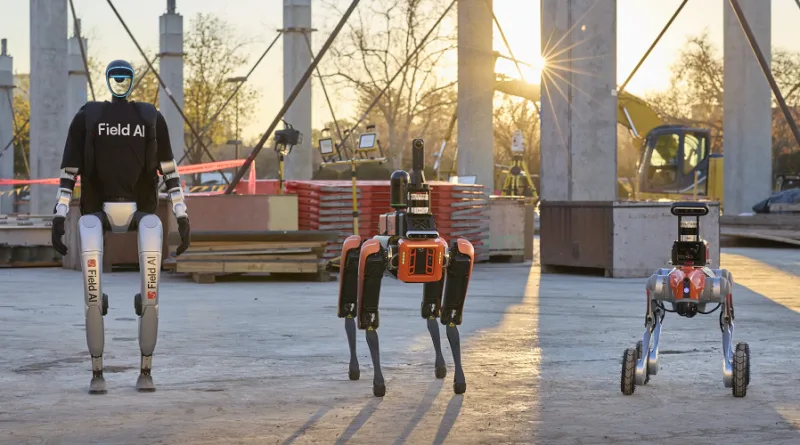
FieldAI Seeks $700M at $10B Valuation as Robot AI Demand Accelerates
The robotics AI startup is in advanced fundraising talks that would quintuple its valuation from last year, according to sources familiar with the matter.

Tech hiring slows even as employers post record open positions
A surge in IT job listings to three-year highs masks a contraction in actual hiring, with technology sector roles declining and unemployment ticking upward.