Nexstrom's 2D Semiconductor Play Targets Chip Manufacturing's Scaling Bottleneck
A Singapore startup backed by Xora Innovation is developing equipment to manufacture ultra-thin semiconductors at scale, raising $12 million to bridge the gap between lab-quality materials and production-ready wafers.

The semiconductor industry has long pursued speed gains through transistor miniaturization and higher component density per chip. Yet this approach creates mounting challenges: managing electron flow becomes increasingly difficult, leading to electron leakage, energy consumption spikes and thermal issues.
Nexstrom, a startup incubated within Xora Innovation, proposes that two-dimensional (2D) materials offer a path forward from silicon-based limitations. The company sees particular opportunity as data center demand continues to strain global component availability.
Operating from Singapore, Nexstrom is developing manufacturing systems and methodologies that would enable foundries to produce extremely thin semiconductors—transition-metal dichalcogenides (TMDs)—directly onto chip wafers. While TMDs aren't literally two-dimensional, their extreme thinness—just a few atomic layers—places them within the "2D materials" category and appeals to chipmakers seeking further size reductions.
The company's primary offering, North Star, targets the production of TMDs on 300mm (12-inch) wafers, the standard format in commercial chip fabrication.
Nexstrom faces competition from established players exploring 2D semiconductor integration. TSMC, Intel and Belgium's IMEC are all investigating methods to incorporate 2D materials into transistor designs. Equipment suppliers and materials firms including AIXTRON, CDimension and various emerging companies are addressing other segments of the manufacturing pipeline. TSMC, ASML and IMEC have already demonstrated how 2D-material transistors could function within a 300mm integration workflow.
Nexstrom's competitive angle centers on a particularly demanding challenge: scaling production of these materials for semiconductor manufacturing. The company's approach builds on research conducted by co-founder and chief scientist Lance Li, who previously directed post-silicon electronics research at TSMC and has focused on 2D materials since 2012.
In the lab, people can get very small, high-quality materials, but only on a very small scale. This is exactly the gap Nexstrom is addressing.
Lance Li, co-founder and chief scientist
On Tuesday, Nexstrom announced a $12 million seed funding round backed by Xora, Foothill Ventures and SEEDS. Combined with prior capital, the company has now raised $15 million total.
Rather than positioning itself as a direct competitor to chip manufacturing powerhouses such as TSMC, Samsung and Intel, Nexstrom intends to license its technology or establish partnership arrangements with these firms. The startup reports that several industry players are already evaluating samples of its wafers and materials, though it has not disclosed their identities.
Substantial technical hurdles remain before such miniaturized semiconductors reach mass production. The most critical involves achieving consistent TMD growth across full-size wafers.
At the current stage, our work is focused on delivering material quality that [industry partners] have specified. We have proven material results on wafers using our 12-inch system that has just been installed. We have systematically scaled from 2 inches to 6 inches, and we are going to complete our 8 inch and 8 inch by the end of October.
Phoebe Tan, CEO
Nexstrom will deploy the new capital toward advancing its technology and transitioning its equipment toward commercial viability. The funding will also support enhancements to process control and measurement systems, workforce expansion, and customer qualification initiatives.
The startup projects that its manufacturing equipment will reach commercial readiness sometime between 2030 and 2035.
Read more

Spotify Founder's Health Screening Startup Neko Brings Preventative Medicine to the U.S.
The body-scanning company co-founded by David Ek has arrived in New York with a 300,000-person waitlist and backing from nearly $1 billion in funding.
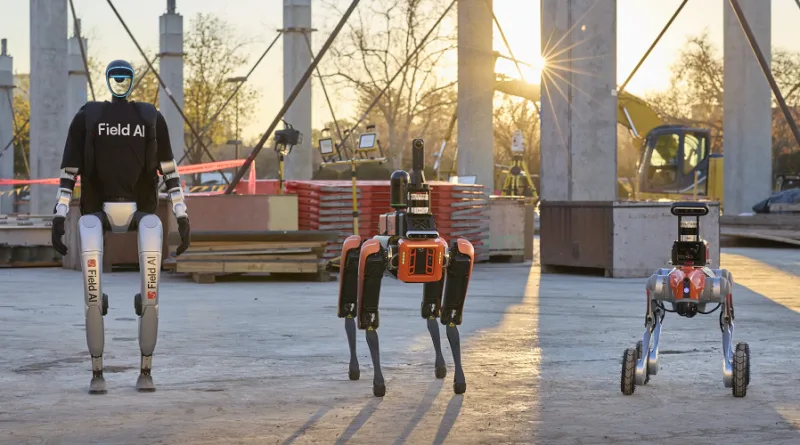
FieldAI Seeks $700M at $10B Valuation as Robot AI Demand Accelerates
The robotics AI startup is in advanced fundraising talks that would quintuple its valuation from last year, according to sources familiar with the matter.

Tech hiring slows even as employers post record open positions
A surge in IT job listings to three-year highs masks a contraction in actual hiring, with technology sector roles declining and unemployment ticking upward.