Maven Robotics Secures $100M Series A to Expand Warehouse Automation Fleet
The industrial robotics firm, founded in 2024, has demonstrated 99% uptime at a major consumer goods company and plans to deploy 250 additional robots with the fresh capital.

Maven Robotics Inc., a Santa Clara-based robotics startup, announced a $100 million Series A funding round on the heels of two years operating with its inaugural customer. The company, established in 2024, entered the market focusing on mixed-case palletizing and tote handling—a sector Maven values at approximately $80 billion. In warehouse palletizing operations, robots assemble individual store pallets from shipments originating at multiple manufacturing facilities.
The composition of goods changes based on shifting demand patterns. "It's all done with human labor today, running around the warehouse picking one of this, one of that," explained co-founder and Chief Executive Hamza Derbas to TechCrunch. Maven's inaugural customer, a major consumer goods manufacturer, was simultaneously evaluating four competing robotics vendors when Maven presented what Derbas characterized as "a cartoon of a robot and a team of people" in 2024. Currently, autonomous robot fleets operate continuously across multiple daily shifts at a Fortune 250 consumer packaged goods company, with as many as eight units deployed overall.
The deployed systems have achieved 99% or higher uptime during 16-hour operational windows, according to Derbas. Each unit features two vacuum-gripper arms capable of lifting up to 30 kilograms from a wheeled platform that reaches speeds of 10 miles per hour.
Maven positions its integrated hardware, software and artificial intelligence offering as a versatile platform. The company has recently expanded into more sophisticated material handling and assembly applications, where it identifies a market opportunity exceeding $1 trillion. The Series A capital will fund production of 250 third-generation robots alongside preliminary development of a fourth generation, Derbas shared with TechCrunch.
The company's strategy centers on addressing "one customer problem at a time," Derbas stated, based on the premise that each such challenge represents its own multibillion-dollar market. Maven projects its robots will accumulate more than 100,000 hours of autonomous operation by year-end and surpass 1 million hours by the conclusion of 2027.
Derbas brings nine years of experience from Apple Inc.'s special projects group, a division widely believed to have been developing autonomous vehicle technology before Apple discontinued the effort in 2024. His sibling Khalid Derbas, serving as chief financial officer, transitioned from the private equity sector. The broader Maven team includes former employees from Tesla Inc., Rivian Automotive Inc. and Zoox Inc.
RoboStrategy Inc., a closed-end robotics investment fund that debuted on Nasdaq in May, anchored the funding round. Additional investors included LocalGlobe, Vine Ventures LP and XTX Ventures, the venture capital division of trading company XTX Markets Ltd.
Jack Pearson, principal at RoboStrategy, observed that "there is a huge gap between a robot that demos well and one that survives three production shifts a day, seven days a week." Maven's leadership demonstrates a track record of delivering commercial products and engineered the robot to satisfy large enterprise requirements at production scale, in his assessment.
Maven had previously raised $18 million from earlier investors prior to this Series A round, according to PitchBook data.
Read more

Spotify Founder's Health Screening Startup Neko Brings Preventative Medicine to the U.S.
The body-scanning company co-founded by David Ek has arrived in New York with a 300,000-person waitlist and backing from nearly $1 billion in funding.
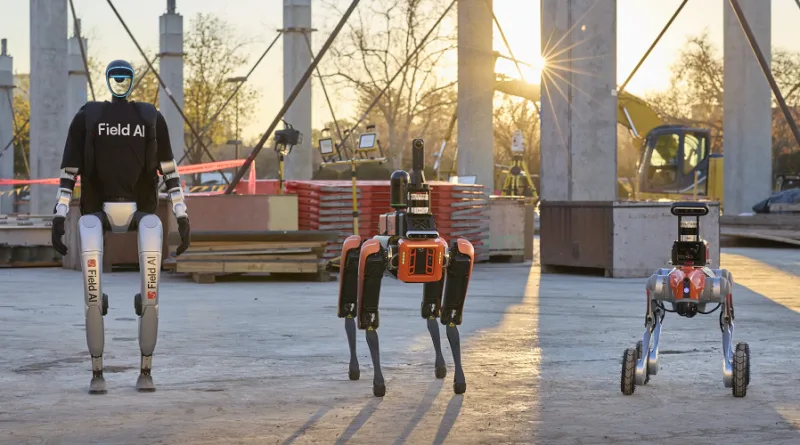
FieldAI Seeks $700M at $10B Valuation as Robot AI Demand Accelerates
The robotics AI startup is in advanced fundraising talks that would quintuple its valuation from last year, according to sources familiar with the matter.

Tech hiring slows even as employers post record open positions
A surge in IT job listings to three-year highs masks a contraction in actual hiring, with technology sector roles declining and unemployment ticking upward.