Maven Robotics Emerges From Stealth With $100M to Scale Industrial Automation
The startup, which landed a major customer deal despite having nothing but a concept when it launched in 2024, is now building robots for warehouse palletization tasks and planning to expand into more complex manufacturing workflows.
When Maven Robotics started in 2024, the company had virtually no assets to speak of. CEO and co-founder Hamza Derbas described the early stage plainly: "a cartoon of a robot and a team of people." Yet the startup managed to secure a significant contract with a major consumer goods manufacturer that was evaluating four competing robotics firms for its logistics operations.
Derbas obtained a meeting with the prospect and took an unconventional approach. Rather than pitching his robotics vision, he requested access to the company's factories and distribution centers. "We saw how people were working; we zeroed in on flows we could immediately bring value to," he explained. The strategy worked. Maven won the deal against established competitors, and after two years of deployment alongside several other partners, the company now operates as many as eight robots running 16 hours daily with 99% or higher uptime.
Maven is now stepping out of stealth mode following a $100 million funding round led by RoboStrategy, LocalGlobe, Vine Ventures, and XTX Ventures. The capital will support production of 250 third-generation units and development of a fourth-generation platform.
Hardware and Current Application
Maven's robots feature wheeled bases capable of traveling at 10 miles per hour and dual arms with a 30-kilogram lifting capacity. The machines are currently deployed for mixed palletization work, where they consolidate boxed goods from multiple sources onto single pallets destined for retail locations.
The workflow addresses a specific pain point in distribution. Retailers frequently adjust product assortments based on real-time demand within 48 hours of shelf placement. "Here's an order with different mixed [products] going to that retail store; please build it out. It's all done with human labor today, running around the warehouse picking one of this, one of that." At Maven's Santa Clara headquarters, the robots demonstrate their capability by using vacuum grippers to pick and arrange boxes at steady speeds, with live feeds showing units operating in customer facilities alongside warehouse staff.
Leadership and Technical Foundation
Derbas brings automotive engineering expertise focused on electric vehicles. Before founding Maven with his brother Khalid—who serves as CFO following a private equity career—Derbas spent nine years at Apple's special projects division. Though he declined to detail that work, it is widely understood to have involved autonomous vehicle development before the initiative was shut down in 2024.
Like other physical AI ventures, Maven staffs itself with former autonomous vehicle engineers who have developed the most advanced techniques for training autonomous systems from operational data. The approach demands rapid data pipelines that feed information from deployed robots back to the company within minutes or hours, enabling continuous retraining, evaluation, and redeployment cycles.
Competitive Positioning
Maven distinguishes itself through an industrial operations focus rather than a research-driven or architecture-specific orientation. Jack Pearson, an investor at RoboStrategy, attributes the company's differentiation to its grounding in industrial systems. Agility Robotics, preparing for a public listing this fall via a $2.5 billion SPAC transaction, represents the most comparable competitor, also prioritizing safety and specific industrial workflows. However, Derbas, while expressing respect for Agility, questions its bipedal design choice. "make zero sense for anything they're doing…they are very complex, unreliable, and add unnecessary cost. ROI is the name of the game here."
Expansion Strategy
Maven's near-term priorities center on data collection and training robots to handle diverse materials before advancing toward broader automation and fabrication tasks. The company will leverage its own systems, engage third-party providers, and has created specialized pincer-shaped gloves enabling humans to demonstrate desired gripper configurations. Though Maven positions itself as a general-purpose robotics maker, its actual strategy unfolds incrementally, addressing one customer problem at a time.
While palletization alone represents an $80 billion market opportunity, the subsequent task categories Maven targets will demand robotic manipulation capabilities that currently do not exist. "We're grounded in solving one customer problem at a time," Derbas said. "If you focus on solving problems and you pick sizeable problems, each problem is a multibillion-dollar market. If you do that, there's plenty of data to master these skills."
This methodical approach may represent the most practical route to workplace robotics deployment, though it also carries risk from breakthrough physical AI models developed by frontier research labs. Derbas remains focused on his own mission: "We're not in the race for models — we're in the race to solve industrial labor and make this work possible at the scale the world needs."
Read more

Spotify Founder's Health Screening Startup Neko Brings Preventative Medicine to the U.S.
The body-scanning company co-founded by David Ek has arrived in New York with a 300,000-person waitlist and backing from nearly $1 billion in funding.
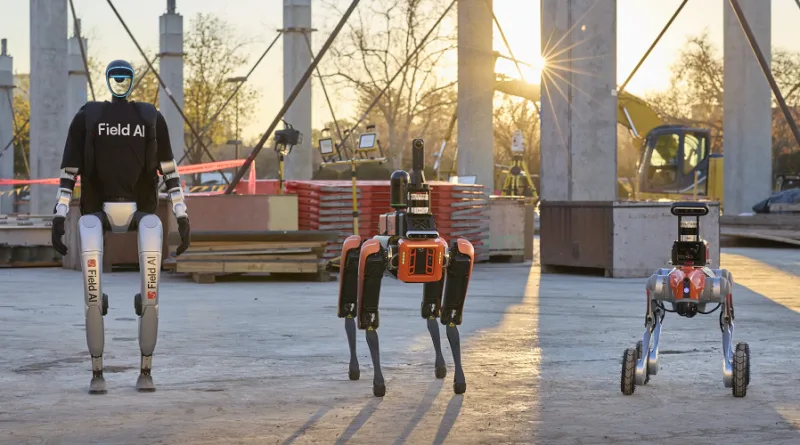
FieldAI Seeks $700M at $10B Valuation as Robot AI Demand Accelerates
The robotics AI startup is in advanced fundraising talks that would quintuple its valuation from last year, according to sources familiar with the matter.

Tech hiring slows even as employers post record open positions
A surge in IT job listings to three-year highs masks a contraction in actual hiring, with technology sector roles declining and unemployment ticking upward.