Five Startup Deals Worth Your Attention: Heart Monitors, AI Proteins, and Airport Tech
A monthly roundup of noteworthy startup funding rounds reveals innovations spanning healthcare diagnostics, aviation operations, protein engineering, and commercial real estate analysis.

Each month, this column highlights five startup funding announcements that may have escaped broader notice. This December selection spans companies developing wireless cardiac monitoring systems, artificial intelligence-powered antibody creation, airport logistics optimization, engineered proteins for industrial use, and commercial real estate portfolio analysis tools.
$29M for at-home hormone health testing
Inito, a Palo Alto-based fertility testing company established in 2015, secured $29 million in Series B funding this month to broaden its offerings beyond fertility monitoring into a comprehensive at-home diagnostics platform. The company has processed more than 30 million fertility hormone data points since 2021, according to company statements.
The expansion strategy centers on developing AI-engineered antibodies—synthetic proteins generated through computational models that simulate how antibody molecules fold and attach to specific biological targets. According to Inito co-founder and CTO Varun Venkatesan, "We predict how proteins fold in 3D, design synthetic antibodies using AI, and test millions of variants virtually before making a single one in the lab. This produces antibodies that are far more sensitive, consistent, and stable than anything developed through traditional methods."
Using this capability, Inito intends to create new at-home diagnostic tests for pregnancy tracking, menopause indicators, testosterone levels, and other endocrine markers. CEO and co-founder Aayush Rai stated, "The endgame is to redefine diagnostics altogether. If you want to understand what's happening inside your body at every life stage and health need, you shouldn't be limited by clinic appointments, lab schedules, or rigid testing systems. You should be able to measure, track, and get insights about your body from home, with lab-grade confidence."
Bertelsmann India Investments and Fireside Ventures led the Series B round. Inito has raised $42.5 million in total funding to date.
$26.6M for smoother airport operations
Assaia, a Zurich-based company, announced $26.6 million in Series B funding this month for its artificial intelligence platform designed to streamline airport operations. The technology is currently deployed at New York's JFK, London's Heathrow, Dubai International, and Toronto Pearson airports, where it addresses aircraft turnaround efficiency amid rising passenger volumes, compressed profit margins, and workforce shortages.
The company will allocate part of its new capital toward enhancing StandManager, an AI software tool that optimizes gate and stand assignments before planes arrive. Armira Growth led the Series B round alongside existing investors. Christian Figge, managing partner at Armira, commented in a statement: "We focus on investing in resilient business models that demonstrate a distinct technological advantage, and Assaia exemplifies that. Its AI platform is already transforming airport operations and helping the aviation industry navigate some of its most complex challenges."
$15M for AI-designed proteins for manufacturing
Aether Bio, headquartered in Menlo Park, California, announced $15 million in new funding this month to advance its mission of manufacturing novel materials through AI-developed proteins and biological manufacturing processes. The company has raised $64 million in total funding, with this round led by Tribe Capital and supported by Natural Capital, Henkel Corp., Resilience Reserve, Shrug Capital, 4DX Ventures, Unless, and Radicle Impact.
Aether combines "purpose-built AI and high-throughput robotics to design proteins that act like molecular assemblers, tiny machines that build one atom at a time." The company describes these as "nanoscale machines [that] have the precision and sophistication of massive chemical factories, but at a fraction of the size, enabling Aether to make new products faster, more affordably, and more sustainably."
RapidPrint, the company's debut product, is a high-performance 3D printing polymer filament line utilizing AI-optimized materials to accelerate manufacturing of aerospace, defense, and industrial components. Aether has developed seven distinct protein classes with potential applications in defense, aerospace, pharmaceuticals, carbon capture, and other sectors.
Aether CEO and founder Pavle Jeremić told Forbes, "One of the things we have got very good at is targeting a novel molecular species and making it very quickly." Tribe Capital Chairman Arjun Sethi explained his firm's investment decision: "We've seen many AI companies focus on discovery, but no one has taken the leap from designing proteins to delivering physical, market-ready products until Aether. Aether is proving that its approach isn't just innovative in theory; it's faster, more cost-effective, and higher-performing than traditional methods, setting the standard for what AI-driven chemistry can achieve in the real world."
$14M for a wireless heart monitor
Heart disease remains the leading cause of death in the United States, accounting for nearly one million deaths in 2023 according to the CDC. Despite this prevalence, accessible monitoring technology for cardiac conditions remains limited.
Wearlinq, a San Francisco-based startup, announced a $14 million Series A this month for its wireless heart monitoring device that delivers hospital-grade cardiac data collection at home. The company noted in a press release, "At home, most devices track heart rate rather than the electrical rhythm. Heart rate alone can't catch many arrhythmias or the subtle changes that signal rising risk. In hospitals, wired telemetry is bulky and brief, and single-lead patches often miss intermittent events. The result is a system where patients take devices off, doctors order repeat tests, and heart disease continues to claim millions more lives."
Wearlinq's device is currently used in 75 cardiology units and serves thousands of patients monthly. The product has received FDA 510(k) clearance. The company plans to use its new funding to "dramatically scale" operations and expand into hundreds of additional clinics. AIX Ventures led the funding round, with participation from Berkeley Catalyst Fund, Angel School, Amino Capital, XB Ventures, Alumni Ventures, SpringTide Ventures, Solasta, Smartlink Partners, NYX Ventures, Maliam, Lightscape Partners, LDV Partners, Device of Tomorrow Capital, and Celtic House Asia Partners. Wearlinq also raised $5 million in venture debt alongside the equity round.
$6M to analyze commercial real estate portfolios in minutes
Commercial real estate investment typically does not attract significant startup innovation attention, reflecting the broader decline in proptech funding in recent years. However, given the trillions of dollars deployed in commercial real estate portfolios globally, platforms that streamline investment analysis and financial modeling represent compelling opportunities.
Built AI, a London-based platform used by commercial real estate investors for financial modeling and analysis, announced $6 million in seed funding this month to enter the U.S. commercial real estate market. The platform has already analyzed $70 billion in investment opportunities across the United Kingdom and Europe, and now targets the estimated $22 trillion U.S. commercial real estate sector.
Work-Bench led the seed round, with support from Lerer Hippeau, Timber Grove Ventures, Emerald Pine Capital, and several angel investors and property sector veterans. Built AI employs machine learning to extract and analyze building data, helping clients manage portfolios and evaluate new investment opportunities. The platform examines individual properties or entire portfolios, considering lease terms, valuation, tenant profiles, and local market conditions. According to the company, the platform reduces analysis time by 90%, compressing what typically takes hours or days into minutes.
Built AI was founded in 2020 by Natan Lempert, who previously worked at Goldman Sachs, Citi, and Benson Elliott Capital Management, and Firoz Noordeen, formerly director at NatWest Venture. The company has raised $8.5 million in total funding to date.
CEO Natan Lempert stated, "Real estate is the world's largest asset class and yet the tools used to appraise deals have barely evolved in the last 40 years. Billions of dollars worth of investment deals are still screened every year using outdated, error-prone processes leading to over $185 billion in annual losses because of incorrect valuation metrics or missed opportunities. Generative AI is becoming increasingly embedded in financial decisions, to translate data at scale and automate underwriting."
Built AI's client roster includes real estate leaders CBRE, Howard Hughes Corp., and Knight Frank Investment Management. Jonathan Lehr, co-founder and general partner of Work-Bench, stated, "The future of software requires three essential attributes: domain expertise, AI skills, and ingenuity. These founders have all three and seek to fundamentally reimagine the real estate investment process."
Read more

Spotify Founder's Health Screening Startup Neko Brings Preventative Medicine to the U.S.
The body-scanning company co-founded by David Ek has arrived in New York with a 300,000-person waitlist and backing from nearly $1 billion in funding.
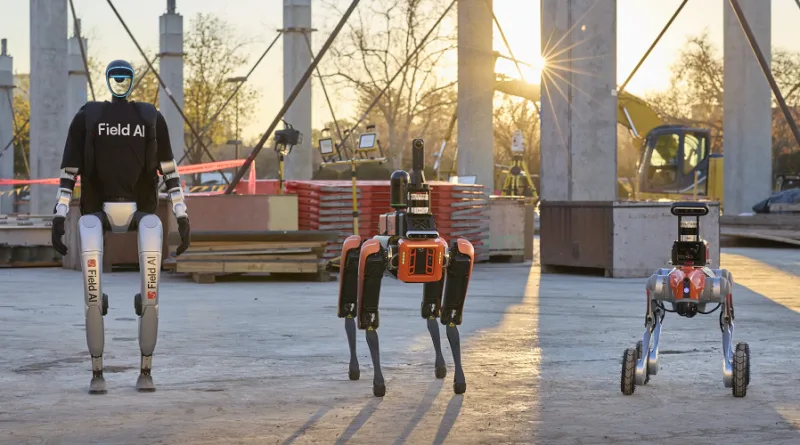
FieldAI Seeks $700M at $10B Valuation as Robot AI Demand Accelerates
The robotics AI startup is in advanced fundraising talks that would quintuple its valuation from last year, according to sources familiar with the matter.

Tech hiring slows even as employers post record open positions
A surge in IT job listings to three-year highs masks a contraction in actual hiring, with technology sector roles declining and unemployment ticking upward.