Five January Startup Deals Worth Your Attention: From AI Fashion to Robotic Labor
A monthly look at notable startup funding rounds that may have escaped notice reveals deals spanning AI-powered design, clean energy innovation, autonomous defense systems, marine robotics, and industrial automation.

Each month, this column highlights five startup funding announcements that warrant attention despite potentially limited coverage. January brought a wave of capital deployment across diverse sectors—here are the deals that stood out.
Designed by AI
Fashion and artificial intelligence have collided in a meaningful way. Raspberry AI, headquartered in New York, just completed a $24 million Series A funding round with Andreessen Horowitz leading the investment. The startup's technology converts designer sketches into photorealistic visualizations that demonstrate how garments will appear, fit and move in actual use.
The efficiency gains are substantial. Traditional design workflows require weeks waiting for physical samples and extensive manual editing through conventional image software. Raspberry AI's system produces finished renderings in just 10 seconds and simultaneously generates manufacturing assets and technical specifications. Both luxury and mainstream brands stand to reclaim significant time in their design cycles.
Ammonia power
Clean energy infrastructure has become increasingly urgent as artificial intelligence's power demands grow. Amogy, based in New York, raised $56 million in a venture round jointly led by Aramco Ventures and SV Investment. The company has engineered a proprietary system that decomposes ammonia into hydrogen and nitrogen, channeling the hydrogen into either an integrated fuel cell or hydrogen engine to generate electricity with zero carbon output.
Amogy has already demonstrated real-world capability. During the previous year, the startup powered the world's first carbon-neutral, ammonia-fueled maritime vessel using its ammonia-to-electrical conversion platform. The technology has also been tested powering an unmanned aerial drone, a commercial agricultural tractor, and a semi-truck. The new funding will support scaling the technology for maritime shipping and stationary power applications.
Off-roading with AI
Defense technology investment momentum appears set to continue into 2025. Overland AI, a Seattle-based company, secured $32 million in Series A funding led by 8VC. The startup develops unmanned ground vehicles tailored for military deployment in challenging terrain where GPS and standard communication infrastructure are unavailable—conditions common in rugged, off-road environments.
The company emphasized that such capabilities prove essential, particularly "in the Indo-Pacific, where complex off-road terrain demands resilience and precision." Since its 2022 founding, Overland AI has already integrated with multiple U.S. military branches, including the Army, Marine Corps, and Special Operations Command.
Data-rich waters
Climate technology funding trajectories remain uncertain given political shifts, but Xocean has positioned itself advantageously through the expanding wind energy sector. The Dublin-based marine robotics firm closed approximately $119 million in funding this month, with S2G Investments among the participating investors. Xocean supplies critical data to energy and hydrography sectors through remotely operated unmanned surface vessels capable of extended ocean deployments.
The company's low-carbon USVs carry sensor arrays and real-time communication systems to gather and transmit ocean and environmental datasets, including wind measurements for offshore wind installations. Major energy companies including BP and Shell rely on Xocean's services. The offshore wind industry represents a significant growth driver, with global capacity expected to exceed 250 gigawatts (excluding China) by 2035—representing more than 500% growth from current levels. Beyond wind support, Xocean's vessels conduct inspections of aging offshore infrastructure and facilitate offshore carbon capture and storage development.
Robots at work
Robotics and space technology continue dominating startup funding announcements—and understandably so, given their transformative potential. RoboForce completed a $10 million seed funding round this month with support from investors including Carnegie Mellon University. The Milipitas, California startup aims to deploy its AI-driven robotic systems into hazardous work environments experiencing labor shortages. Priority sectors include solar, space, manufacturing, and mining—industries the U.S. Bureau of Labor Statistics identified as experiencing the highest injury and workforce loss rates.
RoboForce's AI-enabled robots achieve 1mm precision in mechanical tasks including picking, placing, pressing, and connecting operations. The robots integrate with a spatial AI copilot system enabling communication and continuous learning capabilities. The solar panel installation market represents the first commercial deployment target, expected to launch later this year.
Read more

Spotify Founder's Health Screening Startup Neko Brings Preventative Medicine to the U.S.
The body-scanning company co-founded by David Ek has arrived in New York with a 300,000-person waitlist and backing from nearly $1 billion in funding.
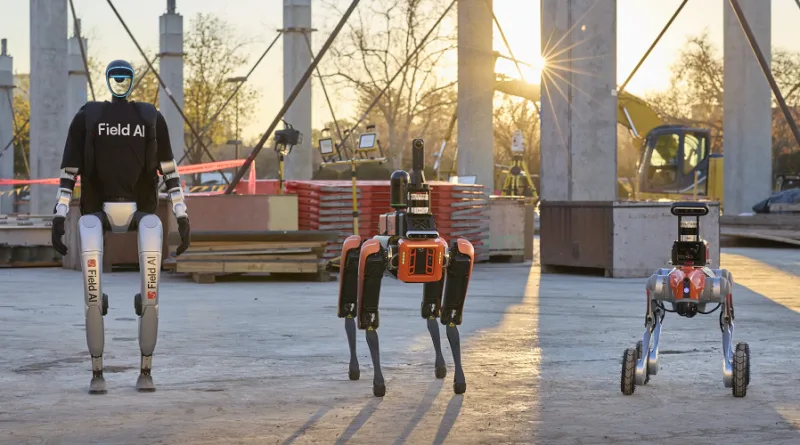
FieldAI Seeks $700M at $10B Valuation as Robot AI Demand Accelerates
The robotics AI startup is in advanced fundraising talks that would quintuple its valuation from last year, according to sources familiar with the matter.

Tech hiring slows even as employers post record open positions
A surge in IT job listings to three-year highs masks a contraction in actual hiring, with technology sector roles declining and unemployment ticking upward.