Beyond the Hype: What Startups Are Actually Pitching to Gift-Givers This Year
Venture funding for consumer gadgets has contracted sharply, but a fresh crop of startups is still pursuing wellness, personalization, and robotics to capture holiday shoppers' attention.
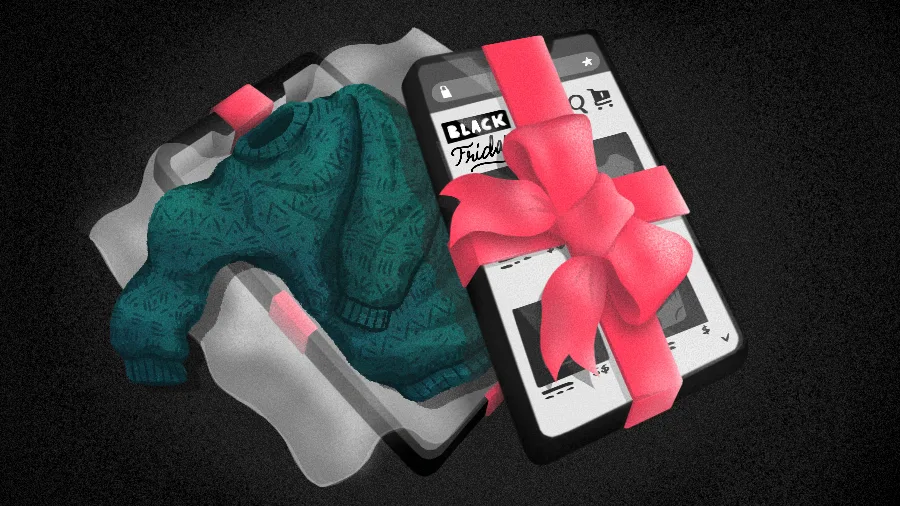
The flow of capital into consumer-focused product startups has diminished substantially over the past several years, with particular pressure on companies hawking gadgets and items designed as gifts. Multiple factors contribute to this pullback, though the sector's historically weak financial performance certainly hasn't helped matters. The contraction spans numerous categories—from apparel to consumer tech to the once-hot direct-to-consumer model—representing a consistent pattern we've documented extensively.
The practical consequence: anyone hunting through recently funded startups for present ideas will find fewer choices than in previous years. The era of $700 juicers and high-tech coolers for entertaining has largely passed.
Nevertheless, compelling opportunities persist, notably in health-focused products, made-to-order goods, and clothing lines. Drawing on Crunchbase's database, we identified 24 startups that secured funding this year and currently offer products to consumers, spanning everything from sexual wellness kits to three-dimensional printing devices. We also examined several patterns emerging across the landscape.
Wellness dominates the funding conversation
Health and wellness emerged as the primary investment focus for consumer-oriented product and gadget companies in the current year.
Leading this category is Oura, the most substantially financed and recognizable company featured here. Oura manufactures intelligent rings capable of monitoring more than 20 different health indicators, delivering users with customized health insights. Entry-level pricing begins near $500.
Sleep quality represents another wellness frontier where startups are investing effort. Eight Sleep stands out as the leading fundraiser in this space, securing a $100 million Series D investment last August. The company manufactures intelligent bedding systems engineered to regulate temperature and provide customized support for improved rest.
Aging-related wellness concerns have also attracted startup attention. OneSkin, headquartered in San Francisco, develops anti-aging skincare formulations and completed a $20 million funding round during summer months. For women navigating menopause or post-menopause stages, Womaness offers kits addressing menopause management, sexual desire, and healthy aging, supplemented by skincare and intimate wellness items—currently available at reduced Black Friday pricing.
Customization captures consumer interest
Tailored gift options have become increasingly popular, with multiple recently financed startups specializing in bespoke merchandise.
Arcade provides a technology-driven design interface for creating personalized jewelry and household decoration pieces. The platform connects designers with a network of certified artisans responsible for manufacturing the final items.
Blank Beauty operates in the nail care sector, formulating custom nail lacquers based on images provided by purchasers. This Tennessee-based operation raised $6 million during a Series A funding round in May.
For those interested in acquiring a substantial item through pre-ordering, EufyMake offers a community-supported personal three-dimensional texture ultraviolet printing device for custom creations. Interested buyers may currently reserve a unit for $2,300.
Fashion's continued presence (with caveats)
Fashion-oriented startups continue attracting meaningful investment rounds, though the sector admittedly lacks the dynamism of previous periods.
Kim Kardashian's Skims generated the largest fundraising achievement within fashion during 2025, completing a $225 million Series D financing this month. The brand specializes in shapewear and ready-to-wear clothing.
Vivrelle, operating as a membership service for designer accessories, attracted investor enthusiasm with a $62 million funding round last summer. The company is promoting Black Friday discounts targeting luxury handbag enthusiasts.
Interesting products versus investor priorities
The marketplace contains numerous purchasing options despite venture capitalists maintaining distance from consumer-oriented sectors.
This pattern reflects historical norms. Among startup categories, consumer products consistently ranks among the most engaging subjects for analysis. The offerings frequently demonstrate ingenuity, eccentricity, and desirable—if not essential—qualities.
However, while industry observers find the category compelling, institutional investors frequently prioritize differently. The 2025 landscape illustrated this dynamic clearly, as venture firms directed unprecedented capital toward artificial intelligence initiatives while largely overlooking consumer product and gadget companies with market-ready offerings.
Dismissing this sector prematurely would be unwise, though. While the year didn't produce numerous consumer product unicorns, investors channeled substantial resources into robotics startups developing consumer applications.
Household automation robots appear particularly promising. The Bot Co., operating for two years, has accumulated $300 million in total funding to engineer a domestic cleaning robot. Sunday, receiving backing from Benchmark, is constructing a household robot designed for routine domestic tasks and recently unveiled its inaugural model, Memo. Additional well-funded companies are pursuing both consumer and specialized commercial robotic solutions.
These innovations might become the season's must-have items within a couple of years. Should early indicators prove accurate regarding their capabilities, they might even manage to wrap themselves.
Read more
Spotify Founder's Health Screening Startup Neko Brings Preventative Medicine to the U.S.
The body-scanning company co-founded by David Ek has arrived in New York with a 300,000-person waitlist and backing from nearly $1 billion in funding.
FieldAI Seeks $700M at $10B Valuation as Robot AI Demand Accelerates
The robotics AI startup is in advanced fundraising talks that would quintuple its valuation from last year, according to sources familiar with the matter.

Tech hiring slows even as employers post record open positions
A surge in IT job listings to three-year highs masks a contraction in actual hiring, with technology sector roles declining and unemployment ticking upward.