Benchmark's Five Partners Take the Stage at Disrupt 2026 to Debate the Future of Venture
All five general partners from one of Silicon Valley's most prominent venture firms will appear together for the first time on the TechCrunch Disrupt stage to discuss where founders are misjudging the market and which opportunities remain undiscovered.
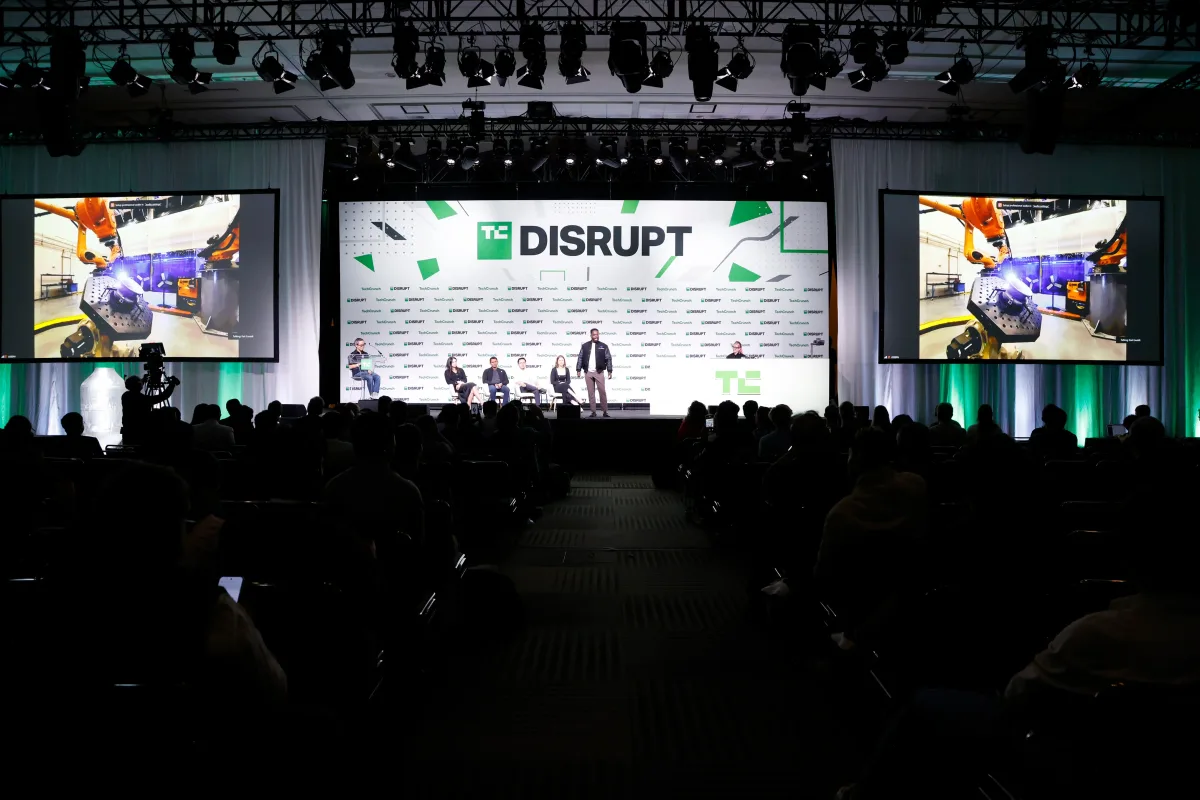
What misconceptions do the leaders at Benchmark, a storied Silicon Valley venture capital firm, believe are holding back founders? TechCrunch Disrupt 2026 will bring together the entire current partnership—Jack Altman, Peter Fenton, Chetan Puttagunta, Everett Randle and Eric Vishria—for a main stage conversation titled "What We Believe Now." This marks the first occasion that all five general partners have shared the Disrupt stage together in San Francisco.

The session will shift attention away from retrospective analysis of venture capital and toward forward-looking questions: which startups will define the next wave, what assumptions merit reconsideration, and which opportunities remain overlooked. The timing is particularly apt in 2026, as Benchmark itself has undergone significant transformation this year by deploying roughly $2 billion across a $750 million core fund and its inaugural $1.25 billion growth vehicle—marking a substantial departure from its historical emphasis on concentrated early-stage investing.
Capital abundance masks a scarcity of genuine conviction
Artificial intelligence has fundamentally restructured the venture landscape in remarkably short order. Data from the OECD shows that AI enterprises captured 61% of worldwide venture funding in 2025, representing $258.7 billion out of $427.1 billion deployed globally. However, this capital concentration was highly uneven: transactions exceeding $100 million accounted for roughly 73% of total AI investment value. This dynamic creates a peculiar predicament for entrepreneurs.
Robust investor appetite for technology ventures coexists with intensifying competition for a narrow pool of companies perceived as potential category leaders. Founders must grapple with difficult questions: Will the subsequent unicorn emerge from AI applications, or has that layer already become saturated? Does competitive advantage originate from model architecture, infrastructure layers, exclusive datasets or go-to-market channels? Are exceptional businesses being overlooked because capital gravitates toward identical themes? And when product development cycles have accelerated dramatically, what distinguishes a company worthy of investment?
The five partners will likely diverge in their perspectives—and that disagreement is precisely what makes the session valuable. Witness this nuanced debate among five prominent venture investors on the Disrupt platform.
Five distinct pathways converge at Benchmark's partnership table
The partnership assembles perspectives spanning company creation, enterprise software backing, frontier technology deployment, and guidance through exits and public markets.
- Jack Altman arrived at Benchmark this year following his founding of Lattice and subsequent establishment of Alt Capital, his own investment vehicle. Prior to joining Benchmark, Alt Capital had accumulated $425 million in early-stage capital. His trajectory offers an unusually direct lens from founder experience into venture investing.
- Peter Fenton carries one of the venture industry's most extensive résumés. His portfolio spans both consumer and enterprise ventures, including current AI positions in Sierra, Digits and Sema4.ai. He has directed seven companies through successful public offerings, namely Twitter, Elastic, New Relic, Zendesk and Yelp.
- Chetan Puttagunta specializes in early-stage enterprise software, having invested in MongoDB, MuleSoft, Elastic, Modern Treasury, Legora and Stytch.
- Everett Randle possesses experience across investment stages and sectors, with stakes in Anthropic, SpaceX, Rippling, Flock Safety, Gumloop and Chainguard.
- Eric Vishria concentrates on early-stage infrastructure and enterprise software, backing Amplitude, Confluent, Fireworks.ai and Cerebras Systems. Prior to becoming an investor, he founded RockMelt as a startup CEO before its acquisition by Yahoo.
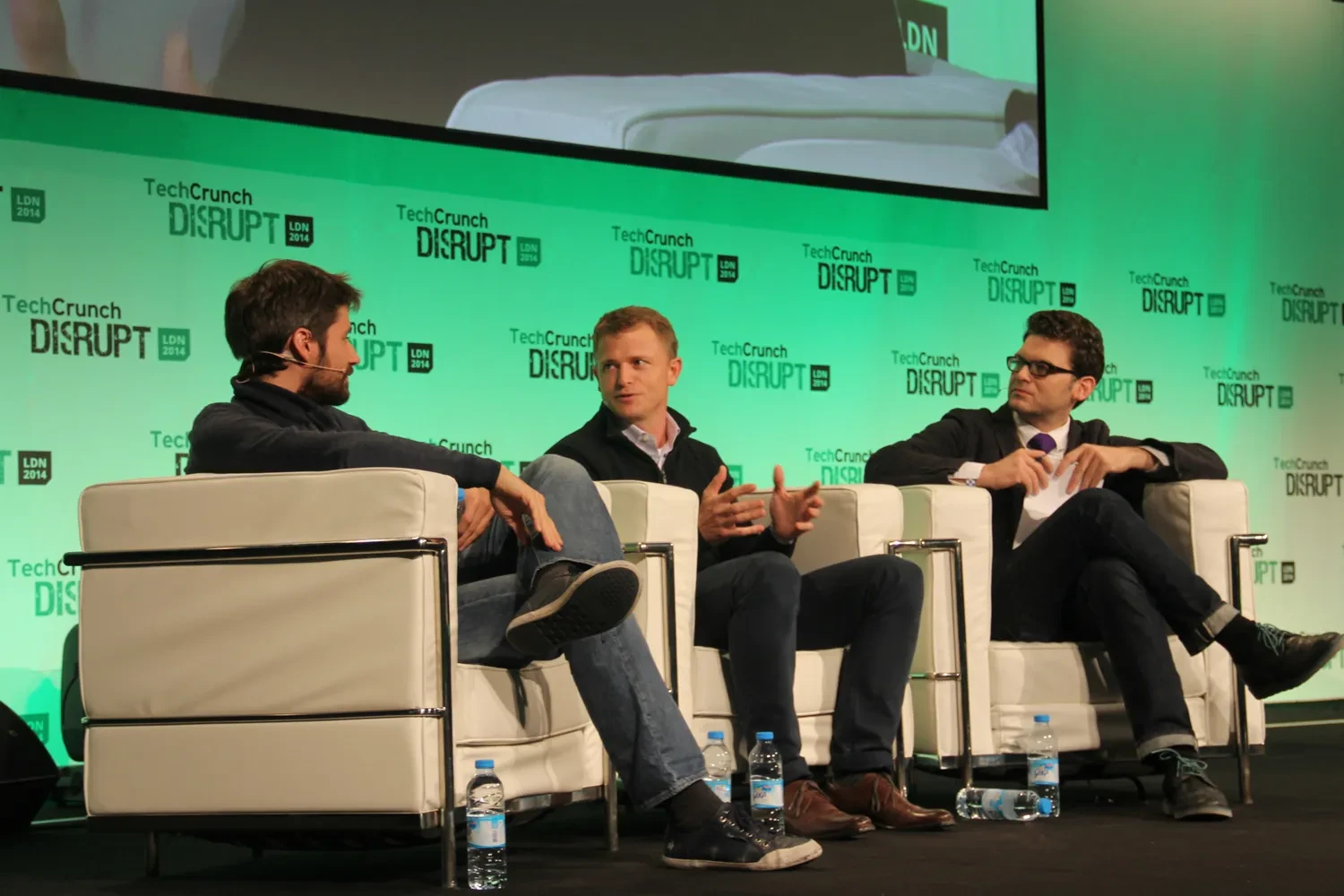
Combining these viewpoints transforms the session from a unified Benchmark position into a forum where seasoned investors openly explore disagreements, revise their thinking, and determine where conviction genuinely exists.
Overlooked opportunities sometimes emerge from uncomfortable conversations
Cerebras illustrates this principle effectively. Vishria recently shared with TechCrunch that he nearly skipped the initial meeting with the AI chip manufacturer in 2016. Hardware ventures fell outside Benchmark's typical domain, and Cerebras's ambitions seemed prohibitively ambitious.
By the presentation's third slide, his assessment shifted. Benchmark ultimately co-led Cerebras's $25 million Series A round. A decade later, Cerebras achieved public market status, with Benchmark retaining a 9.5% ownership stake at the IPO.
This trajectory reveals something fundamental about venture capital. The most valuable opportunity frequently arrives disguised as something other than the obvious choice. It may contradict an investor's established framework. The technology might be premature. The market might not yet be visible. And recognizing when to reconsider your position often proves more valuable than being correct initially. Expect this caliber of reasoning to emerge during the Disrupt conversation.
Founders should arrive prepared to challenge what they hear
For entrepreneurs, the session's most instructive element may be learning which market assumptions Benchmark believes founders are currently misinterpreting. Not because Benchmark necessarily possesses the correct answer, but because understanding how accomplished investors evaluate markets, teams, and potential gives entrepreneurs a framework for testing their own convictions.
Investors can benchmark these frameworks against their own thinking. Business leaders can identify which shifts venture firms consider durable enough to influence their organizations and anticipate capital flows. For students, prospective entrepreneurs, and observers tracking technology's trajectory, this represents a distinctive chance to watch five investors with divergent backgrounds deliberate together in a single setting.
These discussions carry implications far beyond venture circles. Investment decisions fundamentally represent predictions about which innovations, operational models, and entrepreneurs will reshape the coming decade.
Benchmark's thesis is set. What's yours?
Twelve months can bring substantial shifts in technology. AI capabilities evolve. New sectors materialize. Established categories fade. Organizations that appeared inevitable lose momentum, while overlooked ventures suddenly gain traction. Maintaining a thesis matters. Updating it when conditions warrant matters more.
Join Altman, Fenton, Puttagunta, Randle and Vishria at Disrupt to learn Benchmark's current thinking and what might prompt them to shift course.
TechCrunch Disrupt 2026 convenes at San Francisco's Moscone West from October 13–15, assembling over 10,000 founders, investors, operators and technologists across six stages, roundtables, breakout sessions, Startup Battlefield, the Expo Hall and additional programming.
The next transformative company may already be under construction. Discover where some of Silicon Valley's most seasoned investors are directing their attention at TechCrunch Disrupt 2026. Register before September 25 at 11:59 p.m. PT to secure savings of up to $200 before pricing adjusts. Groups of four or more receive an additional 30% discount.

Read more

Spotify Founder's Health Screening Startup Neko Brings Preventative Medicine to the U.S.
The body-scanning company co-founded by David Ek has arrived in New York with a 300,000-person waitlist and backing from nearly $1 billion in funding.

FieldAI Seeks $700M at $10B Valuation as Robot AI Demand Accelerates
The robotics AI startup is in advanced fundraising talks that would quintuple its valuation from last year, according to sources familiar with the matter.

Tech hiring slows even as employers post record open positions
A surge in IT job listings to three-year highs masks a contraction in actual hiring, with technology sector roles declining and unemployment ticking upward.