AI Startups Dominate the Largest Seed Funding Rounds in Recent Months
Venture capital is pouring unprecedented sums into early-stage artificial intelligence companies, with at least a dozen firms raising $100 million or more in seed rounds over the past half year.

The image of a seed-stage startup operating on minimal resources has become outdated in today's investment landscape. Capital is flowing toward ambitious early-stage ventures rather than lean, bootstrapped operations.
The past several months have witnessed a surge in substantial funding commitments directed at nascent companies with limited track records but significant aspirations. Using Crunchbase data, we identified the largest seed rounds from the previous six months, revealing that at least 12 companies globally secured $100 million or more.
Physical AI is leading theme
The majority of top seed funding recipients are focused on merging AI with physical-world applications.
Advanced Machine Intelligence, based in Paris, led the pack with a $1.03 billion seed round in March, supported by numerous venture capital firms, angel investors and corporate partners. The company develops AI models capable of learning abstract representations from real-world sensor information and generating predictions.
Unconventional AI, headquartered in San Francisco, operates where AI meets energy systems. In December, the company raised $475 million to build energy-efficient silicon circuits that mimic the non-linear behavior found in biological neural systems.
Periodic Labs represents another significant recipient, bringing AI to scientific research and experimentation. The San Francisco-based firm, which raised $300 million six months prior, aims to automate materials design for semiconductors, transportation and electrical infrastructure.
Chinese startups have also secured substantial seed funding in the physical AI space. Notable examples include Lingchu Intelligence, which created an AI platform for robotic device development featuring physical environment simulation, and Humanoid Robot Innovation Center, focused on AI-powered robotic systems.
Humans and AI
AI-focused startups are also addressing human-centered applications.
Merge Labs, co-founded by Sam Altman, secured $252 million in a financing round led by OpenAI earlier this year. The San Francisco startup concentrates on leveraging AI breakthroughs for brain-computer interface technology.
Humans&, which ranks as the second-largest seed round recipient, defies easy categorization. The Silicon Valley company raised $480 million in January and develops foundational models centering around people and their relationships with each other.
A new era for seed
Beyond revealing investor appetite for AI ventures, the recent wave of massive seed rounds reflects fundamental shifts in how capital deployment works at the company formation stage.
The overarching pattern shows a movement toward fewer transactions paired with higher average seed round values. Although most seed-stage deals remain concentrated in the $5 million and below category, this proportion has declined progressively.
Seed rounds exceeding $10 million have expanded from representing 2% of all deals in 2018 to 9% currently. Seed rounds surpassing $100 million, which were once extraordinarily uncommon, have become more frequent, with 27 such transactions announced globally since the start of 2025 according to Crunchbase data.
Whether these substantial investments at such an early stage will ultimately prove justified remains an open question. Presently, the arrangement clearly benefits the seed-stage recipients, granting them the exceptional advantage of pursuing transformative objectives without the constraint of operating under severe financial limitations.
Read more

Spotify Founder's Health Screening Startup Neko Brings Preventative Medicine to the U.S.
The body-scanning company co-founded by David Ek has arrived in New York with a 300,000-person waitlist and backing from nearly $1 billion in funding.
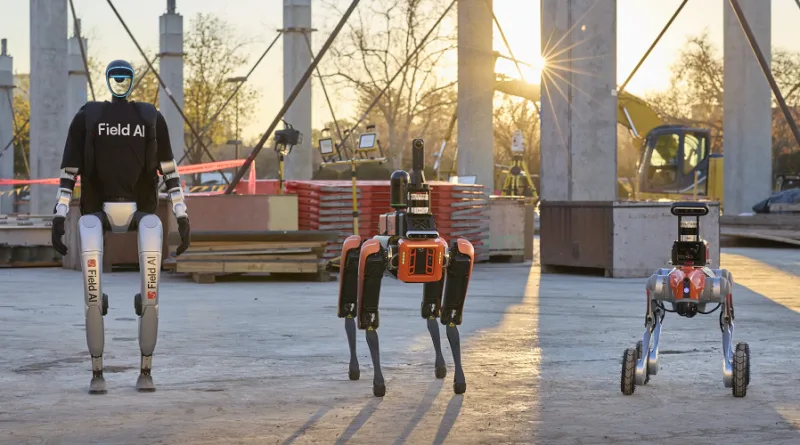
FieldAI Seeks $700M at $10B Valuation as Robot AI Demand Accelerates
The robotics AI startup is in advanced fundraising talks that would quintuple its valuation from last year, according to sources familiar with the matter.

Tech hiring slows even as employers post record open positions
A surge in IT job listings to three-year highs masks a contraction in actual hiring, with technology sector roles declining and unemployment ticking upward.