Oracle Executives Outline Enterprise AI's Path From Lab to Production
Nine Oracle leaders previewed the company's strategy for moving AI from experimentation to reliable, secure production systems at the upcoming Oracle AI World conference.
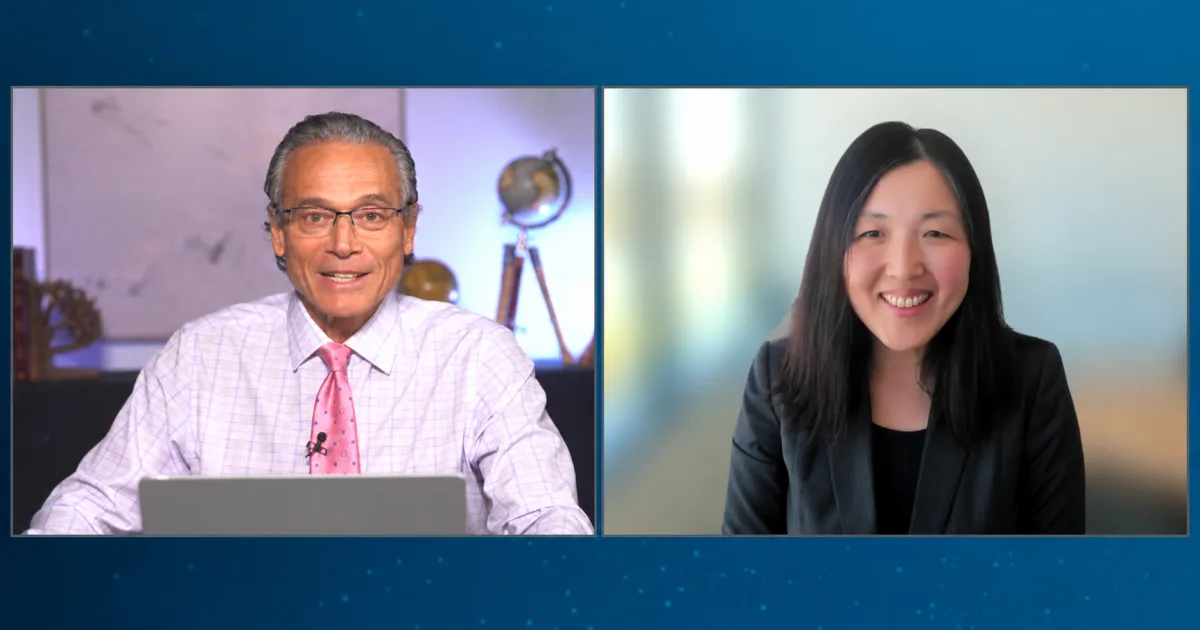
Scaling artificial intelligence in business settings demands far more than access to powerful models. Organizations must establish trustworthy pathways to their data, build dependable systems, and govern autonomous agents effectively—transforming AI pilots into tangible business value.
AI is moving fast. Threats are moving just as fast, and the race is on to build enterprise AI that's not just intelligent, but trusted, secure and, of course, ready for production.
Dave Vellante, chief analyst at theCUBE Research
Oracle Corp. leadership sat for nine conversations with theCUBE Research ahead of Oracle AI World 2026, scheduled for Oct. 25–28 in Las Vegas. The interviews previewed the conference's Data Deep Dive programming and outlined Oracle's vision for trusted agentic AI, database modernization, cybersecurity and application development. Attendees will encounter product spotlights, technical demos and hands-on work, including an Oct. 28 hackathon pairing OpenAI Codex with Oracle AI Database.
1. Enterprise AI trust requires security across the entire technology stack.
Organizations can only confidently deploy agentic AI when they trust these systems to govern decisions and execute actions tied to critical operations, according to Juan Loaiza, executive vice president of Oracle Database Technologies. Loaiza told theCUBE that bolting security onto existing designs falls short when AI systems need constant protection and dependability. His Oracle AI World presentation will examine how merging AI, data management and application development into one coherent architecture delivers security and oversight at every layer. Oracle's Data Deep Dive programming emphasizes a core principle: security must be embedded in the foundation, not left to individual AI models.
2. Oracle AI Database advances enterprise AI with new capabilities and stronger security.
Connecting intelligent applications to enterprise data is what makes AI genuinely valuable to organizations, according to Hasan Rizvi, EVP of product and research, database engineering, at Oracle. Rizvi's session will showcase Oracle AI Database improvements aimed at reducing architectural complexity, enabling flexible deployment and safeguarding confidential data. He also outlined capabilities for handling both structured and unstructured information, constructing AI agents without moving data elsewhere, and enabling AI-assisted application creation. Data protection remains central to Oracle's approach, with emphasis on securing information at the source, reacting swiftly to breaches and maintaining operations during incidents.
3. Database-level controls establish trust for autonomous AI agents.
Autonomous agents working with sensitive business data must respect enforceable security and operational rules, even if applications or agents themselves are breached, according to Tirthankar Lahiri, senior vice president of mission-critical data and artificial intelligence engines, Oracle Database, and Sara Narayan, VP of product management, mission-critical data and AI engines, Oracle Database. Their presentation will explore trust across four dimensions: data, access, knowledge and execution. The executives highlighted capabilities including Trusted Answer Search, which links natural-language questions to verified answers, and JSON Duality Views, which limit what agents can modify in databases through restricted APIs. They also introduced Oracle Database's Deep Trust Architecture, which enforces protections at the database layer regardless of whether requests originate from users, applications or autonomous systems.
4. AI-powered cyberattacks increase the urgency of database security.
AI-driven cyberattacks are forcing enterprises to identify and patch vulnerabilities far faster than traditional schedules allow, according to Vipin Samar, SVP of software engineering, database security, at Oracle. Samar explained that attackers can now use AI to reverse-engineer security patches and uncover flaws, rendering conventional maintenance timelines obsolete. His Oracle AI World talk will focus on expanding visibility into database fleet vulnerabilities and accelerating patch rollout before attackers can exploit gaps. Oracle's defense strategy rests on protecting data where it lives, responding at machine speed and building stronger defenses against advanced threats.
5. Autonomous database infrastructure provides a foundation for enterprise AI at scale.
The difference between impressive AI experiments and deployable applications often hinges on data infrastructure quality, according to Çetin Özbütün, EVP of product and research, data warehouse and autonomous database, at Oracle. Özbütün stressed that modern AI workloads demand automated security, guaranteed uptime and flexible scaling while requiring cost discipline. His session will demonstrate how Oracle Autonomous AI Database handles enterprise AI workloads through self-managing administration, automated security updates and scalable resources. He will also address the financial case for database automation and why solid data foundations are essential for meaningful AI returns.
6. Autonomous AI Lakehouse brings analytics and AI-driven decision-making together.
Enterprise lakehouses are evolving beyond reporting to become decision-making platforms powered by AI, according to Nipun Agarwal, SVP of software engineering, Oracle Database, at Oracle. Agarwal introduced new Oracle Autonomous AI Lakehouse features designed to let organizations extract insights across dispersed data without heavy data movement. His event session will explain how automatic business context enrichment, smarter retrieval of relevant data and expanded Apache Iceberg compatibility can enhance AI output while reducing inference spending. The presentation will also highlight unified security controls, data lineage tracking and an AI-assisted development environment meant to streamline analytics and AI work.
7. Exadata innovations improve AI performance and database resilience.
Running AI alongside critical business transactions demands infrastructure that delivers speed without sacrificing reliability, according to Jia Shi, group VP of data systems software engineering at Oracle. Shi highlighted Exadata Live Migration, which shifts active database virtual machines between servers using Remote Direct Memory Access while maintaining client connections and preventing application interruptions. Her presentation will also cover how Exadata quickens AI vector searches and runs across Oracle Cloud Infrastructure, competing cloud services and local deployments. She will address using agentic AI to identify and fix database input/output bottlenecks through automated diagnosis.
8. APEXlang brings AI-generated applications closer to enterprise production.
AI coding agents are lowering barriers to software creation, yet enterprises require applications they can read, update and govern, according to Mike Hichwa, SVP of software engineering at Oracle. Hichwa introduced APEXlang, a formal language for describing applications that lets AI coding agents build low-code systems in a structured, compilable format. The method permits tools like OpenAI Codex and Claude to generate application definitions while the Oracle APEX engine manages execution. His session will explain how this separation reduces technical debt, preserves human comprehension of AI-created code and meets enterprise governance and scaling needs.
9. Oracle AI World puts agentic AI development into practice through hands-on sessions.
Oracle AI World will move beyond strategy talks to let attendees work directly with production-ready AI technologies, according to Arpan Shah, SVP of database product marketing at Oracle. Shah described the Data Deep Dive program, which pairs executive product sessions with technical demos, hands-on labs and talks on database security and agent creation. A centerpiece is the Oct. 28 hackathon combining OpenAI Codex and Oracle AI Database, where developers can build applications with support from Oracle and OpenAI staff. The program targets professional developers and technically engaged participants seeking practical experience building AI applications on enterprise database platforms.
TheCUBE will cover Oracle AI World 2026 on-site on Oct. 28 in Las Vegas, interviewing Oracle executives and industry figures to explore enterprise AI strategies and the technologies driving adoption. Coverage will highlight major announcements and practical insights from the event.
Read more
IBM's Governed Context Strategy: Making Real-Time Data Work for Production AI Agents
IBM is positioning governed context—current, relevant business information delivered to AI agents in real time—as essential infrastructure for enterprises deploying autonomous decision-making systems. The approach treats data delivery as an operational requirement, not an afterthought.

Action State launches open-source toolkit for auditing AI agent transactions
A new startup is releasing tools to help companies verify what autonomous AI systems actually did, creating independent records of agent behavior across business partnerships.

Anthropic's IPO Postponement Signals Deeper Market Doubts About AI Valuations
Anthropic's decision to push back its public offering reveals mounting concerns about the sustainability of AI company valuations, from pension fund objections to rival CEO skepticism and the rising threat of open-weight models.